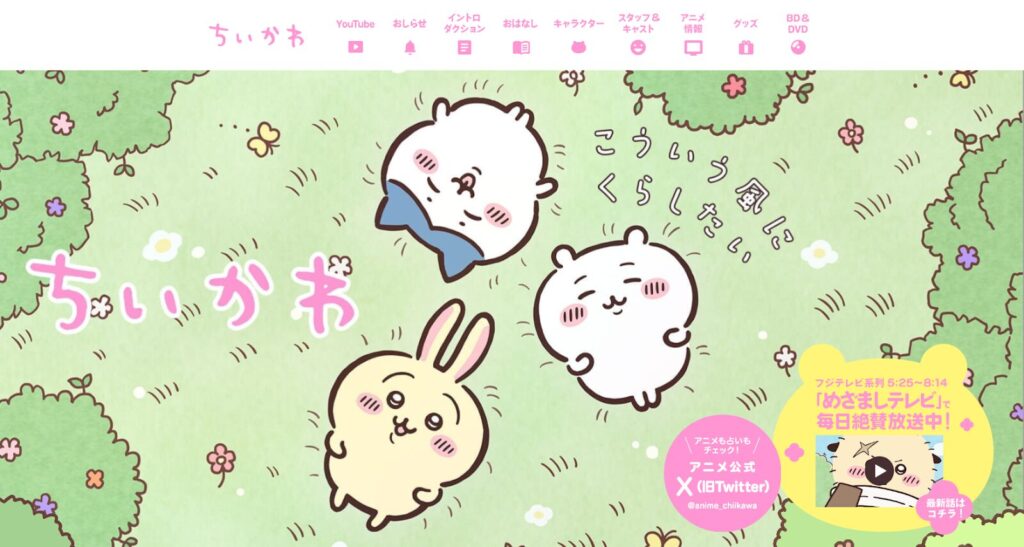
The four-panel manga “Chiikawa,” which quietly began on Twitter in 2017, is the work of illustrator Nagano. With the official Chiikawa X account boasting over 4 million followers as of June 2025, it has become a social phenomenon that has captivated everyone from adults to children across Japan.
Why have these adorable characters—described as being “small and cute” —become so beloved and achieved such commercial success?
Upon analyzing “Chiikawa,” I realized there is an important fact that many people overlook: the popularity of the characters does not necessarily correlate with merchandise sales.
There are numerous examples of characters that become hot topics on TV but fail to sell merchandise. Conversely, there are characters with low name recognition whose merchandise performs well. It’s easy to assume that “since Chiikawa is popular, its merchandise will sell,” but in reality, there is a clever mechanism at work that converts popularity into sales.
In this article, we will analyze why Chiikawa was able to convert its “popularity” into “merchandise sales,” identify the factors behind its success, and offer tips on merchandise development that companies can apply to their own businesses.
Why was Chiikawa able to turn its popularity into merchandise sales?
An era where “empathy,” not “cuteness,” drives sales
People often assume that “Chiikawa sells well because it’s cute,” but that’s not the real reason. What’s important is that the characters’ “struggles to survive in an unreasonable society” resonate deeply with working adults.
For example, when fans see Chiikawa and friends fail a certification exam or get caught up in unreasonable situations, many likely feel a sense of “relatability.” This stems from the psychology that makes us want to root for them precisely because they aren’t perfect heroes, but rather “characters who are doing their best just like us.”
In other words, in today’s world, “the degree to which a product resonates with people” is the deciding factor in purchasing decisions.
Key Point: It’s not cuteness, but the “sense of striving together” that moves fans’ hearts.
Characters that don’t say too much feel more personal
The moment you truly fall in love with a character is when you think, “This character is just like me.” Chiikawa has the power to make you feel that way—as if the story is your own.
When you’re going through a tough time and come across a line on social media like “I’m somehow managing to survive…,” you feel like it’s speaking directly to you. Haven’t you ever felt that way?
This feeling arises because Chiikawa isn’t “too perfect.” She’s a little vulnerable, but she tries her best; sometimes she cries, and sometimes she laughs. ...That imperfection resonates with our own emotions.
For example, if you look at Chiikawa after making a mistake at work, you might feel a sense of relief, as if you aren’t being judged. It doesn’t force a clear conclusion or moral upon you; instead, it leaves “room for interpretation” so that each viewer can freely find their own meaning.
In other words, when you feel that a character is standing by your side, it has already become “a part of you.”
Key Point: Design that makes you think, “This is me,” fosters deep empathy.
Why many popular characters struggle to sell merchandise
As I mentioned at the beginning, the idea that “popular characters = merchandise that sells” isn’t quite accurate.
There are many characters whose merchandise doesn’t sell, even if they become a hot topic in TV anime or go viral on social media. This is because “enjoying something by watching it” and “spending money to buy it” are two completely different consumer behaviors.
The reason Chiikawa’s merchandise strategy serves as a useful reference is that it has a mechanism for converting “the joy of viewing” into “a motivation to buy.” While many characters stop at “cute → want to see,” Chiikawa creates a flow of “cute → want to be with them → want to buy.”
In other words, Chiikawa is positioned not merely as something “to look at,” but as a “partner in daily life.”
Key Point: Just because a character is popular doesn’t mean merchandise will necessarily sell.
How it aligns with modern fan culture
Fan activities for Chiikawa (i.e., “supporting your favorite”) are no longer based on the traditional framework of “cheering on an idol,” but rather on a sense of “working hard together.”
For example, social media is filled with posts like, “Chiikawa is working hard, so I'll do my best too,” and “I felt so comforted—I think I can handle work tomorrow.” This is proof that the character has become an integral part of fans' lives as a source of energy just by being seen.
In other words, Chiikawa is accepted not as an “idol to admire,” but as a “comrade.”
As such, Chiikawa’s merchandise lineup is filled with “emotional touches” designed to move the viewer, rather than focusing on product descriptions or functionality.
What matters isn’t “how to sell,” but “how to make people feel.” And this is an approach that can be applied to any product. If you can connect with people’s emotions, merchandise that naturally makes them “want to buy” will emerge.
Key Point: A marketing strategy suited to the modern era that builds a “partnership” with fans
Why Chiikawa merchandise sells so well: a system that drives itself
What makes Chiikawa merchandise truly stand out is that it combines the following elements:
“Establishing and maintaining daily connections with users”
“A wide range of merchandise to foster purchasing habits”
“Limited-edition and non-commercial items that encourage user-generated content (UGC)”
“Social media and the original work that help fans connect emotionally with the characters”
From a marketing perspective, I believe it is precisely these strategic elements that drive the popularity of the merchandise. Let’s take a closer look.
The brilliance behind the Chiikawa purchasing experience
The reason Chiikawa has been successful in merchandise sales is that the process leading to a purchase has been carefully designed.
Stage 1: Awareness (Seeing it on social media)
For many characters, this is where it ends. It stops at the impression of “That’s cute.”
Stage 2: Empathy (Connecting emotionally with the story)
Chiikawa sets itself apart by depicting everyday worries and struggles. It evokes the feeling of “I get it—I feel the same way.”
Stage 3: Desire (Wanting to be with them)
This stage is crucial. It’s the shift from “I want to see them” to “I want to be with them.” Chiikawa is perceived as a “life partner.”
Stage 4: Justification (Securing a reason to buy)
It provides reasons to justify the purchase, such as “a treat for myself” or “a good luck charm to help me keep going.”
It is precisely because fans go through all four of these stages that Chiikawa fans continue to purchase merchandise. While many characters stop at Stage 1, Chiikawa is designed to guide fans all the way to Stage 4.
From the perspective of marketing sales mechanisms—specifically, funnel construction—this system hits all the right notes. I’ll go into more detail later, but first, let’s take a look at the characters, which are the essence of Chiikawa.
Key Point: Chiikawa hits all the right notes from a marketing perspective as well
Building awareness and interest through social media, anime, and affordable products
Anime and social media foster a sense of attachment to characters. While the stories themselves can serve as a gateway, they also provide an opportunity for people who become interested through gacha games to learn about the characters’ backgrounds and the world they inhabit.
Daily posts increase familiarity with the characters, bridging the gap between fans and the characters, which in turn makes it more likely for fans to purchase merchandise.
Rather than merchandise alone, the story elements that allow fans to empathize with the characters, combined with social media—which makes it easy for fans to connect—can be considered a crucial platform.
Key Point: Content lays the foundation for turning fans into customers.
Monetizing through practical and entertainment-focused items like stationery
The role of gacha, Ichiban Kuji, and collaboration-exclusive items
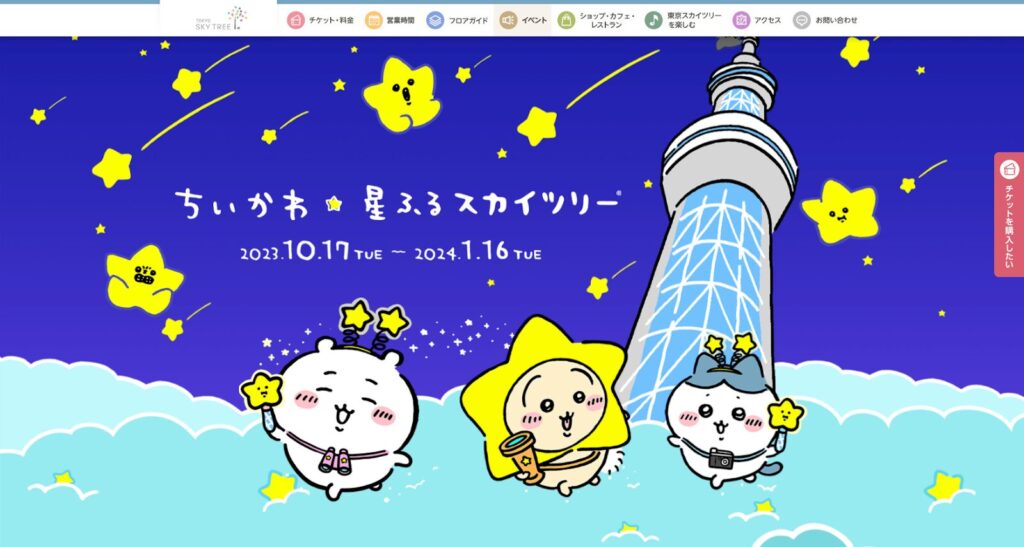
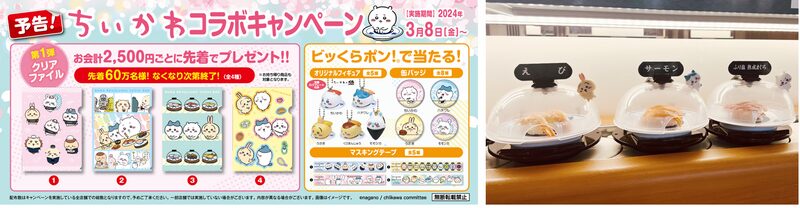
Gachapon, Ichiban Kuji, and collaboration merchandise are mechanisms designed to keep people engaged with “Chiikawa” by spending a small amount of money.
Rather than focusing on revenue, what’s important is that these items are placed along everyday routes—such as at train stations and shopping centers—ensuring that people continue to recognize the characters and that they catch the eye of those who haven’t encountered them yet.
On social media, posts like “I won!” and “I didn’t win…” spread organically.
Key Point: By providing material for social media posts, fans are naturally drawn in as they spend money.
The role of low-cost merchandise (stickers, LINE stickers, etc.)
Since these are low-cost items, they help establish a habit of purchasing and make Chiikawa feel more accessible.
Such merchandise helps lower the psychological barrier to “buying Chiikawa goods.” And by actually holding the item in your hands, it provides an experience that’s “better than expected.”
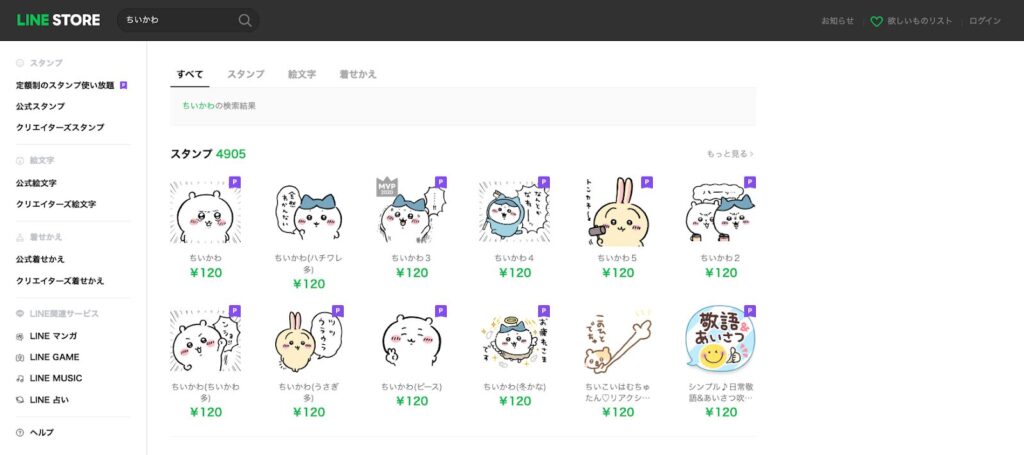
Especially with LINE stickers, where they’re easily visible, making it a habit to communicate using the characters’ lines is likely to make you grow attached to them before you know it.
I’ve had this experience many times myself. Even when I wasn’t familiar with the series, I’ve developed an attachment to the characters and ended up buying merchandise.
Key Point: It serves as a gateway to engage users and expand brand awareness through a small investment.
Monetizing through practical and entertainment-focused items like stationery
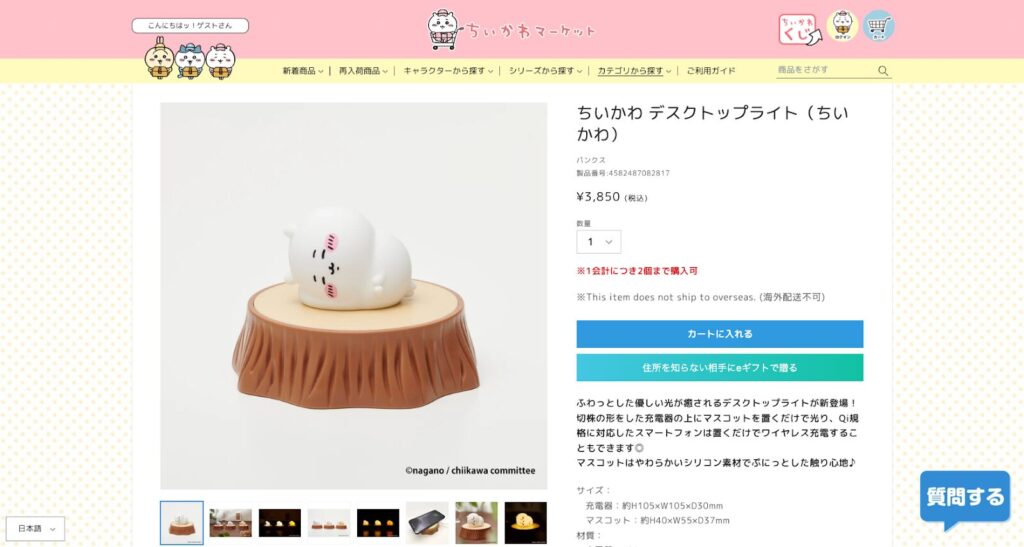
The role of practical items (stationery and miscellaneous goods)
This price range (1,000–3,000 yen) is where significant revenue is generated. Since these are items used daily, they provide a legitimate reason for purchase.
Using them at work helps raise awareness of “Chiikawa” among others.
Key point: Practical products allow you to achieve both profit and brand recognition
The role of plush toys and figures
In the 2,000–5,000 yen price range and above, you can generate high-margin revenue. Since purchases are driven by the recognition of Chiikawa’s value as a “special presence,” these items require more direct engagement with fans than other merchandise.
Furthermore, because they can be used for a long time, they increase the owner’s satisfaction.
Key point: Products that appeal strongly to emotions justify purchases even at high prices
Creating a post-purchase cycle driven by user-generated content (UGC)
New awareness through post-purchase social media posts
Posts like “Chiikawa merchandise I bought today” not only generate organic PR by reaching friends and followers but also create the impression that the brand is gaining popularity.
If the merchandise is practical, showing it in use can convince people beyond just children that it’s “useful for adults too,” giving them a reason to buy.
As a result, the number of people thinking “I want one too” naturally increases.
Key Point: Fan-generated content creates a cycle that attracts new fans
Promoting gradual purchasing habits and stimulating the desire to collect
Beyond their practicality, merchandise sparks a desire to collect more, driven by the psychological urge to build a collection or keep the items close at hand.
First, they discover the product through gacha machines, then grow to like it through the anime or social media. This leads to low-priced merchandise, practical items, and high-priced products. The synergy between a rich merchandise lineup and continuous engagement through the anime and social media drives repeat purchases.
Let’s develop our merchandise strategy by considering this flow—from creating initial awareness to repeat purchases.
Key Point: The relationship with consumers deepens step by step
What sets it apart from traditional character merchandising strategies
Traditional character business models
After a character gains sudden popularity through an anime, the focus shifts to generating profits through merchandise. If the merchandise doesn’t sell, it’s a one-shot deal that ends right there.
Whether or not fans stick around is left entirely to chance.
Key point: Success is unstable in a model reliant on timing and luck
The “Chiikawa System”
ChiiKawa is not just a cute character. It has created a cyclical system where awareness → interest → purchase → sharing → repurchase flow seamlessly, making every product a “gateway to the next purchase.”
A particularly noteworthy aspect is the structure that focuses not merely on achieving broad, indiscriminate awareness, but rather on reaching promising prospects, engaging them with low-priced items to establish purchasing habits, and then guiding them toward the core products that drive revenue.
For companies to replicate this successful model, they must clearly design their own “investment products,” “revenue-generating products,” and “customer flow.”
Since this structure cannot be built by chance, let’s use excellent examples like this one as a reference for our planning.
Key Point: Business expansion through a strategically designed circular structure
Is Chiikawa especially popular with adults? A closer look at its audience
Adult women are the primary buyers of Chiikawa merchandise
“Chiikawa” merchandise is frequently being bought in bulk, primarily by adult women in their 20s to 40s.
While character merchandise is often considered to be aimed at children, the primary demographic purchasing Chiikawa merchandise consists of working women in their 20s to 40s.
Given that adult women are the main target audience, each product is designed to “blend naturally into the fans’ lifestyles.” The fact that the lineup even includes “practical items” may be one reason why adults are so likely to purchase them.
For office work, there are desk accessories and stationery. For personal use, there are bath items like towels. For outings, there are picnic blankets and handheld fans. For home use, there are plush toys and home decor items.
In this way, the brand has carefully analyzed fans’ daily routines and positioned products that allow them to “be with Chiikawa” in every situation. When companies plan character merchandise, they should start by deeply understanding the lifestyle patterns of their target audience.
People buy merchandise based on emotion, not logic
Statements like “It’s made from high-quality materials” or “It has convenient features” are crucial points for product creators. However, not many people actually decide to buy something just because of those explanations. For most people, the moment they pick up a product is when their emotions are stirred—whether they find it “cute,” feel “soothed,” or simply find it “calming” to look at.
This is precisely where the popularity of Chiikawa merchandise lies. The characters aren’t just cute; they’re figures that gently embrace the stress and anxiety of everyday life.
For example, you often see social media posts saying, “I bought Chiikawa merchandise as a reward for working hard.” There’s no rational reason behind it—it’s simply an action driven by what the heart desires.
In other words, when choosing a product, the heart acts first, not the head.
Key Point: The reason for buying is determined by emotion, not logic.
“I couldn’t resist buying it” is an emotional response
When people “buy something even though they don’t need it,” it’s because their feelings have been put into words. Phrases like “I was able to say ‘Help me’” or “Today’s tough, but I’ll do my best” resonate perfectly with the viewer’s inner thoughts.
The moment they see words that express their own feelings, they feel, “This is exactly what I’m thinking,” and their emotions are stirred. As a result, they want to pick it up not just as a mere merchandise item, but as “something that speaks to their feelings.”
For example, there are cases where people who bought Chiikawa keychains featuring quotes have shared on social media, saying, “These words saved me.”
In other words, a single phrase that makes someone think, “This quote is exactly how I feel!” becomes the trigger for a purchase.
Key Point: When words connect with emotions, the product becomes something people “want.”
Can the “Chiikawa-style” merchandising strategy be replicated?
“Chiikawa” isn’t just a cute character. The reason for its popularity lies not only in its appearance but also in the “mechanism that stirs emotions.”
And if you grasp the key points, this mechanism can be applied to any brand.
Focus on capturing emotional moments for your audience
The reason “Chiikawa” resonates so deeply is that it skillfully captures those “little emotions” found in everyday life. It expresses feelings that everyone experiences, such as “not wanting to go to work in the morning” or “feeling exhausted after a night of worrying about others.”
By putting those feelings into words, viewers feel a sense of recognition, thinking, “This is exactly how I feel.” That’s why the first important step is to carefully observe “what kind of emotions arise in what situations.”
For example, when you see a post on social media that says, “I’m tired” or “I want to cry,” the “words they need right now” are hidden within it.
In other words, identifying these small emotional shifts is the starting point for creating characters that truly move people.
Prioritize relatable, empathy-driven stories over self-focused narratives
Many companies end up talking only about what they want to say, like, “This product is amazing!” But to truly capture people’s hearts, you need “words of empathy”—phrases like, “You know that feeling, right?”
For example, instead of saying, “This mug keeps drinks hot for a long time,” saying, “On a night when I felt like I couldn’t get anything done, this mug made me feel a little bit better,” is far more memorable.
In other words, rather than just talking about the product, it’s important to convey “in what kind of emotional state the product will be helpful to the user.”
Merchandise should move people emotionally before it proves its fusefulness
We’ve moved past the era where people buy things simply because they’re convenient. Today, people shop when their emotions are stirred—when something “soothes them just by looking at it” or “gives them a sense of security.”
For example, while a Chiikawa plush toy isn’t something you “can’t live without,” many people buy it because they feel that “having it nearby calms me down when I’m tired.”
In other words, while the practicality of a product is important, the key priority is whether it “stirs an emotional response.” That’s why, when creating merchandise, we should ask ourselves, “In what emotional state would someone need this?”
Behind Chiikawa’s popularity lies a solid emotional design. And this is an approach anyone can replicate.
① Observe people’s emotions closely
② Express those feelings through words
③ Give the product a “reason to choose it based on emotion”
By incorporating these three elements, let’s focus not just on the character’s cuteness, but also on “how to move people’s emotions.”
Summary: product planning insights from Chiikawa’s merchandising success
Let’s summarize the key points so far.
We’re shifting into an era where sales are driven not just by “cuteness” but by “empathy”
“The image of someone striving to survive in an unreasonable world” resonates deeply with modern audiences
Relationships with fans are designed not as “idols to support” but as “comrades working together”
Product lines are designed to balance “practicality,” “aesthetic appeal,” and “rarity”
The lineup ranges widely to include practical merchandise that adults are comfortable buying
By aligning the character’s personality with the product’s functionality, the result is a product that feels authentic.
Fan engagement through social media and anime is paired with merchandise expansion to drive both brand awareness and monetization.
Mechanisms like gacha and Ichiban Kuji are designed to create “triggers for awareness” and “UGC.”
Chiikawa’s merchandise strategy is not merely the success of a “cute character”; it is built on meticulous product and promotional design rooted in a deep understanding of modern consumers’ emotions and behaviors.
More than just visual cuteness, it is the “relatable story” and the fact that the character serves as a “source of emotional support” that ultimately drives purchasing decisions.
When companies apply this approach to their own brands, they should design products from the perspective of “In what kind of mood would a person want this product by their side?” and aim to develop merchandise that naturally blends into people’s daily lives.
Tokuma Kanna
Founder and CEO of NOKID Inc., a premier creative studio specializing in short-form animation and graphic design. With a focus on narrative-driven visual storytelling, he has spearheaded high-profile projects across the global entertainment landscape. His portfolio includes the acclaimed VALORANT: YORU TYPICAL DAYS cinematic, the Hatsune Miku x Seven Premium 15th Anniversary campaign, and Koda Kumi’s music video "100 no Kotoba-tachi e." As a leading producer in the PV and MV sectors, Tokuma continues to redefine the intersection of animation and contemporary digital media.