If you're responsible for branding your company or products, you may have wondered, "Is there a more effective way to communicate our brand and stand out from the competition?" As video content continues to play an increasingly important role in marketing, more companies are incorporating online videos into their branding strategies. Among the many formats available, animation has emerged as a particularly powerful tool for capturing attention and generating engagement.
At the same time, some marketers may be asking:
"Is animation really effective for branding?"
The answer is yes—when used strategically, animation can communicate brand values, simplify complex messages, and create memorable experiences that resonate with audiences.
In this article, we'll explore why animation is such an effective medium for corporate and product branding, drawing on insights from the perspective of a professional animation production company.
Branding videos are designed to shape how viewers perceive a company, product, or brand through visual storytelling. Rather than focusing solely on sales or product features, their primary purpose is to communicate a brand's identity, values, and personality in a way that resonates with the target audience.
For example, branding videos may be created to build trust, establish credibility, or foster a sense of familiarity and connection with viewers. By presenting a company's mission, vision, culture, or unique perspective through compelling stories and visuals, these videos can create an emotional connection that goes beyond traditional advertising.
Effective branding videos help audiences understand not only what a company does, but also what it stands for. By communicating a brand's philosophy and values through storytelling, they can leave a lasting impression and encourage viewers to develop a deeper relationship with the brand.
For a more detailed explanation of branding videos and their role in marketing, please refer to the article below.
Using animated videos for branding
Benefits of branding with animated videos
When discussing branding videos, it's important to understand the differences between live-action and animation. While both can be effective branding tools, animation offers several unique advantages that make it particularly well suited for communicating a company's identity, values, and long-term vision.
Some of the key benefits of using animation for branding include:
Making it easier to communicate a company's future vision or tell its history
Creating original characters that can potentially be developed into intellectual property (IP)
Explaining concepts that would be difficult or expensive to portray through live-action
Offering greater cost efficiency and production flexibility
Allowing updates and revisions even after the video has been delivered
Creating memorable experiences that leave a lasting impression on viewers
Let's take a closer look at these advantages.
Easier to communicate a company's vision and history
In today's digital landscape, consumer trust plays a more important role than ever. With the rise of social media, purchasing decisions are increasingly influenced by recommendations, reviews, and brand reputation rather than traditional advertising alone.
From this perspective, both live-action and animated branding videos serve a similar purpose: helping audiences understand and connect with a brand. However, animation offers a unique advantage when it comes to storytelling.
Unlike advertisements that viewers may encounter passively, branding videos are often watched intentionally. People seek them out because they want to learn more about a company, product, or brand. As a result, creating a positive viewing experience becomes especially important. Viewers should come away feeling that the content was engaging, memorable, or enjoyable.
This is where animation excels. Animation provides creators with complete freedom to visualize ideas that might otherwise be difficult to communicate. A company's history can be condensed into a compelling narrative, while future goals, innovations, and aspirations can be illustrated in ways that are both easy to understand and visually engaging.
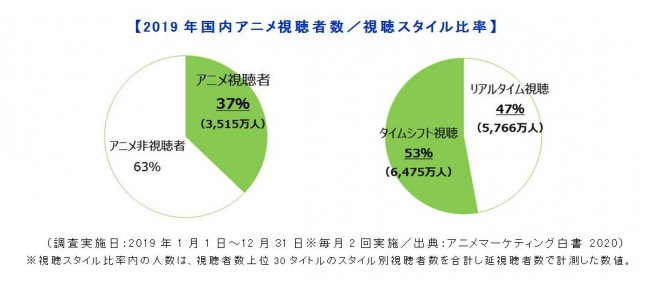
Animation also benefits from broad audience appeal. In Japan and many other markets, animated content is enjoyed by people across multiple generations. Because audiences are already familiar with and receptive to animated storytelling, branding messages delivered through animation can often feel more approachable and engaging than traditional corporate videos.
For companies looking to communicate their mission, values, or long-term vision in a way that resonates emotionally with viewers, animation can be an especially powerful branding tool.
Source: Anime Marketing White Paper 2020 “Survey on Consumer Trends in the Entertainment Sector” – KADOKAWA Game Linkage Co., Ltd.
Based on this trend, branding videos that utilize animation have the potential to resonate with a broader audience than traditional live-action content. Because animated storytelling is familiar and widely enjoyed across multiple age groups, it can make branding messages more engaging, approachable, and memorable.
Establishing characters opens the door to IP-based business opportunities
One of animation's greatest advantages is the ability to create original characters that become closely associated with a brand. In addition to featuring people, products, or services, animated branding videos can introduce original mascots or characters that serve as long-term representatives of the company.
At first glance, creating an original character may seem costly and time-consuming. While character development does require an upfront investment, a successful character can continue delivering value long after the initial production is complete. Over time, these characters can foster familiarity and emotional attachment among consumers, strengthening brand loyalty and potentially increasing customer lifetime value.
A major advantage of creating your own character is ownership. Unlike influencers, celebrities, or spokespersons, a company-owned character can be used indefinitely without concerns about contract renewals, career changes, or shifts in public image. The character becomes a brand asset that can evolve alongside the company.
As brand recognition grows, these characters can be utilized beyond video content. They can appear in advertising campaigns, social media content, events, packaging, and promotional materials. Companies may also explore collaborations with other brands or expand into merchandise and licensing opportunities.
This approach can eventually lead to the development of an intellectual property (IP) business. In industries such as animation, gaming, and publishing, character-based merchandise often represents one of the largest revenue streams. Once a character gains popularity, it can be leveraged across a wide range of products and experiences, extending its value far beyond its original role in a branding video.
Well-known examples include Hello Kitty from Sanrio and Mickey Mouse from The Walt Disney Company. These characters have become brands in their own right, generating recognition and value across countless products and media channels.
In many ways, a successful brand character functions like a long-term brand ambassador—one that never ages, changes careers, or retires. For companies seeking to build lasting brand recognition, this can be one of the most compelling advantages of animation-based branding.
For more information on how businesses can effectively develop and utilize original characters, please refer to the article below.
Easier to communicate concepts that are difficult to portray in live-action
Animation offers a level of creative freedom that is difficult to achieve with live-action video. Because every visual element is created from scratch, brands can communicate ideas, concepts, and emotions in ways that would be challenging, impractical, or expensive to film in the real world.
For example, animation makes it easy to visualize complex product structures, abstract concepts, future technologies, or processes that cannot be captured with a camera. It also allows creators to precisely control character expressions, movements, and narration, making it easier to communicate subtle emotions or nuanced messages.
Another advantage is the ability to create a distinctive visual style and world that reflects the brand's identity. Whether the goal is to create a futuristic atmosphere, a playful aesthetic, or a highly stylized narrative, animation provides far greater flexibility than live-action production.
This creative freedom is one reason animation is frequently used not only for branding videos but also for music videos, explainer videos, and promotional campaigns that rely on unique visual storytelling.
More cost-effective than live-action production
Many companies recognize the value of video marketing but hesitate because of the perceived cost of production. Live-action videos often require a large team and extensive logistical planning, including casting, location scouting, filming, lighting, audio recording, and post-production editing.
For branding videos, where production quality is particularly important, these costs can increase even further.
Animation offers an alternative that can often deliver high production value while reducing many of these logistical challenges. Because there is no need to hire actors, secure filming locations, or coordinate large production crews, animation can often be produced more efficiently and with greater budget flexibility.
At the same time, animation retains many of the strengths that make video such an effective communication tool, including storytelling, emotional engagement, and visual impact.
Depending on the style and production method, costs can be reduced even further. For example, some companies choose to work with independent animators or smaller animation studios to create high-quality content at a lower cost than traditional live-action productions.
Easy to revise and continuously improve
One of the greatest advantages of animation in the digital age is its flexibility after publication.
Online marketing increasingly relies on performance data and continuous optimization. Brands regularly analyze viewer behavior, engagement rates, and conversion data to improve their content and maximize results. In this environment, the ability to make revisions efficiently is a major advantage.
Animated videos are particularly well suited to this approach. Individual scenes, graphics, text, narration, and branding elements can often be updated without rebuilding the entire video from scratch. Creating multiple versions for different audiences, platforms, or campaigns is also relatively straightforward.
By contrast, updating a live-action video often requires additional filming, new production staff, and the coordination of actors and locations. In some cases, if significant time has passed since the original shoot, recreating the footage may require an entirely new production.
For companies that want to continuously test, refine, and improve their content based on performance data, animation provides a highly adaptable solution. As a result, it can be an excellent choice for long-term branding strategies that require ongoing optimization and content updates.
In addition, the growing availability of cloud-based animation tools and online production platforms has made it easier than ever for companies to create, manage, and revise animated content in-house. For organizations focused on digital marketing and continuous improvement, this flexibility can be a significant advantage.
More memorable and visually distinctive
One of animation's greatest strengths is its ability to create memorable experiences that stay with viewers long after they have finished watching. Because every aspect of the visuals—from the characters and environments to the colors and motion—can be designed specifically for the brand, animation offers a level of creative control that is difficult to achieve with live-action video.
Animation also makes it possible to depict imaginative scenarios, stylized worlds, and visually striking concepts without the limitations of physical locations, props, or real-world constraints. In live-action productions, achieving similar effects often requires extensive CGI and visual effects work, which can significantly increase production costs and complexity.
With animation, however, these creative possibilities can be incorporated directly into the production process, allowing brands to create unique visual identities and storytelling experiences that stand out from competitors.
This flexibility not only helps capture attention but also improves brand recall. Distinctive characters, visual styles, and animated storytelling techniques can leave a lasting impression on viewers, making it easier for them to remember the company, product, or message long after the video ends.
As we've seen, animation offers a wide range of benefits for branding, from communicating complex ideas and reducing production costs to creating memorable brand experiences. However, animation is not a single style or format. There are many different types of animation, each with its own strengths and ideal use cases.
In the next section, we'll explore some of the most common animation styles used in branding and marketing videos and examine the situations in which each one is most effective.
Types of animated videos
When we talk about using animation for branding, we're not referring to a single style of video. Animation encompasses a wide range of formats, each with its own strengths, production requirements, and ideal use cases. The best choice will depend on your branding objectives, target audience, budget, and distribution channels.
The table below provides an overview of some of the most common animation styles used in branding and marketing, along with their typical production costs, timelines, and recommended applications.
Animation Type
Typical Budget
Production Timeline
Best Use Cases
Slideshow Animation
¥100,000–¥300,000
1–2 weeks
Product introductions, company overviews
Motion Graphics
¥400,000–¥2,000,000
1–2 months
Explaining complex products or services
Whiteboard Animation
¥500,000–¥1,000,000
1–1.5 months
Sales videos, educational content, training materials
Character Animation
¥500,000–¥1,000,000+ (plus character design costs)
2–3 months
YouTube content, social media campaigns, short-form advertising
Game promotions, artist music videos, entertainment branding
While these figures can vary depending on complexity, animation style, and production quality, they provide a useful starting point when considering a branding project.
For example, companies looking to explain a complex service may benefit most from motion graphics, while brands seeking to build a long-term identity around an original mascot may find character animation more effective. Organizations focused on brand storytelling and emotional engagement often choose full animation, while short-form animations are particularly well suited to today's social media platforms.
Choosing the right animation style is one of the most important decisions in the production process, as it directly affects not only the budget and timeline but also how effectively your branding message is communicated.
For a more detailed look at the animation production process and tips for selecting the right production partner, please refer to the article below.
Examples of animated branding videos
As we've discussed throughout this article, animation is particularly effective at telling stories that engage viewers emotionally and leave a lasting impression. More than any specific visual style, the success of a branding video depends on the strength of the story it tells and how effectively that story communicates the brand's values, vision, and personality.
For this reason, the foundation of any successful branding animation is a well-crafted narrative. A compelling story helps viewers connect with the brand on an emotional level, making the message more memorable and impactful.
So what does an animated branding video actually look like in practice?
Let's explore some examples of animated branding videos and examine how different companies use animation to communicate their identity, build trust, and create stronger connections with their audiences. By understanding the storytelling techniques and creative approaches used in these examples, you can gain a clearer picture of how animation can support your own branding efforts.
One example is Project Young, an event built around the message that "if you never give up on your dreams, fiction can eventually become reality." The promotional video for the event leverages the full creative potential of animation to bring this concept to life, using visual storytelling to inspire viewers and strengthen the event's identity.
By creating a world that would be difficult to portray through live-action alone, the animation helps communicate the event's vision in a more emotional, memorable, and engaging way. This demonstrates how animation can do more than simply explain a concept—it can elevate a brand message and create a stronger connection with the audience.
For more details about this project, please visit our portfolio page.
In addition to traditional branding animations, we also recommend incorporating short-form animated content designed specifically for platforms such as TikTok, YouTube Shorts, and Instagram Reels. These platforms have their own viewing habits and content formats, and videos that are optimized for short-form distribution can help brands reach new audiences more effectively.
Short animated videos are particularly useful for:
Increasing brand awareness through social media
Introducing products and services in a concise format
Building engagement with younger audiences
Expanding the reach of larger branding campaigns
Creating shareable content that encourages organic distribution
By combining long-form branding animations with platform-specific short-form content, companies can create a more comprehensive video strategy that strengthens brand recognition across multiple channels.
For examples of short animated videos and guidance on how to use them effectively, please refer to the article below.
Marketing Perspective in Japan: Beyond Just Creation
NOKID provides creative planning and production for PR using characters, events, and video content. Effective videos balance business and creative perspectives, e.g., short clips optimized for TikTok, designed to capture attention in the first 2–3 seconds.
For first-time animation or PR-focused content, feel free to consult with us.
Tokuma Kanna
Founder and CEO of NOKID Inc., a premier creative studio specializing in short-form animation and graphic design. With a focus on narrative-driven visual storytelling, he has spearheaded high-profile projects across the global entertainment landscape. His portfolio includes the acclaimed VALORANT: YORU TYPICAL DAYS cinematic, the Hatsune Miku x Seven Premium 15th Anniversary campaign, and Koda Kumi’s music video "100 no Kotoba-tachi e." As a leading producer in the PV and MV sectors, Tokuma continues to redefine the intersection of animation and contemporary digital media.