Oita Prefectural College of Arts and Culture is a public junior college offering both arts programs—including the Department of Fine Arts and the Department of Music—and humanities programs, such as the Department of International Studies and the Department of Information and Communication.
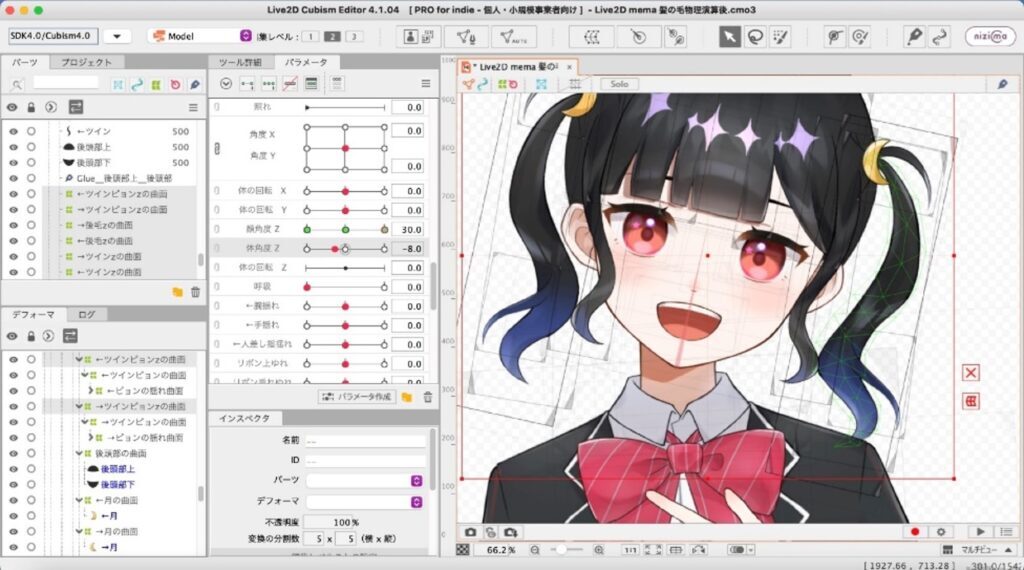
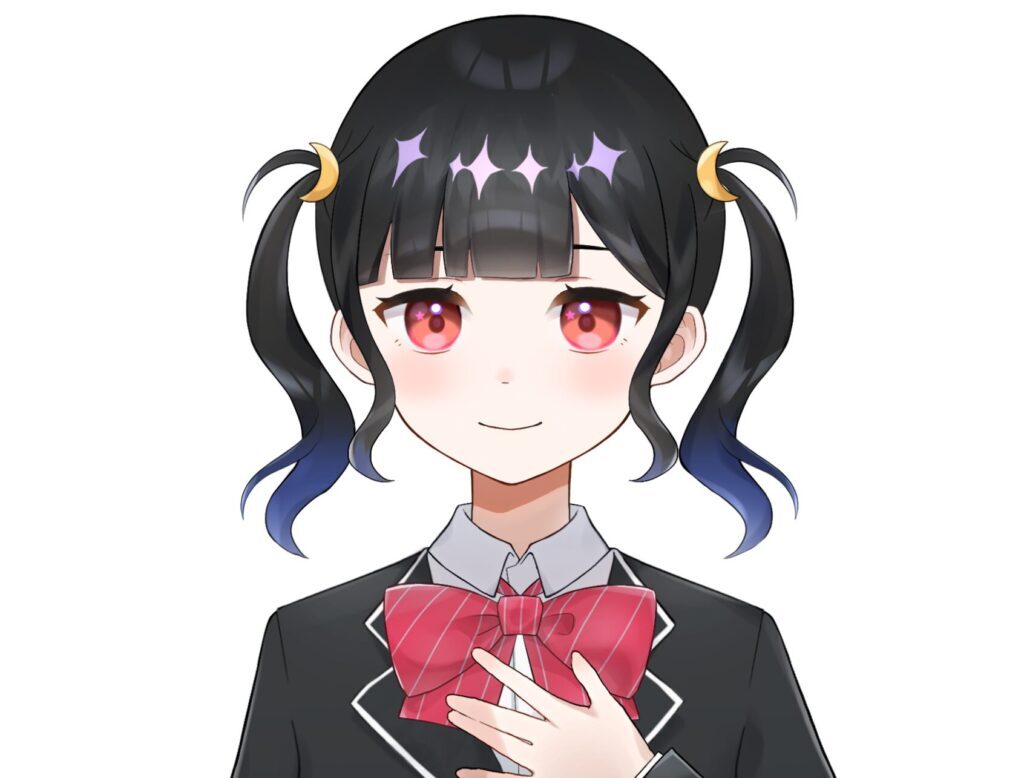
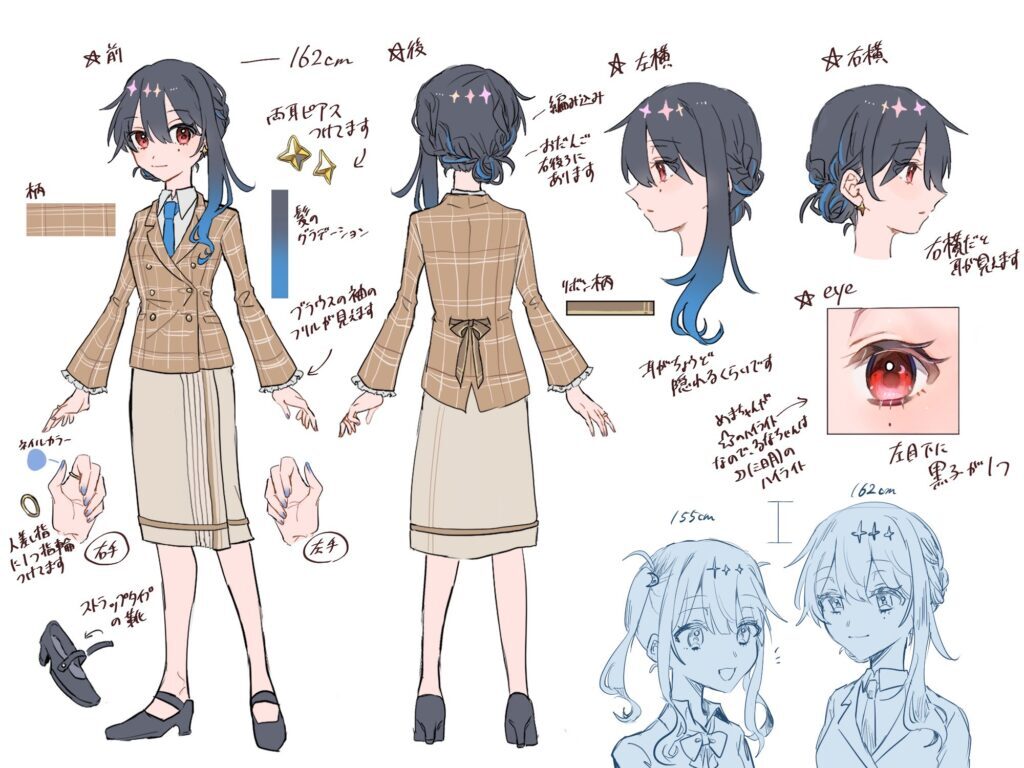
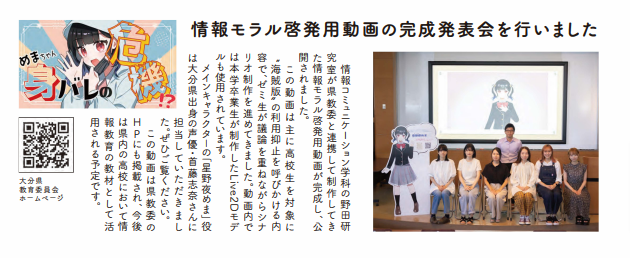
For this project, we created an explanatory animation using Live2D model assets of “Yome Hoshino,” the official mascot of the “Noda Laboratory” in the Department of Information and Communication.
By conveying specialized knowledge about industrial property rights through an “explanatory animation featuring characters,” we were able to create an opportunity for this information to resonate with younger audiences.
Furthermore, through our collaboration, we were able to provide the students who participated in the project with an opportunity to gain a deep understanding of the animation production process. This experience served as a catalyst, sparking greater interest in animation production among the students and leading to a surge in animation-related activities on campus.
Therefore, for this article, we interviewed Associate Professor Noda, the project leader who created this wonderful opportunity to turn the process itself—rather than just the final video—into a learning experience.
[Challenges]
・As this was our first time outsourcing video production, we had many questions
・We couldn’t find a provider that could meet our specific needs
[Request]
・Production of explanatory animated videos for our specialized field using our existing original characters
[Results]
・Even as first-timers, we were able to move forward while resolving any questions as they arose
・Since animated content is more accessible than live-action, we received positive feedback
・As a result, this became the catalyst for larger projects and the development of a new brand identity
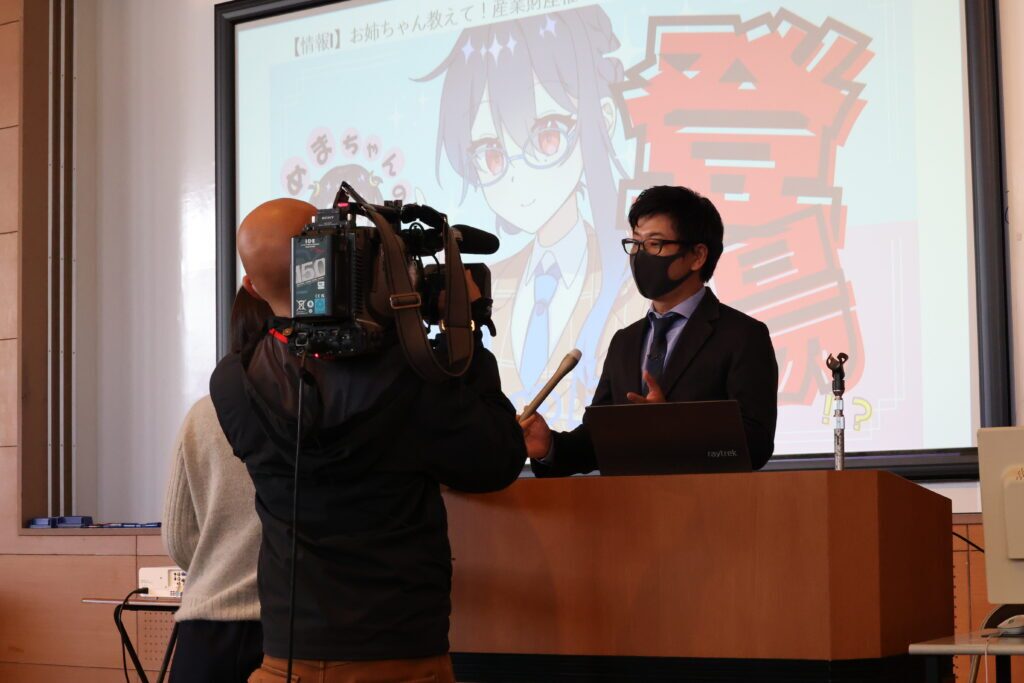
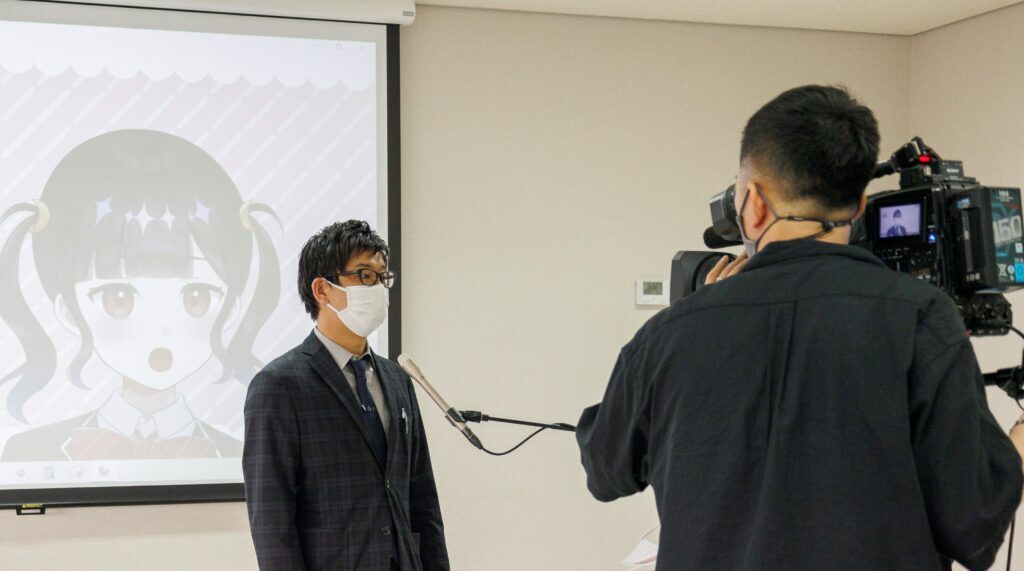
An interview with Associate Professor Noda of Oita Prefectural College of Arts and Culture
NOKID Hirano
“Nice to meet you. Today, I’d like to hear about your experience commissioning video production from our company.”
Nice to meet you.
NOKID Hirano
“Was it around 2022 when you first commissioned us?”
I suppose that’s technically correct. We commissioned our first project in 2022. And we’ve been working together ever since.
NOKID Hirano
“I understand you’ve now completed your second project and are planning your third—thank you very much.”
Thank you very much as well.
"Could you tell us again about the situation at that time?"
“When we first received the request in fiscal year 2022, our goal was to collaborate with Oita Prefecture to produce a video on information ethics in our laboratory.
We received a grant from Oita Prefecture to produce the video, but since this was our first time doing something like this, we weren’t sure who to turn to for help.”
"Why did you decide to create an explanatory animated video?"
“Since we already had a character in the lab back then, we decided to feature that character. We wanted to create videos aimed at high school students (and young people in general), so we thought using the character would help make the videos more accessible. We wanted to have fun creating videos together as a group of students, working on the script and character design ourselves.”
Source: Noda Laboratory, Oita Prefectural College of Arts and Culture
"So, since an alumna from my seminar had just created a Live2D model for me at the time, I thought, 'Hmm, maybe I could find a way to make use of this character.' Around the winter of 2021, I started looking for a place where I could produce an animation that would showcase the character."
"How did you find our company?"
“First, I needed to get some quotes, so I searched online for various companies.
As expected, there aren’t many options like that in my home region (Oita Prefecture)... So, to find potential candidates in Tokyo, I focused my search on websites that compile quotes from video production companies.”
"Were there several other companies you considered?"
I reached out to various companies and received quotes from a few of them, but...
I suppose the sheer number of requests—like using Live2D or hiring a voice actor from Oita Prefecture for the character voices—was a hurdle, because NOKID was the only company that could create the kind of video I envisioned within my budget.
NOKID responded with a cheerful “Sure, no problem!” and I thought, “Oh, great!”
Since we’d been turned down by every other company, I was incredibly relieved. Thank you so much. That’s how it all went down.
NOKID Hirano
"You really did a lot of research, didn’t you?"
"I did look around quite a bit. I filled out the contact form with detailed requests and sent it off multiple times."
NOKID Hirano
"Thank you. At the time, there weren’t many videos that combined Live2D visuals with animation, but when Mr. Noda approached us, we thought it was an interesting project and wanted to do our best to meet his request.
We already had experience using Live2D for VTuber-related projects and creating animations, so combining those elements was a new endeavor for us, but we were like, 'Let’s do this right away!' (laughs)"
"It wasn’t just that there wasn’t anywhere else that could meet our needs; at the time, NOKID’s portfolio page was filled with illustrations by their partner artists, and those were very popular with students. We thought, “It would be great if they could do something like this,” which is another reason we asked them."
"What made you decide to commission us?"
NOKID Hirano
Before you commissioned us, did you have any concerns or worries about the project? I assume the basic premise was that there was no one on campus who could create it.
I think students could make a video on their own, but... well, they didn’t have any experience with animation. We were absolutely set on using characters from the start.
Source: Noda Laboratory, Oita Prefectural College of Arts and Culture
However, since we’d never done anything like this on campus before, and given that we were collaborating with Oita Prefecture, I felt we needed a level of quality that could be promoted nationwide. So I thought, “We really have no choice but to hire professionals for this.” When I actually started looking for a contractor, I got the impression that there weren’t many companies willing to take on this kind of project.
"What was the biggest hurdle?"
"Since this was our first time producing an animation, the biggest hurdle was simply that it was our first time. We had no sense of market rates, and we had absolutely no idea to what extent our requests would be accommodated, so I was definitely a bit overwhelmed at first.
However, in terms of the video’s content, having been involved in education for many years, there was something I’d always wanted to convey. I wanted to give that a concrete form as the theme. I also wanted to do this “together,” so I planned to use Live2D characters created by students and have the students take the lead in writing the script.
If I had just written the dialogue and script myself, it probably wouldn’t have worked. Since this was a video aimed at young people, I felt I needed to come up with dialogue from their perspective, so I had to find a company that would listen to those kinds of requests."
NOKID Hirano
"I suppose our flexibility was a plus. In fact, I remember it being very easy to work with you because you clearly articulated your requests."
"Since there were so many specific requests like that, I think we were probably different from a typical client. That’s likely why there weren’t many companies that could accommodate us."
"Did you also consider producing a live-action video without using characters?"
"Part of it is that I’m a fan of subculture, but our seminar also attracts quite a few students who love anime. Since we’d spent years developing a single character, we really wanted to give them a debut, so we all agreed to “go with anime.”
Live-action would have been a bit… (It has a visually conservative image, and with such a specialized theme, it would have been difficult to attract an audience in the first place.)
(Unlike live-action) I also think it’s great that you can’t see the character’s face. Plus, having a character we can use freely right here in the lab is really convenient—it makes it easy to incorporate them into all sorts of projects."
NOKID Hirano
"We also really emphasize those benefits at our company, so it makes the collaboration much smoother when you understand that from the start."
"That’s great to hear. Thank you."
"Has commissioning our company brought about any changes on campus?"
As I’ve mentioned in various places, when you involve students in creative activities, they really do get inspired.
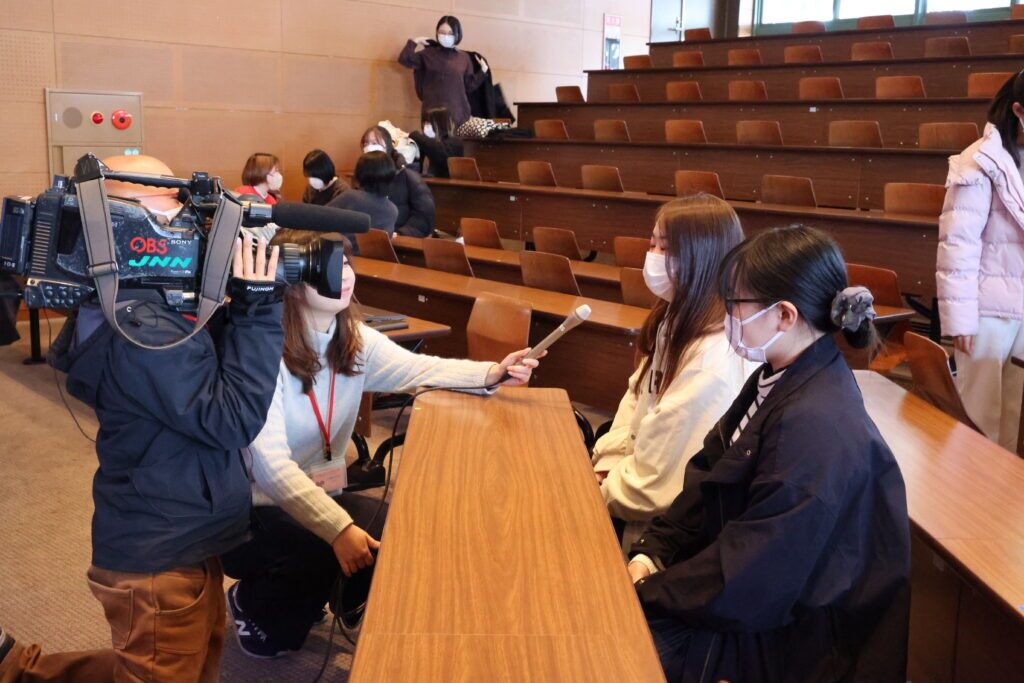
Source: Noda Laboratory, Oita Prefectural College of Arts and Culture
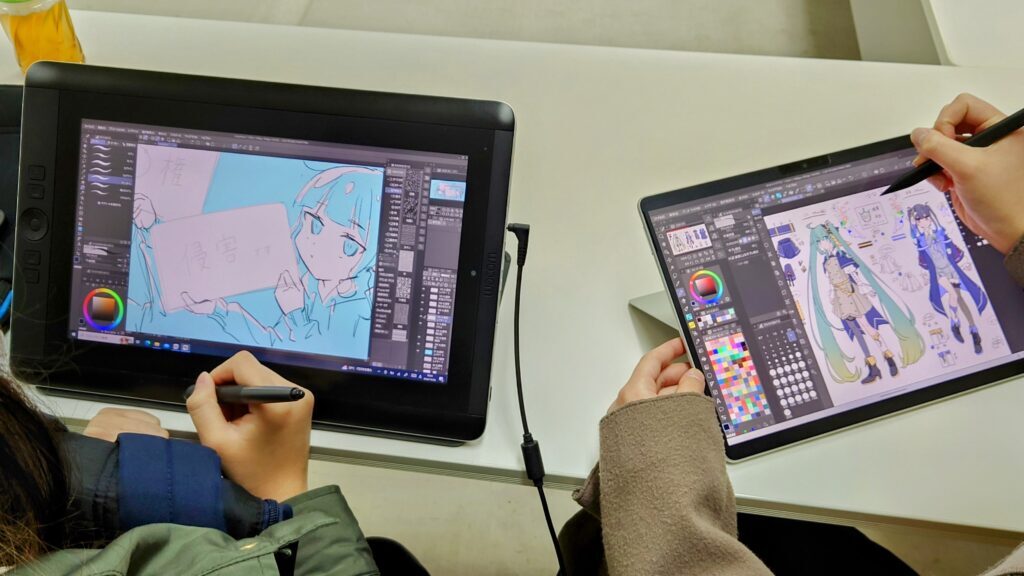
This has led to an initiative where students identify problems on their own and create animations to solve them. For their graduation projects, they create educational animations.
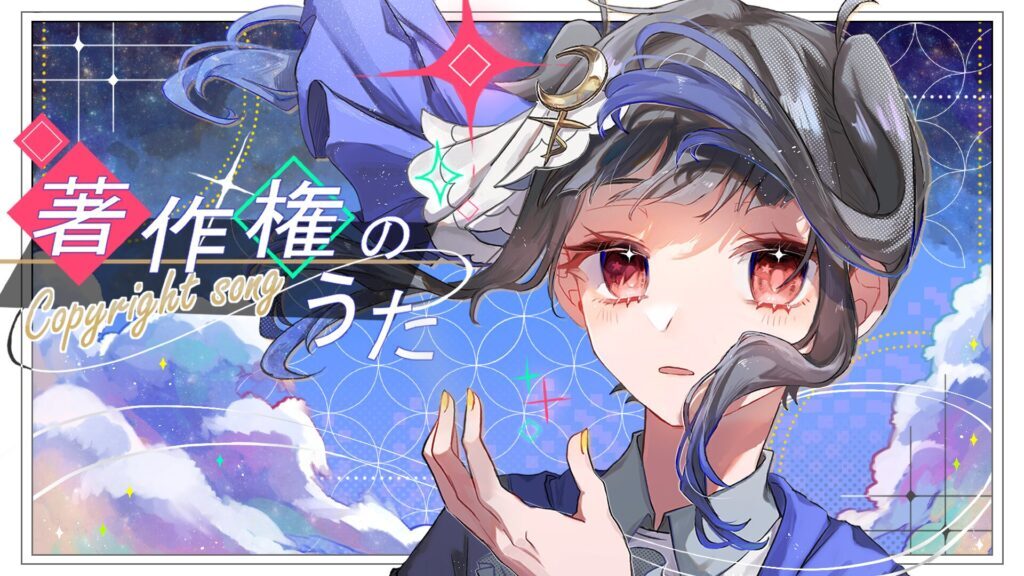
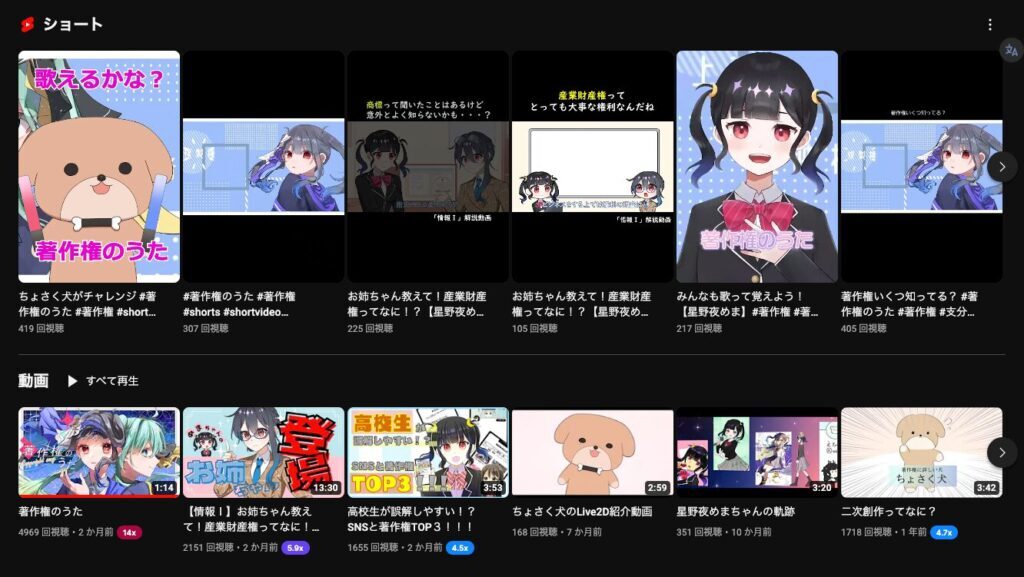
For example, as was recently reported in the news, students created a YouTube video and song titled “The Copyright Song” using Vocaloid.
“A trend has emerged where students take the initiative to produce videos on their own”
(Working with professionals) really sparked our motivation, so we’re entering the National Police Agency’s Cybercrime Prevention Volunteer Public Awareness Contest to see just how far we can go on our own.
The contest began last year (2022) and involves creating a 30-second awareness video based on a given theme. Last year, the members who created our first video submitted it for the first time, and we were selected for the Commissioner’s Award (Best Work) for two consecutive years, both last year and this year.
"The video production and voiceovers definitely have a very DIY feel to them (laughs)
However, we were recognized for our attention to detail—starting from drawing about 10 illustrations per second and animating them with care.
It’s incredibly hard work, but as the students get involved in the production and deepen their understanding of the creative process, I think it sparks a desire in them to say, “We want to do this too.”
These are things you can’t understand unless you experience video production firsthand, so I feel we’re gaining some truly valuable lessons."
NOKID Hirano
"That’s wonderful to hear. Thank you so much. The students were involved in the production process from the very beginning—from brainstorming and planning to scriptwriting, storyboarding, and even checking the illustrations."
"We’re doing this as part of our educational program. While the final product is important, I believe the process itself is what really matters. This fiscal year (2023), we were selected by the Mitsubishi Mirai Development Foundation to participate in their educational program."
“Students told us upon graduation, ‘I’m glad I had this experience’”
Source: Noda Laboratory, Oita Prefectural College of Arts and Culture
“What we did in the seminar last year (2022) was really great,” the students told me as they were graduating. Everyone said, “I'm so glad I had this experience.”
Source: Noda Laboratory, Oita Prefectural College of Arts and Culture
Since it’s a junior college, the program flies by in the blink of an eye. Students are assigned to their graduation research projects only after entering their second year, so they have just one year to work on them. Despite that, she said, “I was happy that they gave me an experience that no one else could have.”
Source: Noda Laboratory, Oita Prefectural College of Arts and Culture
Because it was clear that the experience had left a strong impression on them, I decided I definitely wanted to offer it as an educational program again this year (2023), so I applied to the Mitsubishi Mirai Foundation for Youth Development and was selected.
We place a great deal of importance on the creative process, so I asked NOKID to go out of their way for us...
Source: Noda Laboratory, Oita Prefectural College of Arts and Culture
“Please let the students join the meeting.”
“Please give me a little time to review the storyboards and illustrations.”
I would step in, make sure all the students saw the work, organize it, and then convey the necessary revisions. I believe this approach allowed the students to learn for themselves how to manage production projects and what aspects are most important.
“Students gained valuable experience by participating in the project”
“This makes me really happy—I’m sure other companies would have turned us down. I’m so grateful that you were willing to accommodate our request. I believe our proposal was selected because this approach was recognized as innovative, so I hope initiatives like this will become more widespread.”
NOKID Hirano
“I think being able to actually participate in a professional setting is a fantastic experience for students, so it’s an honor for our company as well.”
“As for the script, we reworked the dialogue dozens of times...
Watching it turn into storyboards and gradually take shape brings all sorts of discoveries—like realizing, “Oh, so this is how it turns out.” I often find that professionals have a different perspective.”
Source: Noda Laboratory, Oita Prefectural College of Arts and Culture
“As with the video segment, this approach really makes things easy to understand, so it’s been a great learning experience.
Also, during the recording, we connected online, and the student who came up with the initial character designs joined our meetings so we could share our vision—I think that’s probably been a very valuable learning experience as well.”
NOKID Hirano
“Turning even a production request into an educational opportunity—that’s a testament to Mr. Noda’s skill.”
“It’s as if he’s determined to involve the students in some way, and having actually experienced it, I feel it has truly become an excellent educational program.”
Source: Noda Laboratory, Oita Prefectural College of Arts and Culture
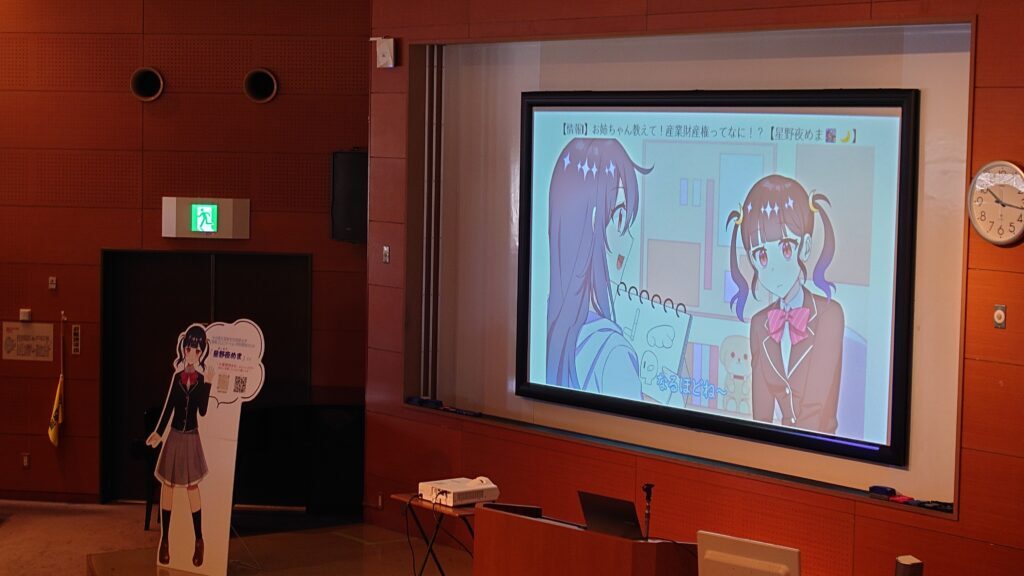
"We’ve been sharing the explanatory animation we created this time in various places, and it’s been getting a great response. It’s something new, after all.
Since I specialize in fields like intellectual property and information ethics, I think it pairs really well with creative work. Issues like rights and how to communicate them are crucial aspects. I’d like to keep doing this in the future."
NOKID Hirano
"It’s gotten to the point where making the video isn’t even the main goal anymore (laughs)."
"Yes, I think the process is incredibly important. We’re currently in the phase of spreading the finished product—showing it to as many people as possible—and I find that part interesting too. The students seem really happy about it, too. It’s great that so many people are learning about it, and we’re actually getting a positive response."
Source: Noda Laboratory, Oita Prefectural College of Arts and Culture
"It’s really encouraging that people in the industry and government officials are taking notice. We’re still creating and distributing cards and flyers to spread the word."
"What results and feedback did you receive from creating the explanatory animation?"
Source: Noda Laboratory, Oita Prefectural College of Arts and Culture
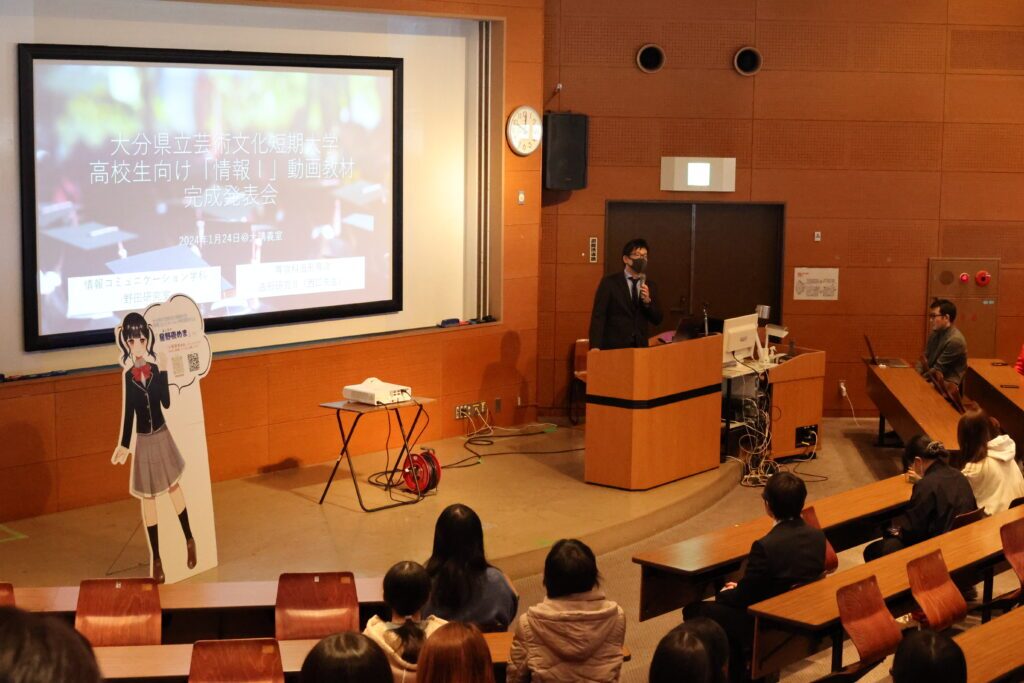
"The other day, after presenting the explanatory animation we created at a conference, a representative from a textbook publisher approached us about including it in their publications.
There seem to be a few hurdles to overcome, but since this might actually come to fruition, I think the students would feel a great sense of accomplishment if it leads to this kind of real-world application."
NOKID
"That’s true. Explaining things through animation makes even difficult topics more accessible, doesn’t it?"
"Yes, it really is the power of animation. With live-action footage, it’s a bit different… There are many educational and explanatory videos out there in this field, but many of them feature experts speaking in front of slides, so I think beginners often find them a bit daunting to watch.
The video we commissioned from NOKID—because it was developed with students at the center—presents the content from a student’s perspective, and since it was produced by professionals, I believe it’s become something we can confidently recommend to a wide range of audiences. Thank you very much."
NOKID
"I believe we originally produced this for high school students and other students. What was the reaction from the students who actually watched the video?"
"Since the video we produced this time was just released in January, we plan to have it put to practical use going forward.
We created this in consultation with teachers who teach computer science at high schools in the prefecture, so I’d like to see how these stakeholders react to the video once they start using it."
“Starting with the second video, we were able to tackle larger projects”
"I review the work as a patent attorney myself, but we’ve also had other professors provide supervision on the scripts and such—so a lot of people are involved in the project. Unlike the first installment, which was our very first attempt, the second one became a large-scale project involving about 24 first- and second-year students working together."
NOKID Hirano
"Would you say that the success of the first video allowed you to expand the scale starting with the second one?"
"Yes, exactly. We really felt that it was only because we had the first project that we could proceed in this way. It’s challenging, but I think it’s great that everyone is enjoying the process. Thank you.
We start with a blank slate and don’t know what the final product will look like, but as we get closer to completion, we’re like, “Wow!” There’s a tremendous sense of accomplishment with every step forward."
NOKID Hirano
"We also found it easy to move forward because our goals aligned—whether it was asking, “Does this align with our objective?” or “Is this the right way to express it visually?” The thing I’m happiest about is that we were able to strike a good balance with the students’ requests for review, thanks to Mr. Noda helping us adjust the schedule."
"What were the benefits of commissioning our company?"
"Yeah, I really think it’s great that we’ve been able to involve the students at key points throughout the process. I don’t think that’s something you can do anywhere else, so it was a really positive experience."
NOKID Hirano
"I imagine it was pretty difficult to align our visions when we first received the request. How did you go about doing that?"
"Since this was our second time working together, I don’t think it was that difficult this time, but the first time (our first project) was really tough because we didn’t have any experience either. We had plenty of requests, like “We want to use Live2D,” but we just couldn’t quite visualize what the final product would look like.
That’s where NOKID really stepped in to help us out—they addressed each of our questions one by one, and we moved forward after discussing things several times."
NOKID Hirano
"That’s right. We managed to hold several meetings. Since the video was intended for educational purposes, we wanted to keep the runtime to around 10 minutes, or definitely under 15 minutes.
First, we listened to your input, and then we discussed how we needed to keep the script length within that timeframe. Since this was for the education sector, we had Mr. Noda handle the script structure this time, and the education team worked to keep the text within the required length."
"That’s right. Then there was the matter of deciding on the illustration style. We had to start from scratch—looking for potential illustrators and deciding on the artistic direction—so that was a real challenge."
“Please tell us about the process of deciding on the illustration style and script.”
Source: Oita Prefectural College of Arts and Culture, Noda Laboratory (Student in charge of design: Nan)
"When it came to creating a video to explain a complex topic like copyright, we thought it would be best to use a cute, anime-style presentation that would be easy for viewers to enjoy. So, after consulting with NOKID, we selected the art style for this first video."
NOKID Hirano
"We started by creating the character designs specifically for the animation."
"That’s right. Since it was our first time creating characters, we received feedback along those lines. And since all the students loved the illustration style of the first video, I think we asked them, “Please use the same style for the second one too.”
Another reason might be that after releasing the first video, we were able to create a clear image of 'this is the kind of video we can make' and 'this is what text looks like when animated.'"
Source: Noda Laboratory, Oita Prefectural College of Arts and Culture
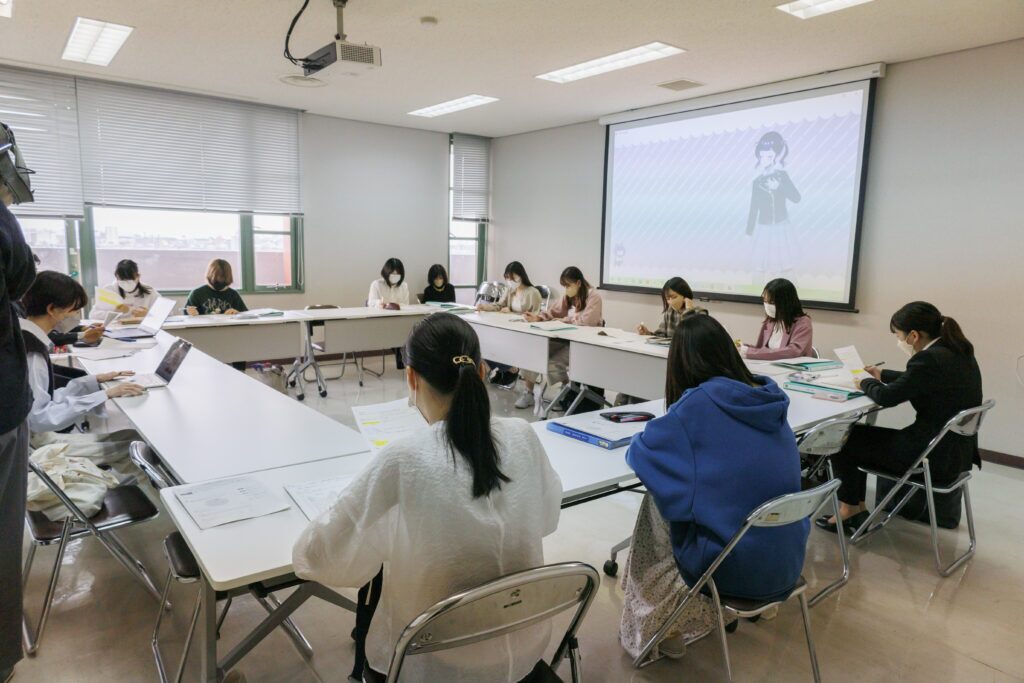
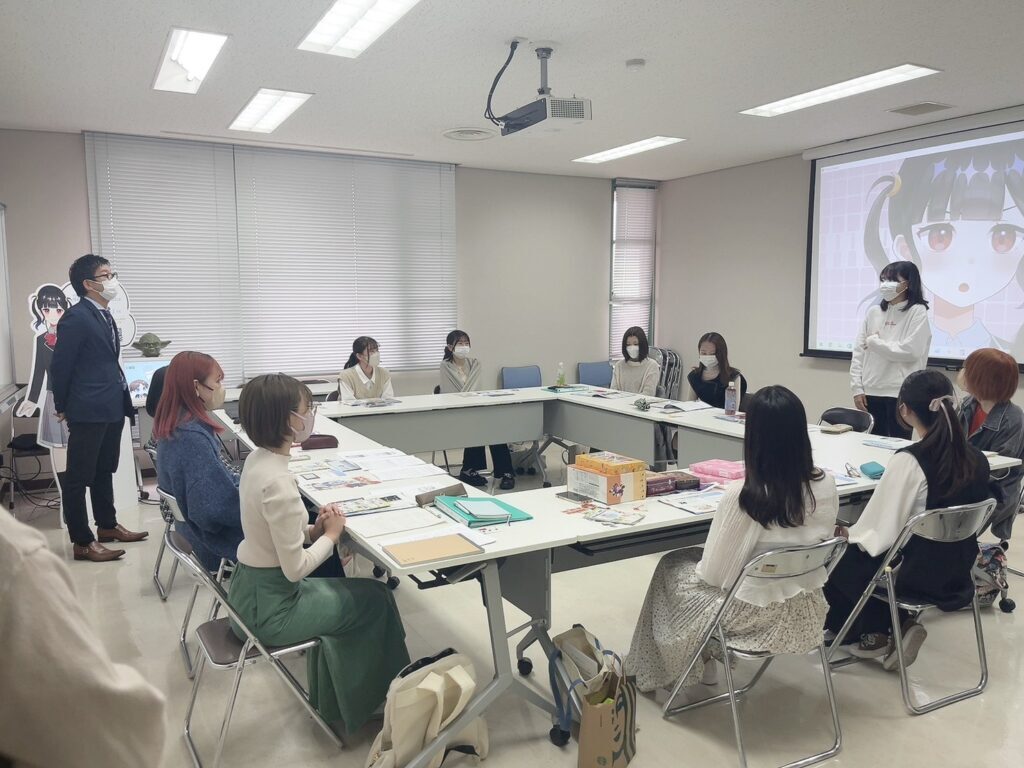
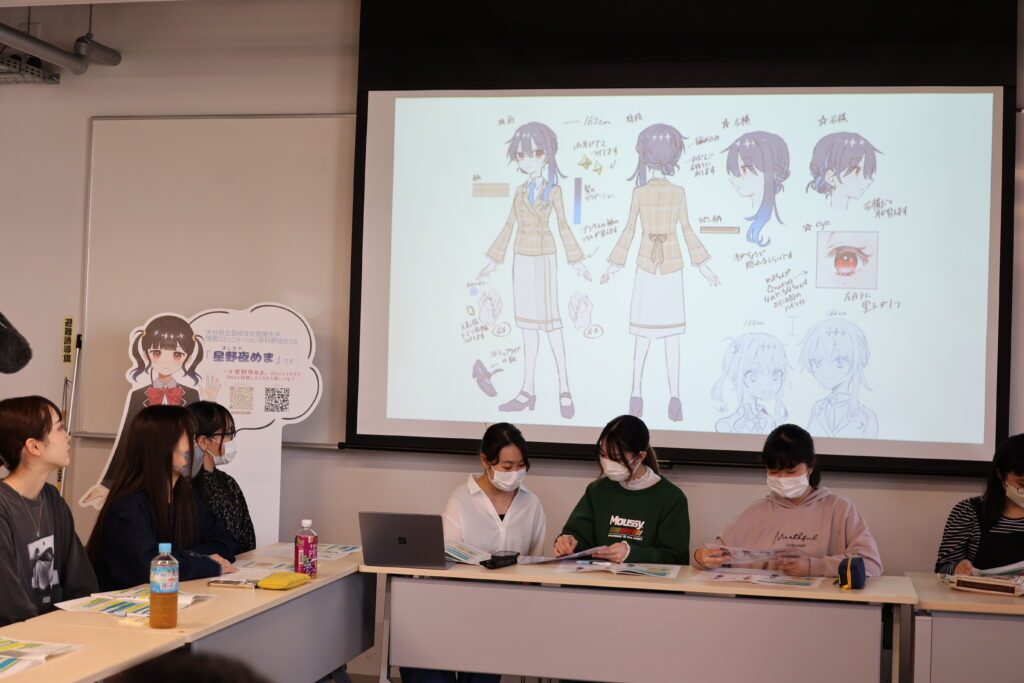
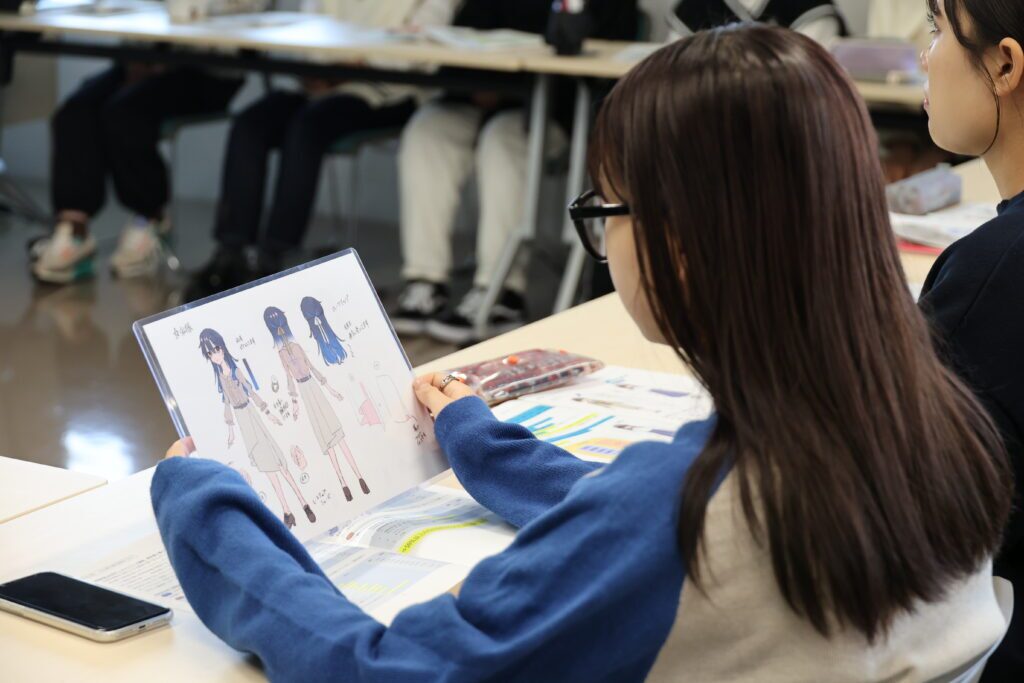
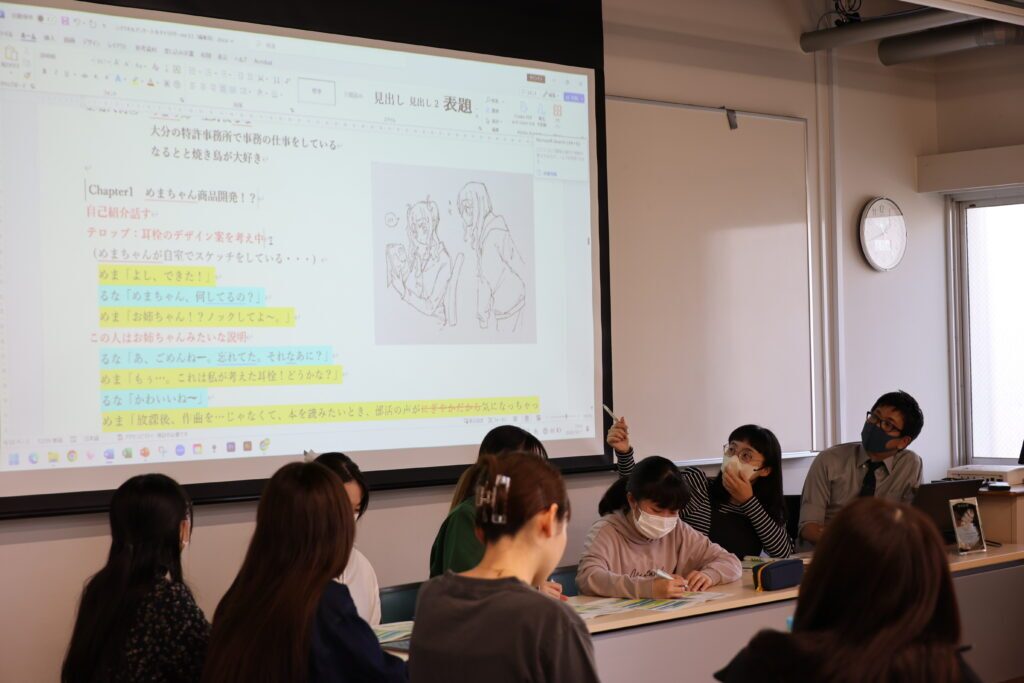
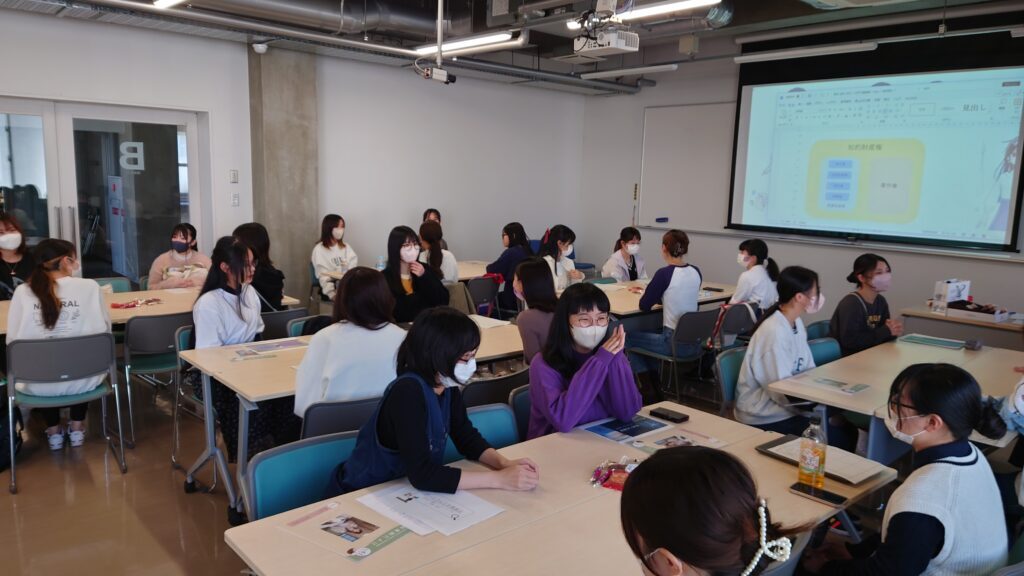
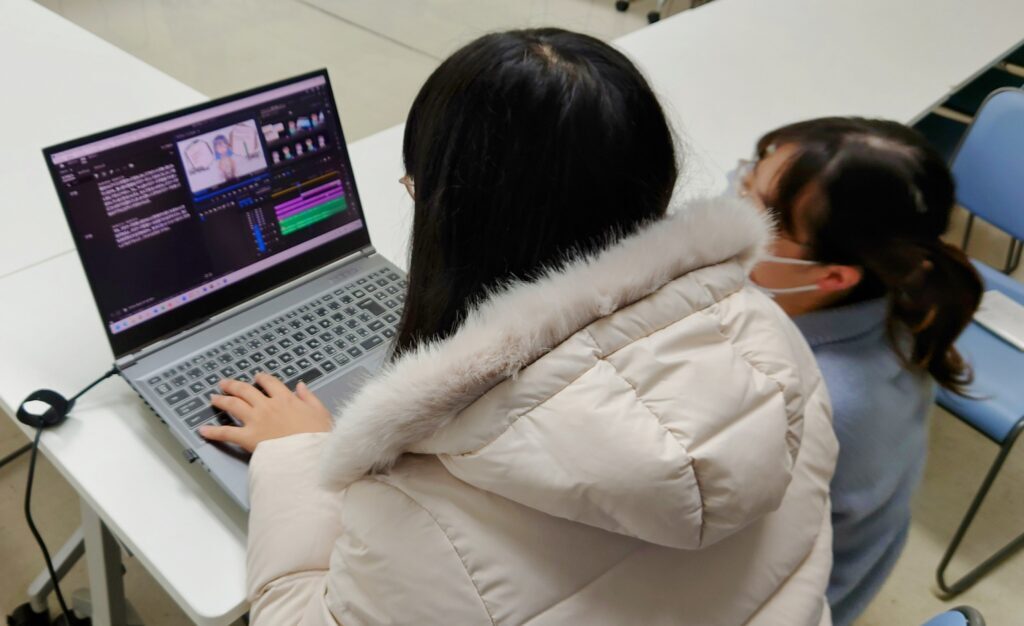
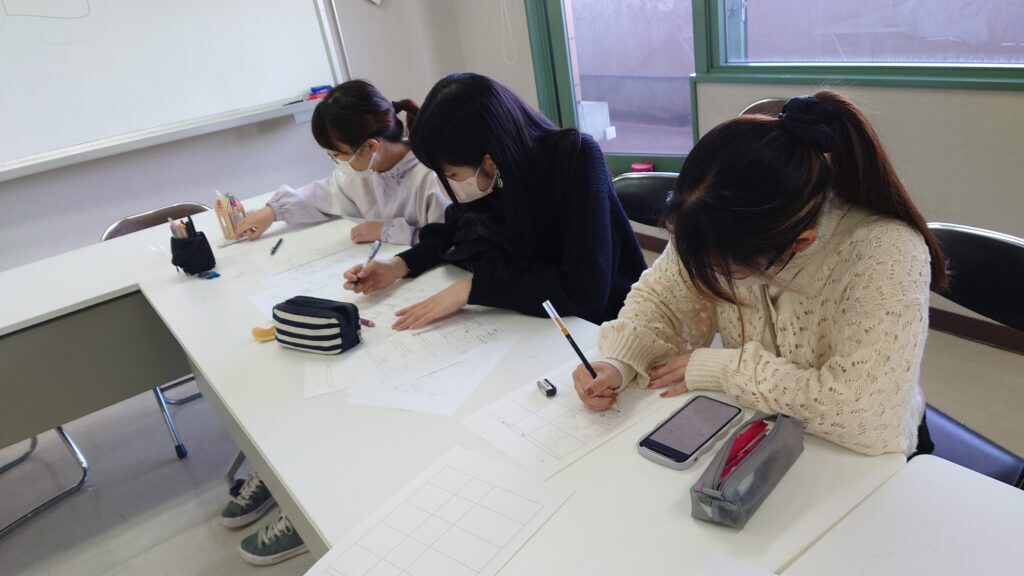
"You know, when we were discussing the script this time, we ended up making all sorts of revisions, but we were having our meetings like this. (See image above)
At this point, the character designs (for the characters newly designed by the students) were finished, and the script was mostly complete. Up until this point, the first- and second-year students had been discussing things separately, but we decided to try working together.
However, there were still a few spots where we just couldn’t agree on what to do."
Source: Noda Laboratory, Oita Prefectural College of Arts and Culture
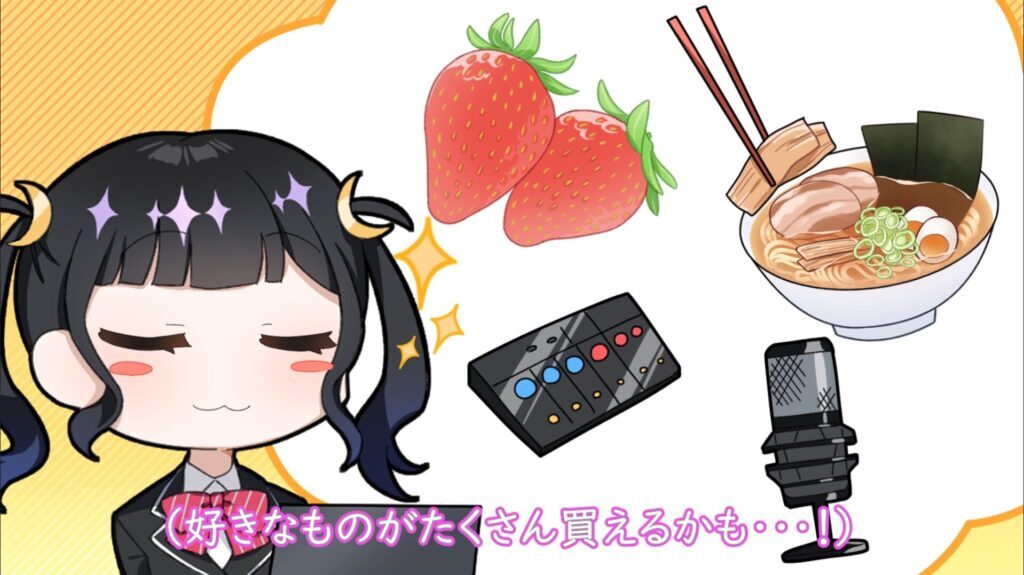
"For example, this might not be central to the educational content, but there’s a scene where Mema-chan (an original character) daydreams about buying things she likes. There were suggestions like strawberries—which Mema-chan loves—or equipment for her music activities, and the discussion turned to “Which one should she choose?”
There were various ideas, like eating a lifetime’s worth of strawberries, but one student suggested, 'Instead of putting that in the dialogue, since it’s a video, why don’t we just convey it all through visuals?'
When she said that, everyone agreed that she was absolutely right. We had been debating it using only text the whole time, so we realized that if we could effectively imagine how it would look once it became a video, our ideas would really expand.
I was really struck by the fact that a student was the one to voice this suggestion."
“The appeal of video is its ability to convey a wealth of information.”
NOKID Hirano
"That’s right. After all, videos are a combination of text, visual imagery, and audio."
"It really broadens the scope, I guess. Take the music video for “The Song of Copyright” we mentioned earlier—there are things you just can’t convey with lyrics alone, so you think, “Well, let’s convey that through imagery instead.”
I’m starting to sense that students are developing that kind of mindset now. It’s like 2D becoming 3D—I think it’s really great that their scope of thinking has expanded like that."
NOKID Hirano
"That’s amazing. You’re turning video production into a way to learn so many things."
"There’s so much to learn, really. I’m truly grateful that we’re able to do this. It’s not something you get to do very often."
“Going forward, we want to support students in taking the initiative to share their work and increase the number of explanatory videos”.
"Now that students are participating and we’ve produced two videos together—and I believe the students are even creating their own original videos—are there any other types of content you’d like to create in the future?"
"First of all, I’d like to make at least one more video next year.
The scope of the high school course 'Information ' alone is so broad that teachers find it difficult to cover, and there’s also the issue of a shortage of teachers to begin with.
While there’s plenty of content available on programming and related fields, there aren’t many explanatory videos covering topics like intellectual property rights or ethical considerations. Teachers in the field are really struggling with this.
For example, the video we spent a year creating covers the field of industrial property rights, but in a textbook, that topic only takes up about two pages.
So I feel there’s still a lot we can do and need to do. Therefore, for the time being, I’d like to continue this approach. I’d like to keep doing this as a project."
Source: Noda Laboratory, Oita Prefectural College of Arts and Culture
"Separately from that, I’ve noticed that more and more students are being inspired by these kinds of experiences. They want to use their creative work to convey a message to others—they don’t just want to learn at school; they want to share what they’ve learned and explain it in a way that’s easy to understand. I’d like to provide effective support for that.
I don’t see this as simply assigning tasks to students and telling them, 'Do this.'
Rather, I want them to use what they’ve learned at the university to identify for themselves what is currently needed and what issues society is facing, think about how to solve them, and take on those challenges on their own."
Source: Noda Laboratory, Oita Prefectural College of Arts and Culture
"I feel that we’re shifting from simply acquiring knowledge to a phase where we’re thinking about how to convey that knowledge, so I’d like to do my best to support this effort. I can’t draw illustrations myself (laughs), so I don’t think I can help with the creative work, but I’d like to do my best to support what you’re trying to achieve."
“We aim to establish a system that allows for content creation across departmental boundaries.”
NOKID Hirano
"It’s more like a space where students—or rather, high school students—can take action and share their ideas, something Mr. Noda is creating, right?"
"Exactly, exactly. That’s the idea. Of course, we’ll provide guidance and do our best to support them in spreading the word, but the main point is for them to discover their own goals, create their own work, and give it their all."
Source: Noda Laboratory, Oita Prefectural College of Arts and Culture
"Another thing: our college has four departments—Fine Arts, Music, International Studies, and Information and Communication. I’m in the Information Media course here (in the Information and Communication Department).
Since there are other departments on campus like Design, Music, and International Studies, I feel it would be really interesting if we could collaborate across these boundaries to create content together.
I’m thinking right now that creating content could really help build those horizontal connections."
NOKID Hirano
"It sounds like it could work, doesn’t it? Really. We’ve got everything we need."
"Actually, this year as well, I reached out to a design professor in the Fine Arts Department, and they agreed to join us. We’ve been working on a project there to produce video teaching materials covering information design and communication for the “Information I” course. So, an explanatory animation on the theme of information design will be released soon."(*Now available).
Source: Oita Prefectural College of Arts and Culture - YouTube
"Going forward, we plan to collaborate even more closely than we do now. Once the script is finalized, we hope to involve design students so they can offer their input.
Conversely, we’d also like to hold discussions about the videos our students are creating in the design field.
We hope to gradually break down these barriers so that, in the future, we can work together to develop educational materials."
“It was precisely because we commissioned the first video (to NOKID) that the scope of our activities expanded.”
NOKID Hirano
"So this commission led to all these activities, didn’t it?"
"I know I’m repeating myself, but it’s really because we had that first year.
It was precisely because we realized we could do something like this that it became a valuable experience for us. And having a tangible result makes it easier to explain things to others (about the next project). I really think it’s all thanks to that first commission."
NOKID Hirano
"If we hadn’t made it this far, we wouldn’t be doing this. There might not have been anyone willing to take on the commission."
"That really was the situation we were in, so it’s scary to think about it (laughs)."
NOKID Hirano
"That’s true. It might have ended up being a video with live-action actors instead."
"That’s true. It’s a good thing, really."
NOKID Hirano
"It’s true that when conveying a difficult theme like this one, if we hadn’t used animation, we might not have achieved this level of awareness."
"That’s right. It definitely became something that young people could relate to more easily. It’s a good thing. I think the field of information is a great fit for animation."
“What kind of companies do you think our services are best suited for?”
"I think they’re really well-suited for companies that want someone to guide them through their first project—someone who works alongside them and collaborates to find the best solution.
I used to imagine that when companies commissioned promotional work, the process would be a bit more impersonal.
But when I actually worked with NOKID, they were truly supportive and offered suggestions like, “How about trying it this way?” So I think they’re a great fit for companies outsourcing video production for the first time, or any business with unique needs.
They really thought through what was possible and responded thoroughly to our specific needs, which is why I believe this project was able to come to fruition."
NOKID Hirano
"Did you have the impression that, typically, they would just do exactly what you asked?"
"That’s what I thought. At the very least, I didn’t expect they’d let us involve students in this way. They accommodated our special requests, and we were truly grateful for that."
NOKID Hirano
"So, the biggest challenge was actually finding a partner to work with, wasn’t it?"
"I think that was the hardest part at first. Back then, I was completely exhausted from searching for partners. I was at the point where I thought it might be impossible, so I was really happy when this opportunity came up."
NOKID Hirano
"For us, too, being able to offer good proposals and deliver quality work gives us a bit of confidence, and I think it will help us move forward. We want to create even more fun and better content. Going forward."
"That’s true. Having fun is extremely important. Also, regarding the voice actors, there was the hurdle that it would be difficult to release the material as educational content unless the (video release) deadline was open-ended, but NOKID was able to resolve that for us as well."
“Through our commissions, we ensure that creators also have a wonderful experience.”
NOKID Hirano
"Amid requests such as 'We want to use the Live2D footage and characters we already had prepared' and 'We want to cast a voice actor from Oita,'Shina Shuto(Yukina Shuto) was deemed the perfect fit, so we went ahead and cast her.
When recording at the studio, Mr. Noda was present as well, and from our perspective, it truly felt like we were creating this together. The voice actress also told us she was eager to work on a project in Oita."
"That’s right. She even promoted it on social media, and the students were thrilled. I think it was wonderful that we all worked together to create this, that so many people were involved in making it a great project, and that we were able to share it with high school students."
"Thank you very much. We’ve been talking about your new approach internally, so I’m glad I had the chance to hear more about it. Thank you for the wonderful time."
"The pleasure was all mine. Thank you very much."
Animation is ideal for conveying concepts that are difficult to express through text alone and for providing clear, easy-to-understand explanations. We offer flexible support to ensure you feel at ease, even if this is your first time commissioning an animation project.
In addition to production, we’re available to consult with you from the very beginning—starting with proposals for storylines and character concepts. Furthermore, our directors, who have extensive PR experience, oversee each project to ensure the final product goes beyond mere production, taking into account the specific trends of each platform.
Marketing Perspective in Japan: Beyond Just Creation
NOKID provides creative planning and production for PR using characters, events, and video content. Effective videos balance business and creative perspectives, e.g., short clips optimized for TikTok, designed to capture attention in the first 2–3 seconds.
For first-time animation or PR-focused content, feel free to consult with us.
Tokuma Kanna
Founder and CEO of NOKID Inc., a premier creative studio specializing in short-form animation and graphic design. With a focus on narrative-driven visual storytelling, he has spearheaded high-profile projects across the global entertainment landscape. His portfolio includes the acclaimed VALORANT: YORU TYPICAL DAYS cinematic, the Hatsune Miku x Seven Premium 15th Anniversary campaign, and Koda Kumi’s music video "100 no Kotoba-tachi e." As a leading producer in the PV and MV sectors, Tokuma continues to redefine the intersection of animation and contemporary digital media.