Have you heard of the term “MV (Music Video)” that's been trending lately? Among these, videos called “Animation MVs” are drawing particular attention. While they're often confused with “PVs (Promotional Videos)” due to their similarities, their roles are distinct.
In recent years, many popular songs have adopted animation MVs. Animation MVs, which feel like watching an entire anime series, offer the major appeal of letting viewers not only enjoy the music but also immerse themselves in its worldview simultaneously.
This article addresses the question “What exactly is an animation MV?” by explaining the following:
Often confused with music videos (MVs) is the term “PV.” While their intended uses are technically distinct, they are sometimes grouped together. First, let's explain the difference between MVs and PVs.
The difference between MVs and PVs
PV stands for “Promotion Video” = a video created to promote a song
MV stands for “Music Video” = a video created to convey the worldview of a song
PV is short for “Promotion Video,” a video intended to promote or advertise something. For example, a common PV is the music used in TV commercials. By playing the chorus or other parts of a song that match the product's image, it serves to stimulate viewers' desire to purchase.
On the other hand, MV stands for “Music Video,” and as the name suggests, it is a video intended to convey music. MVs aim to visually communicate the atmosphere and worldview within a song. They often feature footage throughout the entire song, and videos made by bands for their fans typically fall under this category.
However, while the purposes of ‘MV’ and ‘PV’ are different, many people perceive them similarly. This is because parts of an MV are sometimes cut and used as a PV.
For example, suppose an MV is produced for an artist. To promote this release through advertisements, the MV might be edited into a shorter PV. In such cases, footage from the MV is often used. Essentially, footage created to convey the music's worldview is edited into promotional material for use as a PV.
Understanding the difference between MVs and PVs is crucial. Clarify the purpose for creating the video and determine which format is more suitable. This time, let's take a closer look at “Animation MVs.”
Why animation MVs are on the rise
As mentioned at the beginning, more companies and individuals are producing animated music videos and projects.
There are four primary reasons for this.
1. Mitigates risks associated with live-action filming
2. Widespread adoption of video editing software like Adobe
3. Easier to control costs and effort compared to live-action
4. Conveys a narrative using dynamic expressions
Let's explain in detail.
1. Mitigates risks associated with live-action filming
Recently, the spread of COVID-19 domestically has understandably heightened a mood of self-restraint. As we transition into an era of “non-face-to-face, non-contact” interactions, the film industry is no exception. The need for contact with many people during filming has sometimes caused significant delays in production schedules.
Furthermore, with the high number of infections in the Tokyo metropolitan area, location shoots involving travel have become difficult, impacting production sites.
Amidst this impact on live-action filming, the video industry has also seen a reevaluation of how video content is created. By using animated music videos (MVs) instead of real people, it has become more effective for COVID-19 countermeasures and risk avoidance compared to filming with talent. This has led to a growing demand for animated MVs.
2. Widespread adoption of video editing software like Adobe
The second reason for the growing demand for animated music videos is that creative production has become accessible even to beginners. Recently, a wide variety of tools have emerged, ranging from those with extensive templates that make it easy to produce large volumes of videos, to high-functionality tools offering extensive control for professionals.
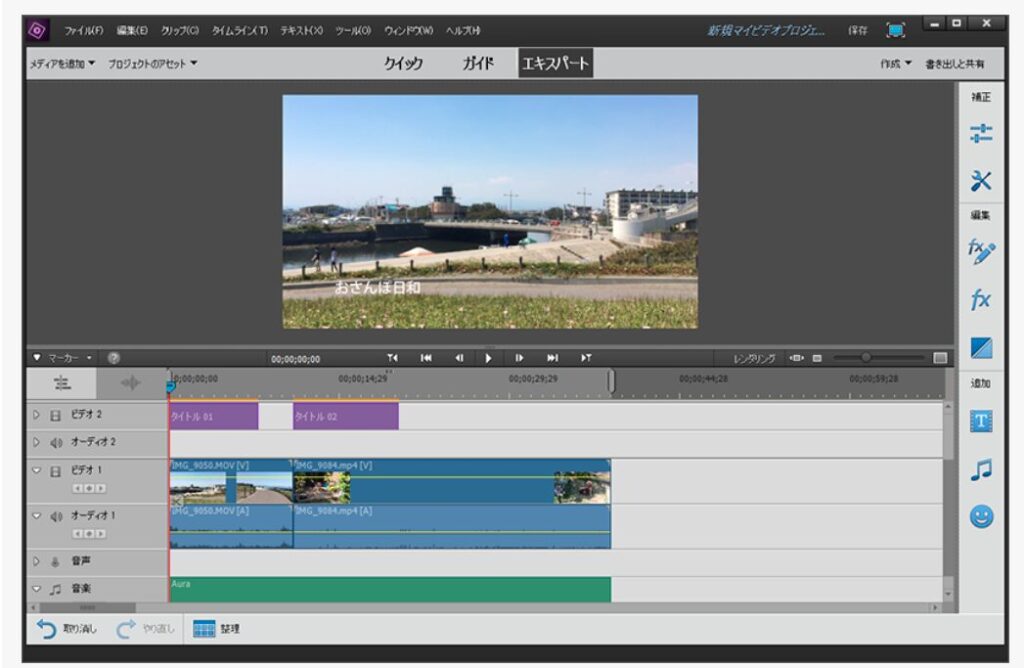
For example, Adobe's production software, renowned for its video creation tools.
“Premiere Elements” is a production software designed for beginners, yet it allows for professional-level video editing. Sold as a standalone, one-time purchase for ¥19,598, it differs from subscription models with recurring monthly fees, making it ideal for long-term ownership. Many users purchase it once and then gather information online while creating their projects.
As such software has become commonplace, more people can now engage in creative production. Consequently, more individuals are taking on the challenge of creating animated music videos.
3. Easier to control costs and effort compared to live-action
The third reason for the rise in animated music videos is that they can often be produced more affordably than live-action videos. Live-action video production involves more people in the filming process than animated music video production. Naturally, production costs increase with the number of people involved, so achieving a satisfactory result with fewer people is preferable.
Personnel costs for live-action video production include the following:
Cast fees
Extra fees
Makeup costs for cast and extras
Lighting equipment costs
Camera operator fees
Other expenses, such as location rental fees
Animated music videos eliminate these costs, often making them more cost-effective and less labor-intensive than live-action productions. Furthermore, the recent surge in popularity of “indie animation” by independent animation creators on social media has made it possible to produce full animations more easily.
4. Conveys a narrative using dynamic expressions
Animation allows you to create imagined concepts directly, without needing to film actual subjects. This makes it ideal for expressing the worldview envisioned by artists.
Recently, there has been an increase in artists utilizing animation for their music videos. This means there are methods to market the artist's authentic self, as well as methods to market the worldview the artist possesses.
For example, YOASOBI, discussed later, uses “novels” as their concept. Therefore, expressing this concept through an animated music video is a better fit than showing the artist's raw persona.
Furthermore, the expressive nature of animated music videos makes them highly likely to gain attention on social media platforms like TikTok. This is crucial for boosting a song's popularity. After all, no matter how good a song is, it means nothing if it remains unknown or fails to spark interest in people to give it a listen.
The difference between anime MVs and MAD movies
As mentioned earlier regarding the difference between PVs and MVs, there are things easily mistaken for anime music videos. Have you ever heard the term “MAD”? MAD refers to secondary creative videos posted on platforms like Niconico Douga.
MAD movies (MAD movies) are works created by individuals editing, synthesizing, and reconfiguring existing audio, games, images, videos, animations, etc. They are often simply called “MAD,” and this term is predominantly used within online communities.
As stated above, the defining characteristic of MAD is that it is created through secondary creation by “combining favorite music and visuals.” It's essentially fan activity for personal enjoyment. The guiding principle is “Do I personally find this good?”
On the other hand, an animation music video is one means of expressing a worldview to maximize the value of the song and artist. It is created to draw out the song's appeal and convey its worldview to fans not just aurally, but visually as well. The guiding principle is “Is the song itself good?”, making it significantly different from MAD videos.
Examples of animation MVs
Animated music videos are actively utilized by bands and singers who find it difficult to appear on camera as a way to express their songs. Recently, even famous artists increasingly use them as one form of expression while still appearing in live-action videos.
There are also cases where animated music videos are released on game apps. I'll introduce them in order.
This animated music video was released by Vaundy, a multi-talented artist who writes lyrics, composes music, handles arrangements, and sings—all at the tender age of 20. It gained significant attention after being selected as the opening theme for the second season of the TV anime “Ousama Ranking.”
Vaundy gained popularity through song uploads on YouTube, but being chosen for an opening theme song for an “anime work” – a format well-suited to animated music videos – brought him even greater recognition. This ease of association with anime works may be another reason why animated music videos have gained attention.
This is the animated music video released by YOASOBI for their song “BEASTARS,” selected as the opening theme for the second season of the TV anime “BEASTARS.” YOASOBI is a music duo consisting of vocaloid producer Ayase and singer-songwriter ikura (Rira Ikuta).
As the title suggests, the song perfectly matches the anime's worldview.
Given YOASOBI's concept of “turning novels into music,” an animated music video is arguably the ideal form of expression.
This is an animated music video by the five members of the third generation of the female VTuber group “Hololive,” affiliated with the VTuber agency “Hololive Production” (Usada Pekora / Jun'ya Rushi'a / Shiranui Flare / Shirogane Noel / Takarajima Marin).
Since songs tend to get more views on YouTube, engaging in artistic activities as a VTuber—beyond just community management through live streams—is likely key to significantly boosting view counts and establishing recognition.
Thus, animated music videos continue to hold great potential as a method for introducing one's characters to a wider audience and building a fanbase.
Beware of common issues when outsourcing freelance production
Animated music videos require extensive expertise, similar to standard animation production, including scriptwriting, character design, and keyframe creation. To maximize an artist's value, outsourcing production to professionals is recommended.
However, assigning an in-house director to coordinate freelance contractors for each production stage is extremely difficult without prior experience. Therefore, consistently outsourcing to a production company is preferable for ensuring quality.
First, let's explain the common issues that arise when assigning an in-house director to manage freelance outsourcing. The most frequent problems are as follows:
The final product doesn't meet expectations
Delivery delays beyond the estimated deadline
Now, let's examine each issue in turn.
The final product doesn't match expectations
When the client is directing the project, it becomes highly prone to issues. Furthermore, directors often commission designers they personally know, which lowers the likelihood of receiving high-quality work.
Of course, even when hiring a designer they know, it is possible to get a high-quality animated music video produced. However, few designers truly understand the workload involved in animation production, making workload adjustments difficult in many cases.
For example, even if the overall aesthetic matches the ideal, issues like inconsistencies in the audio or the way things are expressed can arise.
Delivery delays beyond the estimated deadline
One common pitfall in music video production is missing deadlines. This is because it's difficult to grasp the entire workflow required to create an animated music video.
When a client who has never produced before takes charge of direction and progress, it takes longer than anticipated.
For example, directing involves controlling numerous processes, from planning and assigning animators to video production and CG work.
As a result, deadlines are often missed, and excessive revisions become necessary. For these reasons, outsourcing each specialized area to professionals is also recommended for efficiency.
When outsourcing production, it's best to plan ahead by consulting with the production company while anticipating a timeframe of about 2 to 3 months.
Marketing Perspective in Japan: Beyond Just Creation
NOKID provides creative planning and production for PR using characters, events, and video content. Effective videos balance business and creative perspectives, e.g., short clips optimized for TikTok, designed to capture attention in the first 2–3 seconds.
For first-time animation or PR-focused content, feel free to consult with us.
Tokuma Kanna
Founder and CEO of NOKID Inc., a premier creative studio specializing in short-form animation and graphic design. With a focus on narrative-driven visual storytelling, he has spearheaded high-profile projects across the global entertainment landscape. His portfolio includes the acclaimed VALORANT: YORU TYPICAL DAYS cinematic, the Hatsune Miku x Seven Premium 15th Anniversary campaign, and Koda Kumi’s music video "100 no Kotoba-tachi e." As a leading producer in the PV and MV sectors, Tokuma continues to redefine the intersection of animation and contemporary digital media.