Using characters in a corporate setting is crucial for creating an environment that fosters emotional connections between the company and its users. Other benefits include strengthening the company’s brand image and enhancing the power of storytelling.
On the other hand, if the selection or design of a character fails, it can backfire and potentially damage the brand image. Furthermore, challenges arise regarding operational methods and content strategies aimed at increasing the character’s recognition.
For example, even if a company creates a character account on social media, there is no single “right answer” regarding what kind of posts to make.
Furthermore, what key points should companies keep in mind to effectively utilize characters?
In this article, we will explore the pros and cons of character utilization to identify potential issues and outline the key factors for success. We will also explain effective methods for utilizing characters and content strategies.
We encourage you to learn about the effective use of characters and their benefits, and consider implementing them in your own company.
Is 'cuteness' the sole reason companies create their own characters?
Companies don’t create mascot characters simply because they’re “cute” or “trendy.” In fact, characters are marketing tools deeply integrated into corporate strategy, serving multiple roles such as branding, conveying information, and strengthening connections with customers.
For example, just by seeing a character like “SUUMO,” you can immediately recall which company or organization it represents. This is because the character acts as a bridge, conveying the company’s message and values through a concrete image.
The specific benefits include the following:
・Serving as a brand ambassador to increase brand awareness
・Facilitating smoother interactions with customers to strengthen connections
・Making it easier for new target audiences to take an interest, thereby expanding reach
・Helping create a positive brand image and differentiate the company
・Making it easier to add a narrative to products and services, fostering fan loyalty
・Improving efficiency and standardization by delivering presentations (explanations) on the company’s behalf without the need for a spokesperson
Let’s take a closer look at each of these points.
Effect 1: Serves as a brand ambassador, boosting brand awareness
One of the biggest advantages for companies in adopting characters is increased brand awareness. As a mascot character serves as the “face” of the company, it provides consumers with a relatable image, which increases the chances of the brand catching their eye and makes it easier for them to remember.
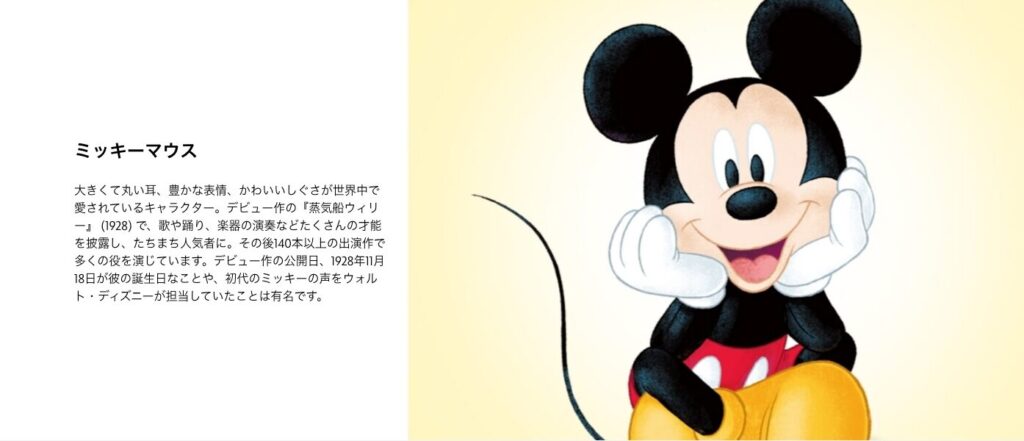
As a real-world example, Disney’s “Mickey Mouse” is widely recognized around the world, and this character’s presence contributes significantly to strengthening the Disney brand. Mickey Mouse symbolizes the Disney image and, as a character loved by a wide range of generations, has greatly increased the company’s brand awareness.
In this way, characters function as approachable symbols of the brand for consumers, further highlighting the brand’s appeal.
Effect 2: Facilitates smoother interaction with customers, strengthening connections
Utilizing characters is effective not only for increasing brand awareness but also for building strong bonds with customers. This is because characters make the abstract concept of a company more tangible, fostering human-like connections.
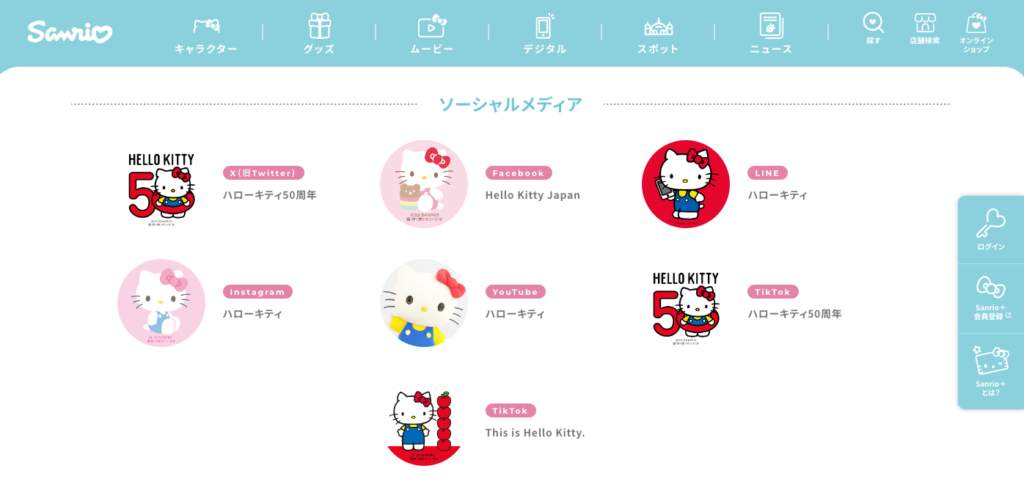
For example, Sanrio’s “Hello Kitty” has built strong ties with fans through a wide range of character merchandise and events. Hello Kitty has become a special presence for her fans, which in turn strengthens the Sanrio brand.
In this way, characters serve as an “emotional bridge between companies and consumers,” facilitating the smooth development of relationships. When consumers develop an emotional attachment to a character, they also become loyal to the products and services of the company associated with that character.
Effect 3: Attracts new target audiences, expanding reach
By utilizing characters, companies can expand their reach to new target markets. In particular, this provides an opportunity to tap into new customer segments that previously did not respond to their efforts.
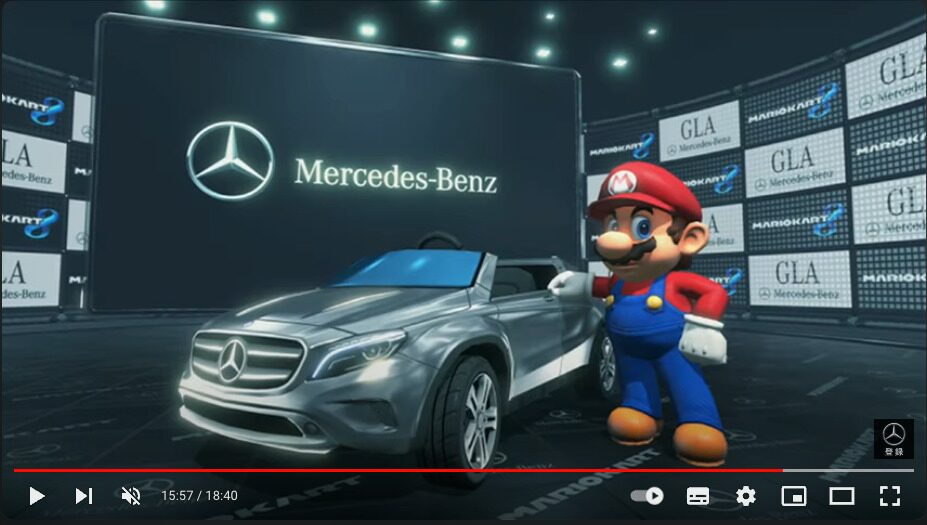
For example, Mercedes-Benz, a well-known name in the automotive industry, featured the character “Mario” in a campaign. As a result, Mercedes-Benz was able to project a new brand image—one that emphasized playfulness and innovation in addition to its traditional sense of luxury—and captured the attention of younger customers.
Conversely, by featuring Mercedes-Benz in Mario Kart, the brand has indirectly boosted its recognition and enhanced its positive image. At the GLA press conference, Mario made a special guest appearance, and the release of Mario Kart 8 was also announced.
In this way, the approachability and charm of these characters serve as a key factor in sparking interest among new consumers and drawing them to the company’s services.
By leveraging the charm and unique personalities of characters, companies can cultivate a positive image and encourage consumers to view their brand products favorably.
Specifically, characters can “soften” the image of a company or its products, allowing even industries that are generally perceived as “stiff”—such as finance and B2B—to convey a sense of approachability and reassurance.
For example, LINE’s “BROEN (Brown)” and “COONY (Connie)” have established a unique form of communication within LINE. This has solidified the image of LINE as synonymous with LINE FRIENDS, making it a key differentiator within the same communication platform.
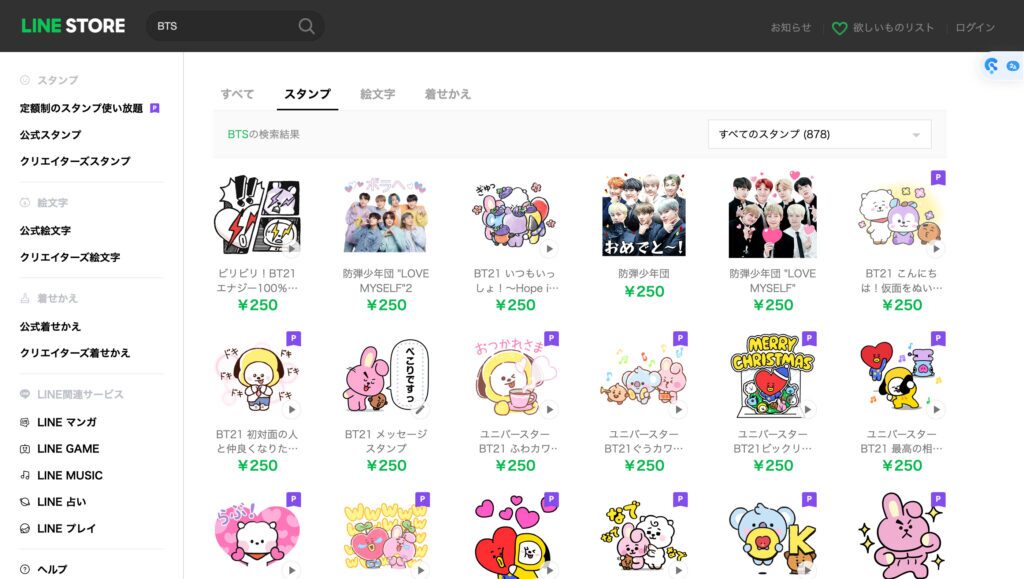
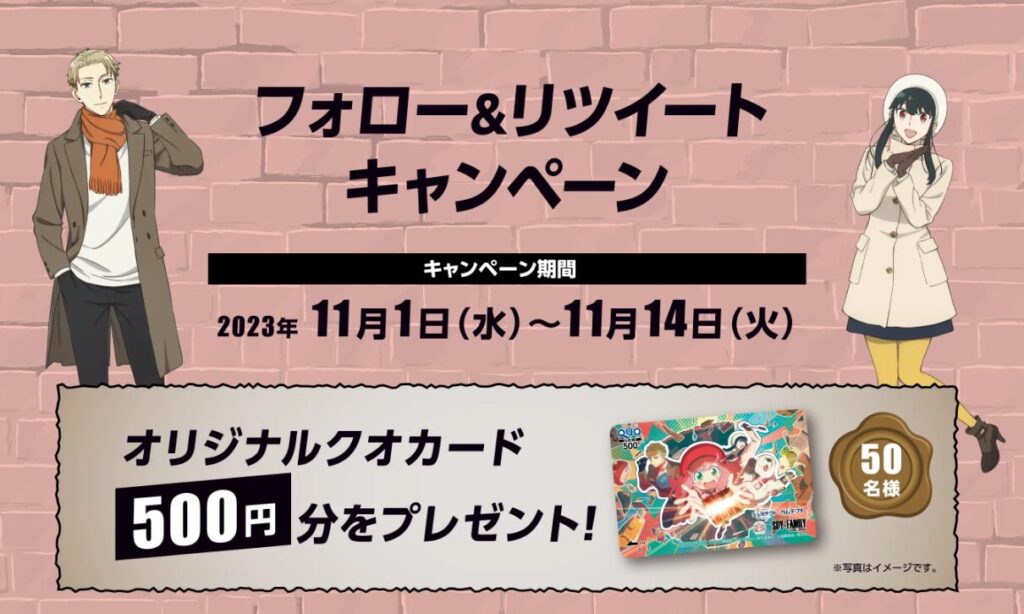
Additionally, by featuring characters owned by other companies, companies can leverage their popularity and influence. At LINE, the release of numerous collaboration stickers with famous artists has also helped attract new users to the platform itself.
In particular, there was a risk of losing market share in the long term due to the tendency among younger users not to use LINE. For this reason, collaborative stickers like the ones shown in the figure above likely proved to be an effective strategy.
In this way, by leveraging the power of characters, companies can establish their own unique positioning and appeal.
Even for impersonal products and services, using characters can add narrative depth and emotional elements, turning customers into fans and creating reasons for them to buy. By linking the story portrayed by the product or service with the character, you can appeal to consumers’ emotions and leave a lasting impression.
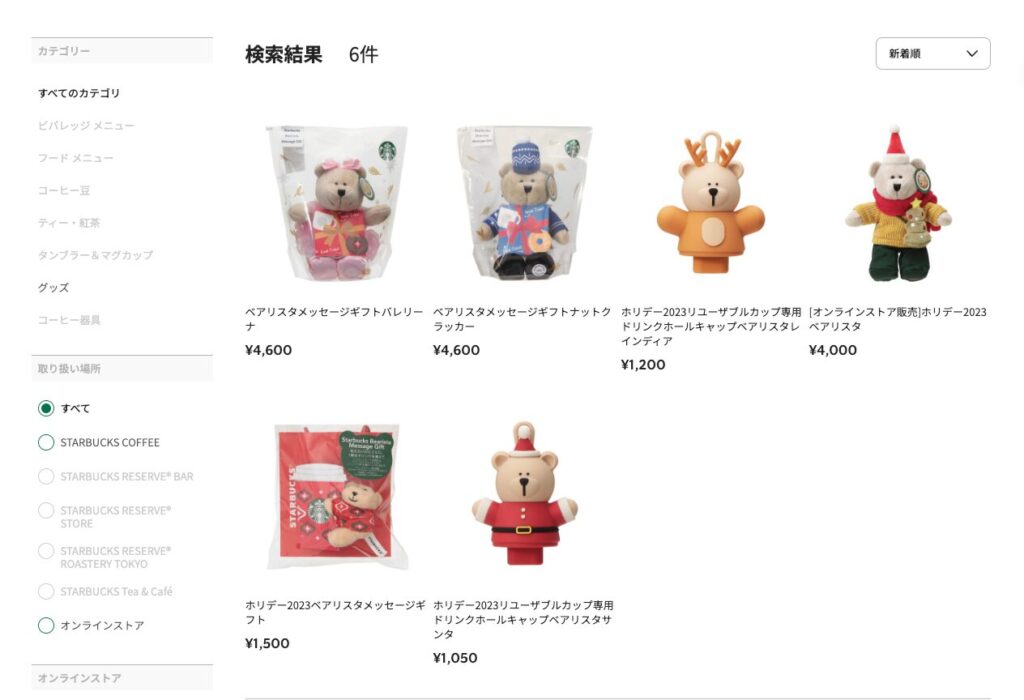
For example, the “Starbucks Bearista,” a limited-edition character offered by Starbucks each season, has a presence that goes beyond that of “mere coffee shop merchandise.” The existence of this character (merchandise) serves to inspire customers to “experience Starbucks coffee even more.”
Linking products or services with stories featuring characters does more than simply boost sales. It deepens customers’ attachment to the brand, leading to long-term repeat business and higher average transaction values—effectively fostering a loyal fan base.
Benefit 6: Streamlines and standardizes presentations by acting as a stand-in without showing a face
We recommend using characters not only as brand ambassadors but also to provide explanations online or at event venues, acting as substitutes for public relations and sales staff. This approach not only enhances clarity but also improves employee efficiency and helps prevent reliance on individual staff members.
Even explanations that might otherwise be boring become more enjoyable for viewers. Having a character provide the explanation not only boosts the character’s own brand recognition but also ensures the video is “easy to understand” through the use of animation.
As a reference, we have included the following explanatory animation below, which we helped produce.
As shown here, creating original characters allows you to consider using them for information dissemination and merchandising, and opens the door to expanding into IP-based business ventures.
How can companies utilize and deploy their characters?
There are many ways for companies to utilize characters. From product development to promotions and digital content creation, characters help strengthen a company’s brand image and contribute to building relationships with customers.
Specific ways to utilize characters include the following:
Product Development (Brand Establishment)
PR Events (Sales Promotion)
Content (Promoting Understanding)
Collaborations with Other Companies’ IP (Sales Promotion)
We will provide a detailed explanation of each application and implementation method.
Use in Product Development: Creating opportunities to spark interest in the brand
Using proprietary characters to promote branded products creates a unique appeal—a key differentiator. In particular, by “anthropomorphizing” branded products through characters, what was once abstract becomes more relatable to consumers, strengthening the connection with them.
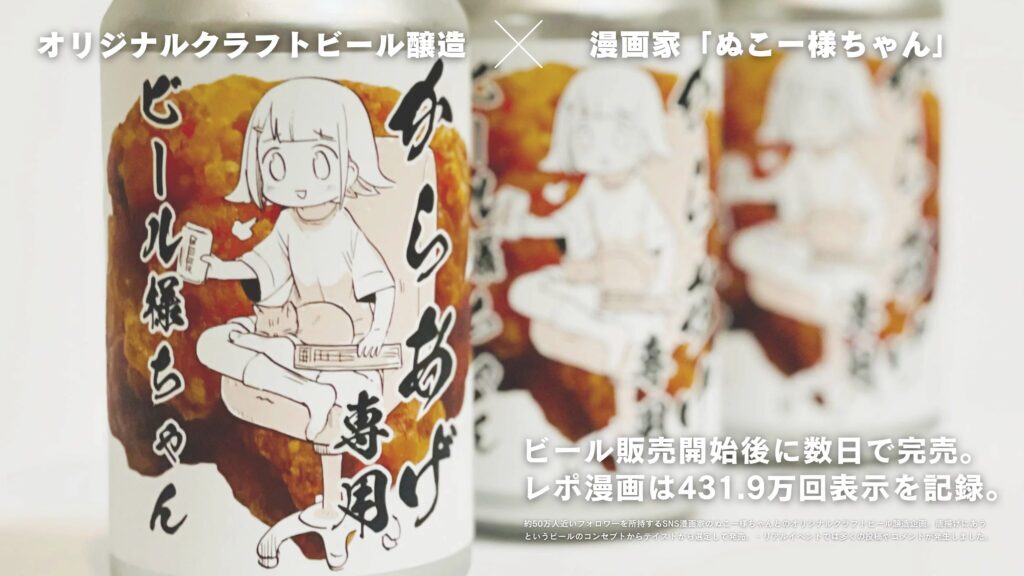
For example, a beverage brand like the one shown above released limited-edition packaging featuring a character, which sparked interest not only among existing customers but also among new target demographics, leading to a sell-out within a few days. One contributing factor to this success is believed to be that the character was associated with “karaage” (or its personality and backstory)—which pairs well with beer—allowing it to naturally capture consumers’ attention.
The key to this approach is to carefully consider the compatibility between the character and the brand product and avoid creating characters indiscriminately.
Use in PR Events: Doubling the appeal of events (sales promotion)
Incorporating characters into promotional events significantly enhances the event’s appeal and helps attract more attendees. This is because characters make it possible to convey the event’s purpose and message more intuitively, leaving a strong impression on families and younger audiences in particular.
For example, at new product launch events or corporate anniversary events, providing experiences that allow attendees to interact with the brand—such as photo opportunities with characters or the distribution of merchandise—often leads to increased engagement and satisfaction among participants.
Furthermore, events featuring characters encourage sharing on social media and other digital platforms, which can help expand the event’s visibility and reach.
In this way, incorporating characters into PR events is an effective strategy that doubles the event’s appeal and boosts brand promotion.
Use in Digital Content: Enhancing the online experience
By incorporating characters into digital content—such as social media posts, your company website, or advertisements—you can transform the online experience—that is, your brand’s message—into something “engaging and memorable.”
For example, by featuring a character in an “explanatory video about product information” on your website, you can convey information clearly and naturally promote your products. Using videos where a character guides users can have the same effect as hiring an online sales representative.
Additionally, on social media, posting entertaining content through a character account can capture users’ attention and spark their interest in the brand. Posts featuring characters can also encourage users to share them enthusiastically, as there are techniques that make such content more engaging by incorporating the personality of the “person behind the account.”
In this way, leveraging characters allows you to effectively convey your brand’s personality and appeal in the digital space.
Use in Collaborations with Other Companies’ IP: Opportunities to reach new target audiences
Collaborating with third-party IP (characters) provides an opportunity to introduce your brand to new potential customers by leveraging the influence of those characters.
Specifically, by featuring characters from companies or anime series in different fields in your brand campaigns, you can expand your existing brand image and create opportunities to attract new fans.
Launching third-party IP (character) collaboration campaigns
By launching collaborations on a campaign-by-campaign basis, you can create “reasons to buy or sign up now,” such as limited-time gifts. This helps attract the attention of new consumers who have not previously shown interest in your brand.
Collaborations with the fashion and food and beverage industries—such as limited-edition merchandise or special menus featuring characters—can help attract new consumers and offer a fresh experience to existing customers.
These collaborations allow brands to connect with different markets and cultures, reaching new customer segments and providing opportunities to discover new facets of the brand’s appeal.
It is important to note that rather than engaging in random collaborations, maintaining consistency in brand image and values is key. Let’s strategically create opportunities to raise awareness among new consumers and offer them something fresh, thereby building long-term customer relationships.
Use in Merchandising: New brand expansion (monetizing IP)
Character-based merchandising is an effective way to translate brand value into tangible products and services. In particular, the sale of character merchandise provides an opportunity to enhance brand loyalty.
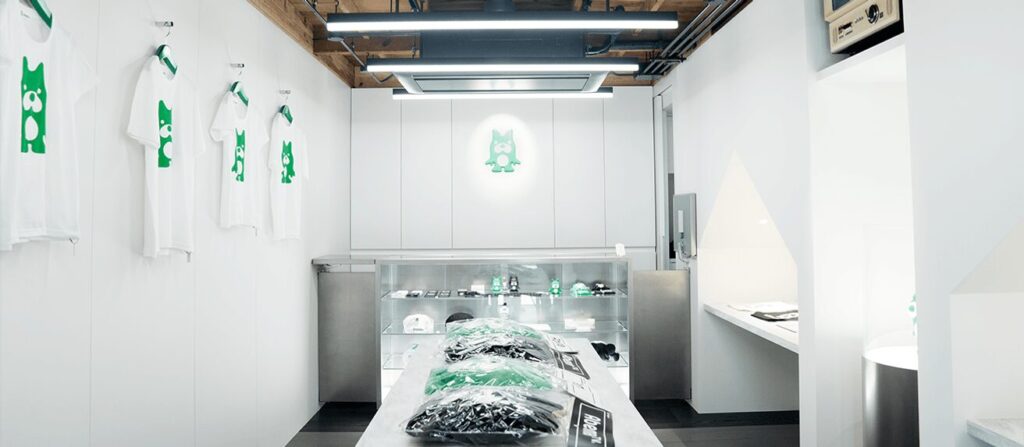
Since character merchandise can be developed into a wide range of products—such as T-shirts, bags, stationery, and toys—brands can generate new revenue while broadly communicating their brand’s worldview to consumers.
Furthermore, limited-edition goods and collector’s items generate buzz among brand fans, leading to a deeper sense of attachment.
In this way, character-based merchandising leverages a brand’s unique personality and appeal to generate new revenue.
Does using characters boost a company’s performance? What are the pros and cons?
Characters have become an effective branding method adopted by many companies today. So, how does this impact a company’s performance?
Specifically, there are the following benefits:
As the character’s popularity grows, so does awareness of the company’s services
Smooth communication with customers on social media
The ability to express ideas directly that might be difficult for a person to convey
Easier to attract attention in all types of advertising creative
Can be used long-term while maintaining the same appearance
As the value of the character itself increases, IP business opportunities can be explored
Furthermore, the use of characters can be divided into two approaches: “utilizing your own IP” and “utilizing another company’s IP.” Therefore, we will introduce the advantages and disadvantages of each from the perspective of “Does it lead to increased organizational profits?.”
Benefits of using in-house IP (characters)
Leading to Product Differentiation and Enhanced Customer Experience
Products and services featuring a company’s own character enable differentiation in sectors where it is difficult to distinguish offerings from competitors (such as commoditized markets). This is because, in markets saturated with similar services, such a character serves as a unique selling point, making the product or service more likely to be chosen.
Furthermore, even for services that might otherwise come across as too rigid, adopting a likable character as a symbol can significantly transform their image.
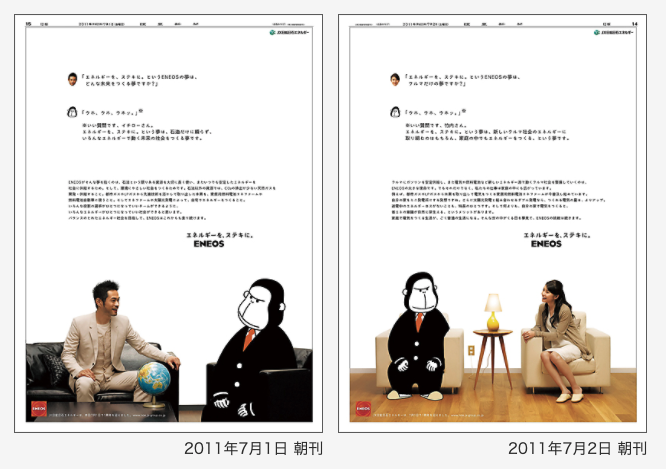
One example is “Enegori-kun,” the corporate mascot of ENEOS Corporation. This serves as an example of a character that has become the face of the company, effectively establishing the company's brand identity.
Although ENEOS originally started as a service station business with a predominantly male customer base, the character “Enegori-kun” helped increase brand recognition among homemakers.
Generating new revenue streams through IP expansion
Utilizing in-house characters creates a direct revenue stream through the sale of character merchandise and related products. This generates a synergistic effect between brand revenue and character revenue.
Minimizing Scandal Risk and Stabilizing Brand Image
Since in-house characters do not carry the risk of scandals associated with celebrities, they enable long-term stability in brand image.
Characters are unaffected by aging, illness, or scandals, allowing for the maintenance of consistent brand value. This enables companies to maintain a stable brand image over the long term while preserving their credibility.
Drawbacks of using in-house IP (characters)
Requires Initial Investment and Time
Developing in-house characters often involves significant upfront costs, including design, storytelling, and the formulation of marketing strategies.
Additionally, it takes time for characters to gain recognition in the market and build a fan base, so immediate results are unlikely.
Unplanned character creation will not boost brand popularity
If your in-house character is not accepted by consumers, it could have a negative impact on your brand image.
For example, if the character’s design or message does not resonate with the target audience or is out of step with the times, it could harm the brand.
A character’s words can damage the brand’s reputation
When companies use their own characters, they are almost always closely tied to the brand. Therefore, if the character’s actions or statements receive negative feedback or cause issues, there is a risk that the brand’s popularity will decline.
For example, if a character’s behavior or message conflicts with societal values, there is a concern that the brand’s credibility will be damaged.
Benefits of using third-party IP (characters)
Boost brand awareness instantly and reach new customer segments
By partnering with popular characters from other companies, you can instantly boost brand awareness and leverage their existing fan base. This enables rapid market penetration for new products and campaigns, while also expanding your reach to new customer segments.
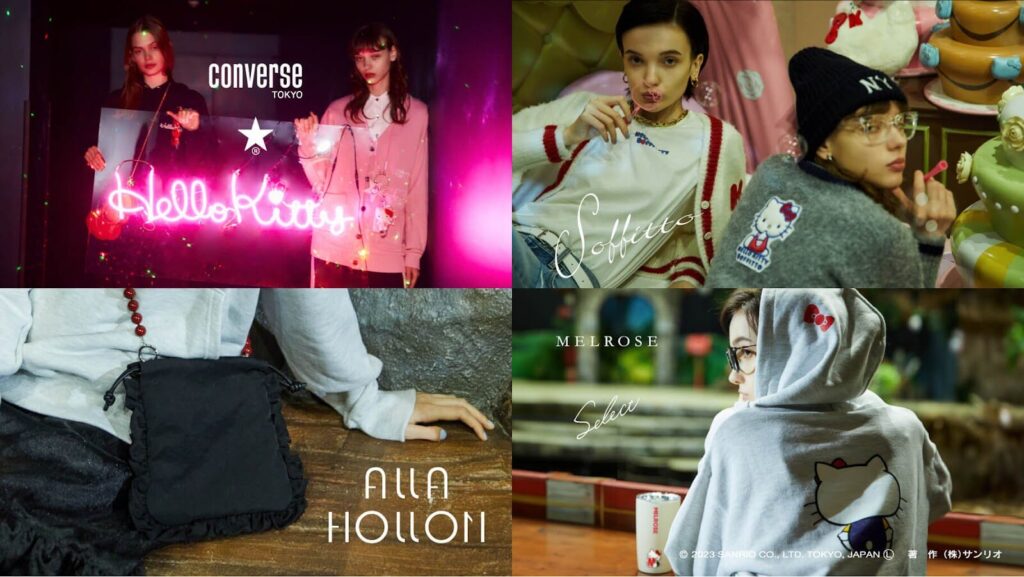
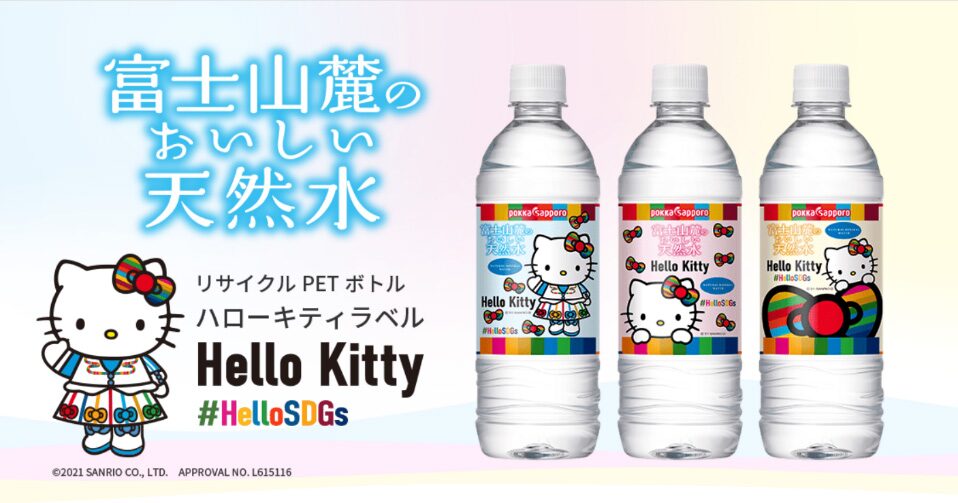
For example, suppose a company that sells water dispensers holds a collaborative campaign event with Sanrio’s “Hello Kitty,” as shown in the figure above. This would provide existing customers with a sense of novelty and serve as a purchasing incentive for new customers.
Leads to risk mitigation and efficient marketing
By utilizing characters already accepted in the market, companies can reduce the risks and costs associated with developing new characters.
Furthermore, by leveraging the credibility of established characters, companies can more easily enter new markets and conduct marketing activities efficiently.
Diversification of brand image
Collaborating with other companies’ IP allows a company to diversify its brand image and offer new appeal to consumers.
For example, by partnering with characters from different industries (such as video games) for each product, a company can adapt its brand image to suit a diverse consumer base.
Drawbacks of using third-party IP (characters)
Licensing fees and usage restrictions
To use another company’s characters, you must pay licensing fees. Furthermore, usage terms and restrictions are often imposed, which can limit your freedom in your own campaigns and promotions.
As a result, companies may find their scope for creative expression narrowed, potentially affecting the flexibility of their promotions.
Reliance on the Character’s Brand Image
Using another company’s character means becoming heavily reliant on that character’s image. While this can be effective for expanding reach in the short term, relying on it long-term may undermine the uniqueness of your own brand.
Furthermore, if the character’s image does not align with your brand’s image, there is a risk of causing consumer confusion or brand misperceptions.
Difficulty in Differentiating in the Market
While using another company’s character can attract temporary attention, it is difficult to achieve sustainable differentiation in the market.
In particular, if many companies are using the same character, your products or services may get lost among competitors, making it difficult to stand out.
5 steps for brand growth using in-house and third-party IP (characters)
When incorporating characters into a brand’s growth strategy, it is important to consider the pros and cons of each approach and utilize them appropriately.
Broadly speaking, you should plan a strategy that leverages the immediacy of third-party IP to expand brand awareness while simultaneously developing your own IP to build a unique brand image.
Step 1: Immediate expansion of brand awareness through the use of third-party IP
In the early stages, we will leverage popular characters from other companies that are already well-known in the market to rapidly expand brand awareness. This will draw attention to the brand and its products, enabling us to establish a strong market presence in a short period of time.
Step 2: Diversification of brand image and differentiation in the market
By leveraging characters from other companies, we aim to collaborate with businesses in different industries and reach new customer segments. This will help diversify our brand image and differentiate us in the market.
Step 3: Development and nurturing of in-house IP
After achieving immediate results through third-party IP, we will begin developing our own original characters as part of our long-term brand strategy. Cultivating our own IP is a crucial step in reinforcing the uniqueness of our brand image and building deeper relationships with our customers.
Step 4: Long-term strengthening of brand value through in-house IP
As our original characters become established and market recognition grows, we will further strengthen our brand value. Through the sale of character merchandise and integration into digital media, we will establish new revenue streams and enhance the brand’s uniqueness and differentiation in the market.
Step 5: Sustainable brand growth and improvement
While nurturing our proprietary IP from a long-term perspective, we flexibly adjust our brand strategy to align with market trends and consumer needs. Through the continuous development and innovation of our proprietary IP, we ensure the brand’s sustainable growth and competitiveness in the market.
By following these steps, companies can implement strategies that range from immediate expansion of brand awareness in the early stages to the long-term strengthening and growth of brand value. By maximizing the benefits of both proprietary and third-party IP, companies can achieve effective brand growth.
Risks (Points to note) and countermeasures when companies utilize characters
While there are many benefits to utilizing characters, there are also risks and legal considerations to be aware of. In particular, careful handling is required in various areas, such as licensing fees, copyright, and the risk of brand damage.
Special attention must be paid to “copyright and licensing fees” and “consistency with brand image.” Let’s take a closer look at each of these.
Verifying Copyright and Licensing Fees
When using characters for business purposes, licensing fees and copyright management are extremely important. It is particularly important to note that the copyright for a character belongs to its creator.
For example, when using a famous character such as “Snoopy,” permission must be obtained from the company that holds the copyright, and fees must be paid based on a licensing agreement.
Furthermore, even when creating a new character in-house, the copyright may belong to the creator or the design company that produced it. Therefore, when creating a character, it is important to clarify in advance who will hold the copyright and, if necessary, to enter into agreements regarding the transfer of copyright or licensing rights.
Consistency Between Corporate Image and Characters
When companies utilize characters, it is crucial that the character’s image aligns with the company’s brand strategy. Since characters are recognized by consumers as the face of the company, ensuring consistency between the brand image and the character is key to business success.
For example, a company selling eco-friendly products that features a nature-loving character demonstrates consistency, making it easier to gain the empathy of desirable prospective customers.
To ensure that a character supports the company’s image over the long term and serves as a narrator of the brand’s story, it is essential to select a character deeply rooted in the company’s culture and strategy.
Consider “Culture and Strategy” as Well as the Character’s Visual Appeal
As mentioned above, when selecting a character, it is important not only that the character is visually appealing but also that it reflects the company’s values and message.
Therefore, choosing a character that does not align with the brand image can confuse consumers and potentially damage the brand’s credibility.
Should planning and production be outsourced to utilize in-house characters?
In principle, if you’re simply looking to design a character, you can solve this by hiring a freelancer or consulting a low-cost production company. However, what really matters isn’t creating something cheaply, but rather getting a return that exceeds the cost.
To ensure your investment isn’t wasted, you must aim to boost your business performance by leveraging your characters to gain recognition among potential customers, spark their interest, and increase your following—all of which ultimately make it easier to sell your products and services.
To help you make that decision, I’ll explain step by step what value outsourcing can provide.
Is it better to create characters in-house? What is the balance with outsourcing?
Creating characters in-house allows you to reflect “internal understanding (of products and values)” and “flexibility and attention to detail.” On the other hand, external experts offer the value of “new perspectives informed by knowledge of industry trends” and “specialized, advanced skills.”
Therefore, rather than favoring one approach over the other, the author believes it is best to find a process that leverages the strengths of both.
For example, a basic approach is to create the initial draft and concept for a character in-house, then commission an external creator to expand on the design. In this case, the process runs more smoothly if the company prepares samples after first hearing research on competitors and objective opinions and proposals from the external expert.
Conversely, it is also effective to have a creator whose unique style matches the company’s image develop the initial character concept, while the company efficiently handles the animation (visualization) process and promotes the character on social media and other platforms.
By utilizing outsourcing, companies can create higher-quality characters even with limited resources. Furthermore, incorporating different perspectives allows you to maximize the potential of your characters.
With this collaborative approach in mind, let’s find the optimal approach for your company.
Outsourcing = Production from an objective perspective: Character designs that capture consumer insights
Character design is a key factor in directly appealing to consumers. In other words, it’s not enough to simply create a character; it requires creativity and expertise to enhance the brand image and foster a sense of approachability. This is precisely why the role of external experts is so important.
When a company handles this work in-house, it tends to get stuck in familiar ways of thinking, whereas external experts can view the company from a fresh perspective.
For example, by drawing on their experience with other companies’ success stories and leveraging their unique professional insights, they can create character designs that hit all the right notes.
By collaborating with such external experts, it becomes easier to create characters that express your company’s image more vividly from a perspective close to that of the consumer. Let’s incorporate this external perspective and utilize these characters not merely as mascots, but as key figures that tell your brand’s story.
Outsourcing = Improved cost and time efficiency: Allows focus on core business operations
Outsourcing character creation to external experts offers significant advantages in terms of both cost and time. Creating characters from scratch in-house often takes much longer than expected. Furthermore, we must not overlook the opportunity costs associated with being unable to focus on core business operations.
While it may involve some upfront costs, in the long run, you can expect to save time, reduce expenses, and enhance your brand value by allowing your team to focus on core business activities.
Consider outsourcing character creation not merely as a way to achieve financial savings, but as a vital partnership that frees up time to focus on activities that raise your brand’s visibility among a wider audience.
Outsourcing = Opportunity to deepen understanding of legal issues to mitigate risk
While character creation involves legal considerations such as copyright, these matters fall within the purview of legal professionals. However, by collaborating with external experts, such as production companies, you gain more opportunities to learn how other companies handle these issues.
This enables companies to prevent problems in advance and effectively utilize characters in promotional campaigns for their business.
Characters are valuable corporate assets, and their proper management and protection are essential to business success. By collaborating with external experts, companies gain the opportunity to learn best practices for handling characters safely from a legal perspective.
*More specific measures and consultation with legal experts may also be necessary.
Some ideas involve revealing the creator through collaboration with artists
Collaborating with external creators elevates character creation into an artistic project. Characters created in partnership with creators become unique works that leverage each other’s strengths, offering consumers a fresh experience.
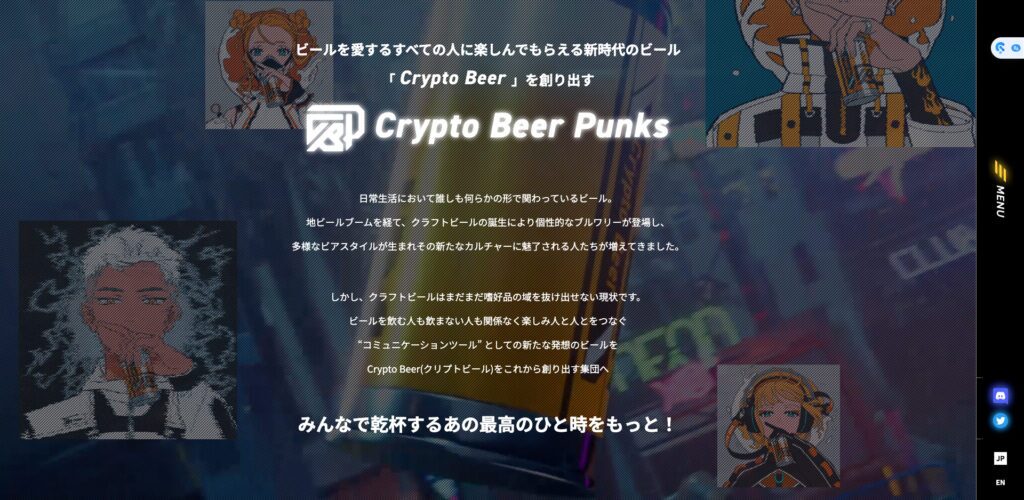
For example, as shown in the image above, a craft beer maker teamed up with a popular illustrator to release a limited-edition collection incorporating NFTs. This collaboration garnered significant attention and received support from the illustrator’s fan base.
By blending the creator’s unique worldview with the appeal of craft beer, this collaboration successfully tapped into a new demographic of craft beer enthusiasts.
Furthermore, by sharing the production process, consumers gain insight into the background of the characters’ creation, deepening their attachment to and understanding of the work.
Co-creation with creators provides an opportunity for mutual inspiration and broadens the scope of creativity. The characters born from such collaborations hold value beyond that of mere mascots, becoming entities that richly convey the brand’s story.
Many companies lack a plan for after the character is created
While many companies create mascots, it is not uncommon for them to struggle with how to utilize them effectively afterward. Simply creating a mascot does not automatically make it popular or solve the company’s problems.
The key question is: After creating a mascot, how can it be accepted by the target audience and gain popularity?
Increasing the character’s name recognition is key
Many companies fall into the trap of creating a character but having no plan for what comes next. This is because they often fail to establish a strategy for “effective utilization” or “appropriate communication with users” after creating the character, resulting in it becoming little more than a “figurehead.”
This situation arises when the character fails to reach its intended target audience, meaning it cannot realize its true value. Of course, there are also cases where the character is simply not suited to the target audience and therefore not accepted.
However, in most cases, the primary cause is the lack of a plan after the character is created, which is a real waste.
When designing a character, the key is to ensure it is accepted by the target audience. However, the underlying goal is to “boost business performance.” Therefore, you must view the period after the character is created as the real work begins and develop a plan for “how to make as many potential customers as possible aware of it.”
Is sharing character posts on social media effective?
In today’s world, with the widespread use of social media, it is essential to engage with users through platforms like Twitter and TikTok. For example, one effective strategy is to create a character account and post as that character, or to reveal the “person behind the account” to showcase originality and attract attention.
Because characters can be portrayed with appealing visuals, they naturally stand out in the feed and leave a lasting impression. However, to turn viewers into fans, you need content that people will want to share.
To create shareable content, it is effective to incorporate expert knowledge, behind-the-scenes stories about the company, or customer challenges into your posts, or to use storytelling, following the points below.
Information that is useful to users
Stories that evoke empathy or emotion
Funny anecdotes
Little-known secrets
For example, by posting interesting situations or stories on social media that arise from the interaction between your unique character and customers, you can evoke empathy and interest among users.
When people’s emotions are stirred, they feel a connection to the character and want to support it. Building this kind of relationship increases sharing on social media, which helps spread your brand’s message and image more widely.
In this way, when utilizing characters, it’s important not just to create them, but also to plan how to boost their popularity.
It takes a long time for a character to gain acceptance
To create a strong character, it’s essential to develop a design based on a well-thought-out marketing strategy. For this reason, we cannot guarantee same-day completion upon request. In other words, if you don’t start preparing now, time will just keep slipping away.
Furthermore, creating a good character isn’t the end of the process. This is because a character takes root by being seen by many people and fostering communication. This usually takes months or even years. In other words, once it takes root, it becomes a unique appeal that competitors won’t easily surpass.
Tasks that take time tend to get put off. However, that’s precisely why starting now allows you to gradually strengthen your company’s uniqueness and build a brand that people remember. We’re here to support you in this process.
Should you redesign your character?
What kind of new character should you create?
How can you make the most of your current character?
If you have questions like these, why not reach out to us?
Of course, to keep costs as low as possible, we’re constantly reviewing our operations and strive to “deliver the best value within your budget.” Please let us work with you to determine what your company truly needs.
Summary of corporate character utilization
Let’s summarize the key points so far.
Leveraging character-product tie-ins to capture customer interest and highlight product features
Using characters at promotional events doubles the event’s appeal
Integrating characters into digital content enhances the online experience
Character-based collaborations diversify and expand the brand
Bringing brand value to life through merchandising
Character development requires time and cost but offers long-term value
The character’s reputation can directly impact and influence the brand
Leveraging third-party IP to capitalize on immediate brand recognition and popularity
Diversifying brand image and acquiring new customer segments
Licensing fees and usage restrictions are drawbacks of third-party IP
For companies, utilizing characters is an effective strategy to enhance the appeal of products and services and expand brand awareness. However, it is important to consider that character development requires time and cost, and that the character’s reputation can directly impact the brand.
Furthermore, while utilizing third-party IP contributes to immediate recognition, licensing fees and usage restrictions can sometimes be drawbacks. Effective planning and appropriate communication strategies are essential to maximize the use of characters.
However, it is also a fact that many companies struggle to see tangible results even when they aim to effectively leverage the power of characters. Moreover, creating and utilizing characters from scratch is no easy task.
Marketing Perspective in Japan: Beyond Just Creation
NOKID provides creative planning and production for PR using characters, events, and video content. Effective videos balance business and creative perspectives, e.g., short clips optimized for TikTok, designed to capture attention in the first 2–3 seconds.
For first-time animation or PR-focused content, feel free to consult with us.
Tokuma Kanna
Founder and CEO of NOKID Inc., a premier creative studio specializing in short-form animation and graphic design. With a focus on narrative-driven visual storytelling, he has spearheaded high-profile projects across the global entertainment landscape. His portfolio includes the acclaimed VALORANT: YORU TYPICAL DAYS cinematic, the Hatsune Miku x Seven Premium 15th Anniversary campaign, and Koda Kumi’s music video "100 no Kotoba-tachi e." As a leading producer in the PV and MV sectors, Tokuma continues to redefine the intersection of animation and contemporary digital media.