It's been over a decade since I first learned about Hatsune Miku. She had green pig tails and a mechanical yet somehow human-like singing voice, but honestly, I just thought, “What an unusual piece of software.” Back then, I never dreamed that 17 years later, this character would still be loved around the world.
Back then, I witnessed “Senbonzakura” trending on NicoNico Douga and its popularity skyrocketing. Yet Hatsune Miku had almost no official story or background.
Despite that, she now holds concerts, goes on world tours, and is treated as a global artist. For a typical character, fading into obscurity within a few years wouldn't be surprising...
Why is that? I believe this “incompleteness” is a major reason. In other words, her enduring popularity stems from the fact that users—her fans—could “raise” the character themselves.
But that's not all. What's surprising is that this success was no accident. From the design phase, Crypton Future Media reportedly intended to create an “IP for co-creation.” By loosening copyright restrictions and allowing anyone to use it freely, they created a flow where fans spontaneously created works, uploaded them to YouTube, and spread Hatsune Miku worldwide.
Through this approach—one most companies wouldn't take—Hatsune Miku continues to evolve. Powered by CG technology, she now performs like an artist and has already taken the lead in the next era.
This time, we'll analyze the specific reasons Hatsune Miku achieved such immense popularity and remains popular today, introducing insights that can serve as hints for IP development.
The green-haired virtual singer character “Hatsune Miku” was born in 2007 and remains popular to this day.
For ordinary anime characters, they are often forgotten once the anime ends. However, Hatsune Miku continues to be loved even after more than 17 years have passed.
The reason Hatsune Miku remains active on the front lines today is due to her structure as a “self-sustaining IP” that allows fans to freely create content.
Ordinary characters quickly become stale unless the official team takes action. But with Hatsune Miku, fans continuously create new songs and artwork, making her a constant topic of conversation and drawing attention.
Hatsune Miku is a character for “vocal synthesis software.” In other words, she is like a mascot character for software that allows computers to sing songs, and she is different from ordinary anime characters.
・Non-anime origins
・No fixed story
・Free reigns on creation
This is the major difference. Hatsune Miku is a character with “minimal settings.” Specifically, Hatsune Miku has no fixed personality, no set favorite foods, no hobbies, and no romantic partner.
Why was she intentionally left in such an “unfinished” state?
According to interviews with the official representatives of the companies involved, it was so that the fans could “flesh her out and complete her.” Even the story setting that existed during early development (an android delivering songs in the future) was deliberately not adopted officially, and it was decided to stick only to the bare minimum profile.
Hatsune Miku - A blank slate becomes an iconic character
Many people believe that “character settings should be meticulously defined.” The author shares this view and consciously strives for specificity.
However, Hatsune Miku's success proves the exact opposite. Precisely because Hatsune Miku was intentionally created as “unfinished,” fans compose songs, draw pictures, and devise stories, ultimately completing their own unique Hatsune Miku.
Hatsune Miku has no fixed personality. Her favorite foods, hobbies, or even the existence of a romantic interest or “ship culture” are not defined. This is no accident; Crypton Future Media designed it this way intentionally.
Is minimal setting the reason for fan fervor?
Why was the setting kept minimal, almost unfinished? It was to let fans “flesh her out and complete her as their own entity.” In other words, she was designed to become a Hatsune Miku tailored to each fan.
Precisely because Hatsune Miku has almost no established “personality or backstory,” fans could create their own image of her.
Typical anime characters have detailed profiles like “personality is XX” or “had this event in the past.” But Hatsune Miku's profile contains only the bare minimum: “16 years old, 158cm tall, 42kg, birthday August 31st.”
For example, in one person's song, she becomes “Miku singing of a heartbreaking farewell,” while in another's illustration, she becomes “Miku, the warrior protecting the city of the future.” Because the setting isn't fixed, any form of Miku can be the “correct” one.
In other words, it was precisely because the character was ‘unfinished’ that fans could breathe life into her with their own imagination.
Key Point: Having few settings isn't a flaw; it became an “appeal that allows fans to freely create stories.”
The appeal of “Who is the voice?": The mystery of the unseen creator
The fact that Hatsune Miku's “voice actor does not appear publicly = a character who does not speak” is also consistent with the idea that fans can freely interpret her.
Many characters and VTubers have a “person playing the role,” whose words and emotions determine the character's personality and actions. However, Hatsune Miku has almost no “words of her own.”
While the official voice actress is “Saki Fujita,” she rarely appears publicly as Hatsune Miku, performing like a VTuber.
For example, popular anime characters sometimes see their activities halted due to sudden SNS troubles involving their voice actors. Hatsune Miku, however, remains unaffected by such issues.
Because she is a “voice material” anyone can use, Miku actually changes depending on the user.
From the beginning, Crypton, Hatsune Miku's developer, has produced her under the policy of “not putting the voice actor in the spotlight” and “not overdefining the character's personality.” This intent has been stated in official interviews.
In other words, it is precisely because Miku “doesn't speak” that fans have created a “Miku they can freely speak for.”
Key Point: By not appearing publicly as the voice actor, the character's personality is entrusted to the users.
Hatsune Miku - Popularity through “community”
While Hatsune Miku often draws attention as an idea for “vocal synthesis software,” her true value lies not in the technology. The “community” that connects people is the very essence of Hatsune Miku.
Similar software already existed
When Hatsune Miku debuted in 2007, other vocal synthesis software was already available. Technologically speaking, Hatsune Miku wasn't particularly superior.
So why did Hatsune Miku succeed where others didn't? The answer lies in “community building.” Hatsune Miku transcended the boundaries of voice synthesis software, creating a space where creators gather, collaborate, and compete.
Within this community, creators from diverse fields work together: music producers, singers, illustrators, video creators, dancers. They pool their talents to create works that no single person could produce alone.
Creation expanded beyond just music
NicoNico Douga and YouTube form the foundation of this community. Creators share their work, fans share their reactions, and new creators are inspired to join. This cycle keeps the community growing.
For example, look at NicoNico Douga or YouTube. Hatsune Miku songs almost always spawn derivative works like these:
“Cover Videos”: Versions sung by humans
“Dance Videos”: Choreographed dance videos
“Instrumental Covers”: Versions played on instruments
‘Artwork’: Illustrations inspired by the song
“Physical Creations”: Three-dimensional works like figures or cosplay
From a single song, countless works branch out like tree limbs. If it were merely software, the tool might have spread, but the character wouldn't have come to the forefront like this.
In other words, Hatsune Miku's value lies not in her software functionality. The true essence of Hatsune Miku is the “creative community” where creators worldwide participate, collaborate, and continuously produce new works.
Key Point: Creating a space that inspires people to participate is more important in the long term than superior technology.
Source: Expanding the Scope of Copyrighted Works with PCL and Piapro Link - YouTube
Most companies think, “Let's strictly manage copyrights to prevent unauthorized use.” However, Crypton took the opposite stance: “Please feel free to use it as much as you like.” This strategy produced unexpected results.
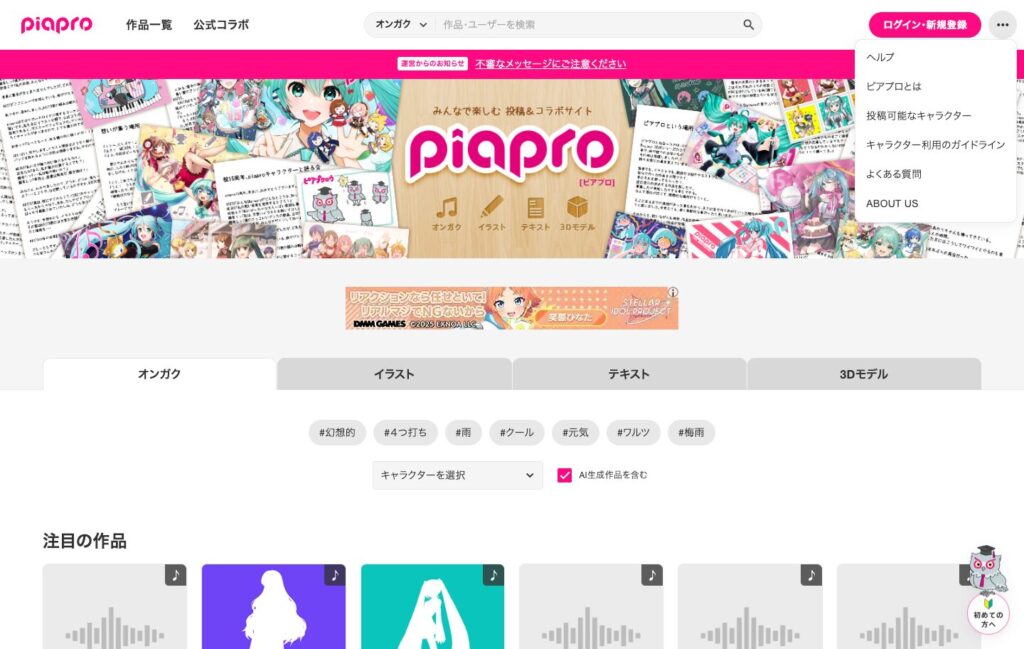
Crypton created a special rule called the “Piapro Character License (PCL)”. Under PCL, Hatsune Miku can be freely used for non-commercial purposes. This level of freedom is unheard of for other characters.
・“Feel free to use it” for personal enjoyment
・“Feel free to use it” for activities that don't generate income
・Commercial use is also OK with “simple procedures”
Compare this to other characters. While rules allowing free non-commercial use have become more common now, basic character usage is still prohibited.
What happened as a result of relaxing the copyright? More people could use Hatsune Miku, leading to an increase in related posts and greater recognition. This increased recognition then led to an increase in commercial value.
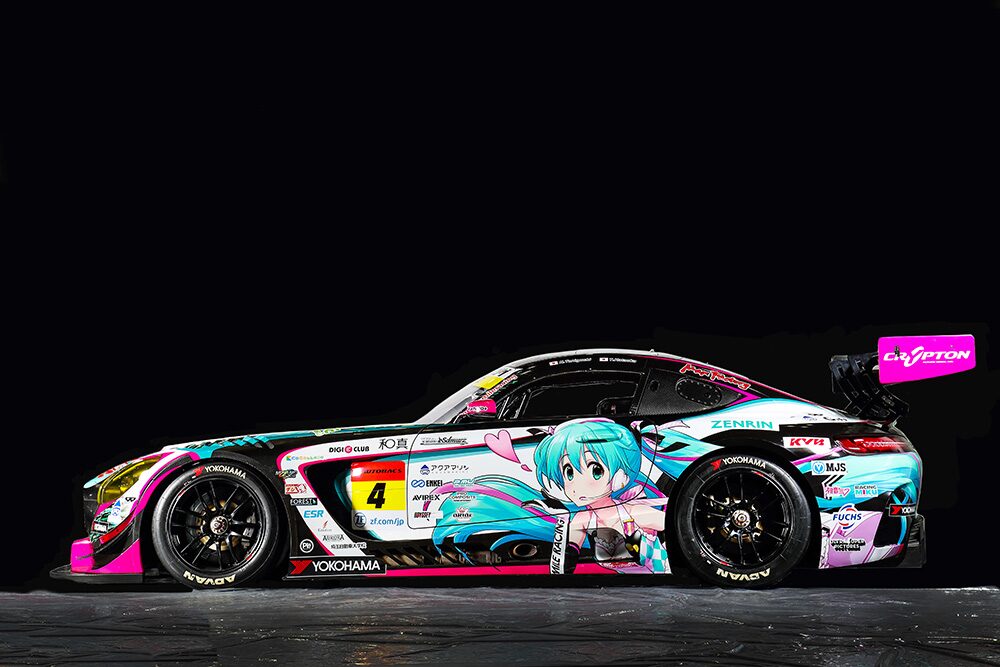
For example, thanks to this liberal copyright, various companies collaborated with Hatsune Miku.
If copyright had been strict, these collaborations might not have been discussed by users, and consequently, corporate collaborations might not have materialized. In other words, by loosening copyright restrictions for general users, the character gains exposure and popularity, ultimately leading to licensing revenue from companies.
Furthermore, the World Intellectual Property Organization (WIPO)'s “Hatsune Miku: Giving Creativity a Voice Beyond the Physical Realm” features Hatsune Miku as a successful case study in international trademark protection, demonstrating a well-balanced approach to both protecting and leveraging intellectual property rights.
The Hatsune Miku case teaches us that while protecting intellectual property through copyright is important, the concept of “opening up” to gain greater benefits is also crucial.
Key Point: Strictly prohibiting intellectual property isn't the only way to generate business results.
Evolving from a “song creation tool” to an “artist”
Hatsune Miku is not a character exclusive to Japan. Her popularity is also driven by how she transcends borders and language barriers through the universal language of music.
Magical Mirai is an opportunity to “prove her existence”
Magical Mirai is a place where Hatsune Miku, who shouldn't exist, makes you feel she is “truly there.”
At the live venue, a 3DCG Hatsune Miku stood on stage and got the audience excited together. It's precisely because you experience her not “on a screen” but “in the same space” that Hatsune Miku feels truly “alive.”
Indeed, at Magical Mirai held since 2023, over 10,000 people visited the live venue, and social media overflowed with posts like “I met Miku” and “She was alive.”
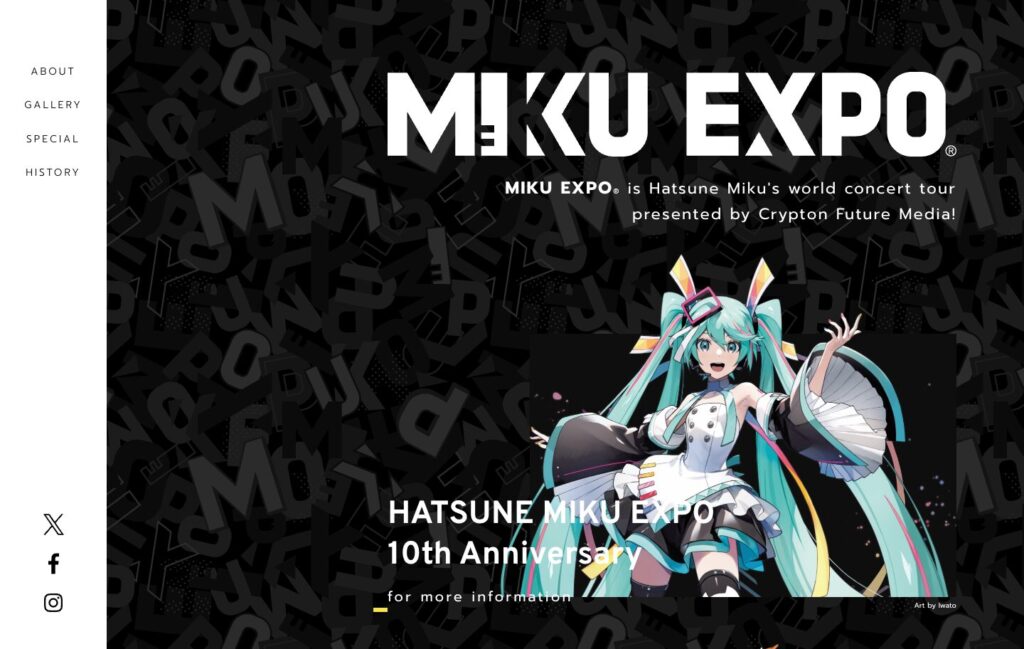
Furthermore, the success of the MIKU EXPO world tour physically expanded Hatsune Miku's presence globally. This innovative endeavor—a virtual character holding real-world concerts—garnered worldwide attention.
Additionally, Hatsune Miku performed at “Coachella,” one of the world's largest music festivals, in 2024.
In other words, while Hatsune Miku was born in Japan, she has now become an “international platform” supporting the creative activities of people worldwide. She has become a force connecting people through music, transcending language and cultural differences.
Point: Global content provides a “co-creation space” where people worldwide can participate.
How did Hatsune Miku's IP expand to achieve popularity and trend?
Hatsune Miku's popularity was born from a “self-sustaining IP expansion” driven by the spontaneous involvement of fans and creators.
While typical character IPs spread through companies creating and marketing works, Hatsune Miku was the opposite. “Fan creations” came first, and this became the catalyst for her widespread recognition.
How did Hatsune Miku, a character “nurtured by everyone's creations,” expand as an IP? Let's take a closer look.
The song “Senbonzakura” is a prime example of the “Vocaloid IP-style expansion” where music sparks stories and merchandise development.
Posted around 2011, “Senbonzakura” captivated many with its unique worldview. From there, fans expanded it into illustrations, PVs, stage plays, novels, and even merchandise.
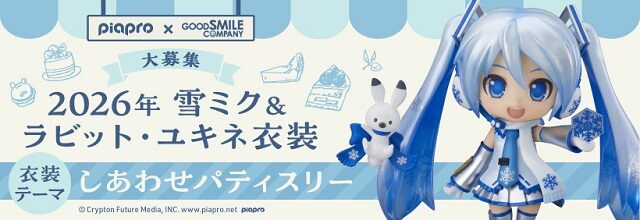
For example, ‘Senbonzakura’ started as just a single song, but the art created by fans spread, eventually leading to the creation of the “Senbonzakura Miku” costume, which became an official merchandise item.
KurousaP's original song “Senbonzakura” became a massive hit, surpassing 100 million views combined on NicoNico Douga and YouTube. It was adapted into a stage play in 2013 and novelized in 2014.
In essence, the song itself became the “worldview,” leading to a new form of expansion where fans later created stories and visuals.
Key Point: The Senbonzakura case proved that music can give birth to stories, characters, and merchandise.
Hatsune Miku merchandise is cherished as “a way for fans to spend time with Miku.”
Numerous forms of Hatsune Miku that fans can hold in their hands are sold, such as Nendoroids, life-size figures, and plushies. This allows fans to move from simply “looking at her” to experiencing “holding her, displaying her, and being with her.”
For example, items like the Nendoroid Hatsune Miku, with their physical form, become items that allow fans to feel “their favorite Miku” is more within reach.
By 2025, the scale of merchandise has diversified, including limited releases like life-size figures (approx. 190cm). New products are released annually around Hatsune Miku's birthday (August 31), creating an event that has become a tradition.
In essence, Hatsune Miku merchandise has evolved from mere “consumption” of the character into a means of “empathy and integration into daily life.”
Key Point: The merchandise expansion serves to establish Miku as a “presence that is always nearby.”
Collaborations with other IPs like Fortnite and Gundam
Hatsune Miku is a character well-suited for collaborations precisely because she lacks a fixed storyline, allowing her to blend seamlessly with other IPs. This aspect also contributes to her increased recognition through buzz.
Characters with overly strong worldviews are difficult to collaborate with other works, but characters like Hatsune Miku, with minimal backstory, easily adapt to any world. Therefore, she can naturally integrate with everything from “SF like Gundam” to “battle games like Fortnite.”
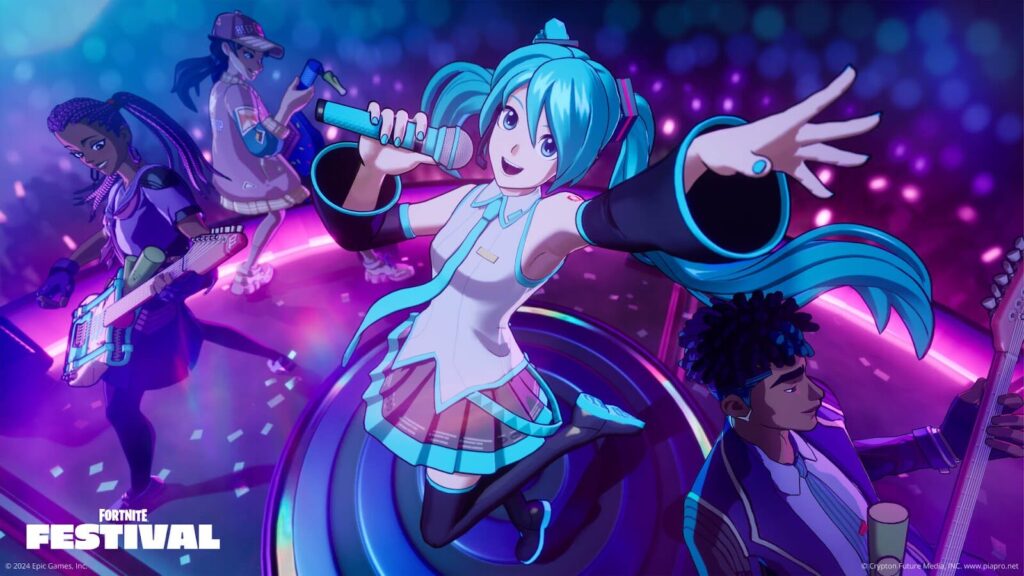
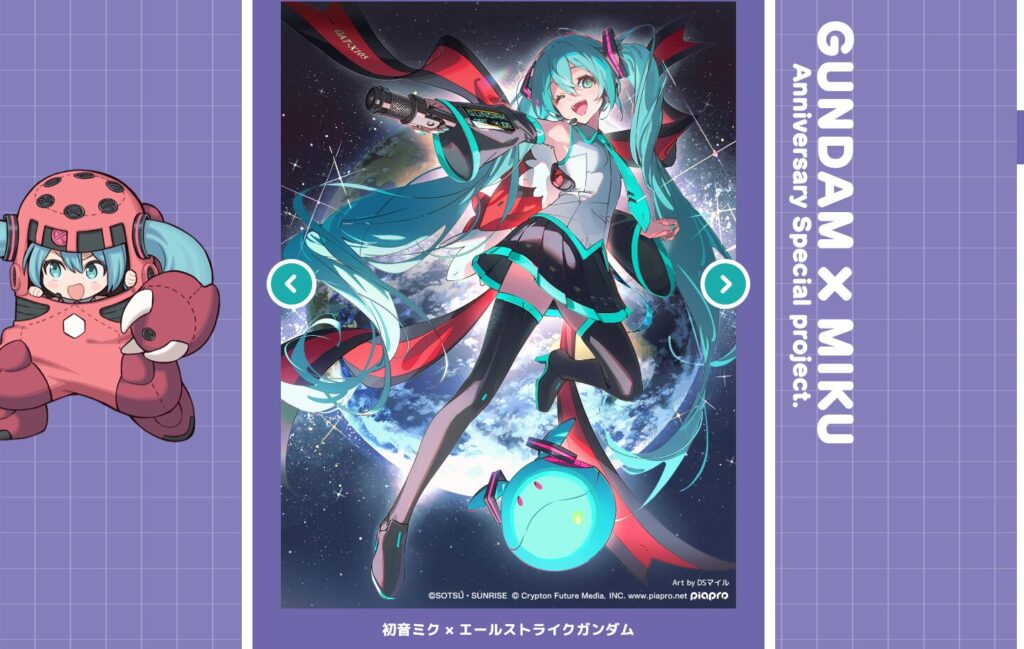
In Fortnite, Miku's dance emotes and outfits appeared, while the Gundam collaboration became a hot topic with visuals featuring her alongside iconic mechs. Both surprised fans with “Wait, Miku here?” moments while attracting new fan bases.
In 2023, she continued collaborating with brands like “Kataage Potato,” “Gundam,” and “Pokémon,” each partnership creating synergistic effects.
In other words, Hatsune Miku is an IP that can seamlessly enter other worlds, not just her own fanbase, precisely because of the “blank space” in her character design.
Key Point: Miku can naturally blend with IPs from different genres, making it easy to generate buzz.
Why “Hatsune Miku” remains popular today
Let's summarize the key points so far.
Hatsune Miku was deliberately designed with minimal settings to remain “unfinished,” encouraging fan creations.
A “co-creation cycle” has emerged where fans create works that inspire other fans.
Platforms like YouTube and Niconico Video function as fertile ground for expanding these creations.
The Piapro Character License provides an environment where fans can create with peace of mind.
By “opening up” copyright, the company actually expanded recognition and revenue.
Hatsune Miku functions more as a “community connecting people” than as mere “technology.”
She connects the hearts of people worldwide through the universal language of music.
Hatsune Miku transcends being just a tool and is recognized as an artist.
Hatsune Miku's enduring global popularity over 17 years stems not only from technological evolution but also from the “co-creation space” where fans actively participate. The novel concept of a “character completed by everyone,” rather than a “finished character,” sparked fans' desire to participate and fostered deep attachment.
Precisely because it's their own character, each fan maintains enduring affection. As these connections spread, they continuously generate new topics of discussion.
When considering the future of the anime industry and content business, the success hints Hatsune Miku demonstrates cannot be overlooked. Please consider them as a reference when advancing your IP business.
Marketing Perspective in Japan: Beyond Just Creation
NOKID provides creative planning and production for PR using characters, events, and video content. Effective videos balance business and creative perspectives, e.g., short clips optimized for TikTok, designed to capture attention in the first 2–3 seconds.
For first-time animation or PR-focused content, feel free to consult with us.
Tokuma Kanna
Founder and CEO of NOKID Inc., a premier creative studio specializing in short-form animation and graphic design. With a focus on narrative-driven visual storytelling, he has spearheaded high-profile projects across the global entertainment landscape. His portfolio includes the acclaimed VALORANT: YORU TYPICAL DAYS cinematic, the Hatsune Miku x Seven Premium 15th Anniversary campaign, and Koda Kumi’s music video "100 no Kotoba-tachi e." As a leading producer in the PV and MV sectors, Tokuma continues to redefine the intersection of animation and contemporary digital media.