Are you struggling with the complexity and high costs of character licensing agreements? Many companies have abandoned promotions using popular characters due to budget overruns or faced disputes caused by unclear contract terms.
You might think character licensing seems expensive and only worthwhile for large corporations and entities, but that's definitely not the case. Licensing fees are actually flexible and negotiable oftentimes, and by carefully defining the scope and duration of use, even small and medium-sized businesses can utilize them effectively. Furthermore, you don't necessarily need to focus on famous characters. Selecting characters that resonate with your target audience can yield a higher return on investment.
The difficulty in regard to character licensing lies in the complexity of contracts and the lack of transparency regarding costs. Particularly, proceeding with a contract without fully understanding royalty calculations or usage restrictions can lead to unexpected additional fees or failure to achieve the intended results. Additionally, neglecting market research can result in choosing a character that doesn't connect with your target audience, halving the effectiveness of your promotion.
However, when used properly, character licensing is a powerful tool for enhancing brand value. As a next step, start by clearly defining your company's target audience and selecting characters that align with them. Additionally, thoroughly reviewing contract terms beforehand and consulting experts when necessary will ensure you stay on the path to success.
・Learn the details about character licensing (IP rights)
・Understand the usage fees (market rates) for character licensing (IP rights)
・Discover key points to note in character licensing (IP rights) contracts
・Learn promotional methods utilizing character licensing (IP rights)
Character licensing: The rights (contract) to use another company's IP
The global licensed retail market size in 2023 was $356.5 billion, with the entertainment and character segment accounting for $147.6 billion, representing 41.4% of the total number. Characters from anime, games, and movies have become powerful tools for enhancing product appeal and elevating brand value. Below, we will introduce specific ways they can be utilized.
Reach new audiences with characters! What role does licensing play?
Character licensing is a contract where the rights holder (licensor) grants permission to another company (licensee) to use a character for commercial or marketing purposes.
Through this agreement, the licensee can use the designated character on product packaging, in advertising, and for merchandise development to aim for “increased brand value and sales.” Meanwhile, the rights holder can expand the character's recognition while monetizing it.
For example, consider a popular character being used on the packaging of a convenience store product. In this case, the character's recognition not only makes the product feel more familiar to the masses but also increases consumers' desire to purchase it.
Practical steps
1. Ensure the character aligns with your brand's values and message.
2. Select characters that resonate with your audience—approachable for children, nostalgic for adults.
3. Consider a strategy to cultivate the character as a brand symbol through sustained use, not just temporary deployment.
What is the licensing contract process? Steps to implementation
Licensing agreements typically proceed through the following steps. At each stage, clarifying terms and managing risks are key points.
Character selection
Confirming and contacting the rights holder (licensing agent)
Determining and negotiating contract terms (scope of use, duration)
Drafting, reviewing, and executing the contract
Commencing use of the license (copyright)
For example, consider a café chain obtaining a license for the popular character “Snoopy” to run a seasonal promotion.
Example
1. Selection:
Choose “Snoopy” after determining its approachable character aligns with the target audience
2. Approach:
Contact the licensing agent managing the character rights and confirm conditions
3. Negotiation:
Negotiate to limit usage to “store decorations and SNS campaigns” to reduce licensing fees
4. Contract:
Establish agreement by clearly defining usage scope, royalties, and violation procedures in the contract
5. Usage:
Begin usage according to the terms & pay royalties as stipulated in the contract
Practical steps
1. Define your purpose, budget, and target market, and gather all necessary information for character licensing.
2. Carefully review the terms and reach an agreement acceptable to both parties regarding royalties, usage restrictions, and other conditions.
3. Utilize the licensed character in promotions and products, then measure the results.
What clauses are included in a licensing contract? (Scope of use, Royalties, Term)
License agreements include clauses such as the following. In particular, the three most critical clauses for both the company using the rights (the licensee) and the rights holder (the licensor) are the scope of use, royalties, and the term. If these clauses are not clearly defined, there is a risk of disputes arising later on.
Clause
Content
Example
Scope of Use
・Product categories eligible for commercialization・Permitted regions and periods of use・Character usage guidelines (design, color, etc.)
・Product Category: T-shirts only・Available Regions and Period: Japan (retail stores), limited to one year・Character Usage: Specific designs and sizes・Colors require approval each time
Royalty
・Setting a fixed percentage of sales revenue・Setting a minimum guaranteed amount・Payment frequency (monthly, quarterly, etc.)
・Fixed percentage of sales: 10% of sales・Minimum guaranteed amount: ¥5 million annually・Payment frequency: Monthly
Quality control
・Product sample approval process・Compliance with quality standards
・Product sample approval: Prior approval required・Compliance with quality standards: Must adhere to specified print accuracy
Contract period
・Contract start date and end date・Renewal conditions
・Contract start and end dates: Start date to be determined; duration is one year・Renewal conditions: Renewal by mutual agreement on an annual basis
Exclusivity
• Exclusive license• Non-exclusive license
・Exclusive (Non-Exclusive) License: Non-Exclusive
Sublicense
・Permission (or prohibition) of sublicensing
・Permission for sublicensing: Prohibited
Trademark and Copyright Notice
・How to properly display rights information on products
・Audit Rights: Sales reports and inventory records may be audited up to once per year.
Post-contract termination arrangements
・Methods for disposing of inventory・Return of intellectual property
・Disposal of inventory: Cease sales in accordance with instructions・Intellectual property: Return all related materials
By clearly defining these conditions and limiting the scope, it is possible to enable character usage while aiming to expand revenue.
Practical Steps
1. Determine the scope of usage based on brand image and market strategy.
2. Select the optimal royalty model (fixed/variable) based on sales forecasts.
3. Adjust the contract period to align with campaign and product sales plans.
How to select character licenses (third-party IP) that align with your brand
Prioritize compatibility with your brand over mere character popularity
Popular characters may seem like an attractive option at first glance, but if they clash with your brand image, the marketing approach can backfire.
By selecting characters that align with your brand's values and message—not just their name recognition—you can convey a consistent image to consumers and boost brand loyalty.
For example, a brand promoting luxury using a comical character could create a disconnect with its brand image. Similarly, if a healthcare brand uses a character with violent imagery, consumers may question the brand's credibility.
Practical steps
1. Find a character that aligns with your brand's mission and core values.
2. Verify that the character's background and image are suitable for your brand's target audience.
3. Gather opinions on the character's impression and suitability through customer interviews or surveys.
Methods for differentiation even when competitors use the same character
Even with the same character, you can differentiate them through unique stories and usage. In such cases, it's crucial to devise distinctive stories and promotional campaigns.
For example, emphasizing different aspects or settings of the character, or creating a unique storyline, can provide a brand experience distinct from competitors. Additionally, developing unique combinations of the character with your company's products or limited-edition items can be effective.
Practical steps
1. Develop an original story that intertwines your brand's products or services with the character
2. Prepare special experiences or content that only your company can provide
3. Select promotional channels not used by competitors, such as SNS or events
Specific criteria for choosing characters that resonate with your target audience
When selecting a character, it is essential to thoroughly analyze the needs and preferences of the target audience. By choosing based on the target audience's lifestyle and values, the character can fulfill the role of eliciting empathy for the brand.
For example, choosing a retro character for a younger audience may backfire with trend-sensitive demographics. Conversely, it could resonate strongly with middle-aged and older audiences who feel nostalgia.
Detailed target criteria for character selection
Age group: Does the character's fan base align with your target audience?
Gender: If the character is strongly favored by a specific gender, consider this factor.
Cultural background: If the character is associated with a specific culture or region, is it suitable for your target audience?
Practical steps
1. Research the target audience's hobbies and preferences for characters
2. Select characters aligned with regional or national cultures and trends
3. Evaluate whether the character aligns with the brand's philosophy and vision
With these points in mind, select the optimal character license for your brand and build deep connections with consumers.
What should you watch out for in character licensing agreements (third-party IP)?
How can you prevent common issues? Common scenarios seen in licensing agreements
Overlooking blind spots in character licensing agreements significantly increases the risk of damaging brand value.
Common issues we've observed in character licensing agreements include “misalignment in interpreting usage scope,” “unclear royalty calculation methods,” and “violations of post-contract termination procedures.”
To prevent these, it is crucial to clearly specify usage methods and calculation formulas in the contract and ensure mutual understanding. Indeed, the Agency for Cultural Affairs' “Copyright Contract Guidelines” repeatedly emphasize the importance of clearly defining contract terms.
For example, consider a case where an apparel brand signed a contract to use a popular character on T-shirts. Despite the contract explicitly permitting only “domestic sales,” the brand proceeded with overseas sales via an online shop, resulting in the payment of substantial liquidated damages.
Practical steps
1. Clearly specify the scope of character usage (region, media, purpose)
2. Confirm restrictions and rights handling after contract expiration
3. Confirm the extent to which character usage is restricted by competitors or third parties
What concerns do rights holders have? Understand the intent behind contract clauses to negotiate more effectively
Licensors typically present terms favorable to themselves, but understanding their intent makes it easier to find room for negotiation. Specifically, “scope of use,” “royalty rates,” and “contract duration” are established to align expectations between parties.
For example, a “revenue-based royalty system” can be interpreted as the licensor expecting greater long-term profits rather than immediate fixed royalty income.
Practical steps
1. Consider how each clause benefits the licensor and propose a balanced counteroffer
2. Present concrete figures or case studies to demonstrate the contract's fairness
3. Have legal professionals or in-house counsel review the contract to prevent oversights
How to determine character license fees (third-party IP) and their market rates?
According to the Agency for Cultural Affairs' survey report, disputes in copyright agreements can sometimes arise from differences in interpretation of the contract terms. To align expectations before negotiations, it is particularly important to understand the sections related to usage fees.
How to set license fees? Calculation methods and why revenue-sharing is common
The appropriate price for a license fee is determined by balancing its impact on sales with its cost-effectiveness. While 5-15% of sales is a common benchmark in many licensing agreements, this reflects a balance between securing the licensor's profits and reducing the licensee's burden.
For example, consider selling snack foods using characters from a popular anime. Under a contract where the license fee is 5% of sales, the licensor can expect increased royalty income due to the character's recognition. For the licensee, while this reduces risk compared to a fixed-fee system, it may increase the financial burden.
Calculation method for license fees
The calculation method for license fees considers factors such as the character's market value, scope of use, and contract period. Fixed-fee systems, percentage-of-sales systems, or hybrid models may be employed.
Practical steps
1. Before signing a contract, verify the appropriateness of the license fee rate by conducting market research and comparing it with similar cases.
2. Analyze the market recognition of the character to be partnered with and the purchasing power of its fan base.
3. Limiting the scope of use to specific regions or time periods improves the efficiency of license fees.
※The above rates and guidelines are merely general estimates; actual license fees vary depending on individual contracts. To obtain accurate information, we recommend contacting the licensor directly.
Which is more profitable: “fixed fees” or “revenue sharing”? The structure of royalties
Fixed fees and percentage royalties each carry distinct risks and benefits, so companies must select the optimal structure based on their scale and product characteristics. The choice between these royalty structures depends on the licensee's business scale, revenue projections, and the character's influence.
For instance, a fixed fee structure is suitable when sales are stable, whereas a percentage royalty structure is a better option for mitigating risk when sales forecasts are uncertain.
Royalty structure
The percentage-of-sales model is widely adopted as a method that maximizes profits for both parties and facilitates risk sharing. On the other hand, the fixed-fee model offers clear costs and simplifies budget planning, but it requires a guaranteed level of sales to be viable.
Practical steps
1. Calculate whether a fixed fee or sales-based commission is more advantageous based on business scale and projected sales.
2. Consider a fixed fee if the character significantly impacts sales.
3. Include a clause allowing a switch from a sales-based commission to a fixed fee once the business stabilizes, using the commission model during the trial period.
How to control license fees that vary based on character popularity?
Generally, brands with higher brand recognition tend to command higher royalty rates, demonstrating that influence impacts licensing fees. However, even highly popular characters can have their licensing fees controlled through strategic contract terms.
While being a popular character directly correlates with high licensing fees, costs can be reduced by adjusting the scope of use, duration, and promotional methods.
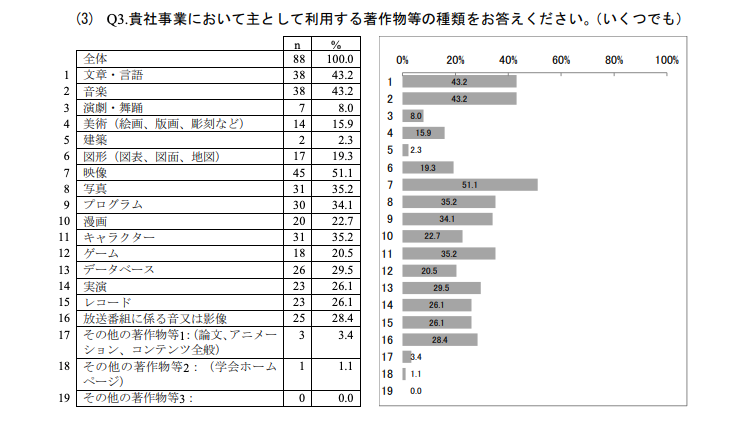
As shown in the above survey, most copyrighted works fall under the categories of “text/language,” “music,” and “video,” accounting for a significant proportion. In a majority of cases, usage can be limited to some form of promotion only.
For example, while purchasing a full set of high-end brand bags is expensive, costs can be reduced by choosing limited-edition designs or partial usage. Similarly, character usage costs can be minimized by restricting how they are used.
Key implementation points
1. Media restriction: Limit the media used (TV commercials, web ads, in-store POP) and exclude other uses from the contract.
2. Regional restriction: Limit the usage area to domestic or specific regions to curb unnecessary costs.
3. Popularity restriction: Select niche characters likely to gain popularity to keep costs down while aiming for first-mover advantage.
4. Period restriction: Limit usage to specific campaign periods or seasons.
Strategies learned from successful promotions using character licenses (third-party IP)
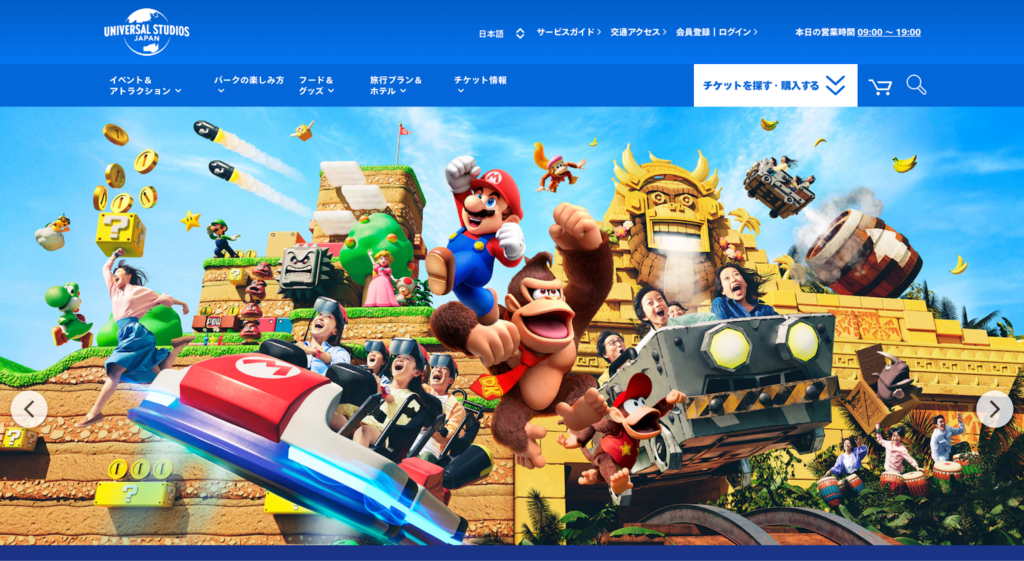
USJ (theme park) success case: Creating a unique world by combining multiple IPs
USJ holds a theme park operation license from Universal Studios in the United States. Initially, characters were licensed to USJ through sublicenses from Universal Studios, which had contracts with each licensor. In recent years, USJ has increasingly negotiated and signed contracts directly with each licensor.
The introduction of the Harry Potter-themed area, recreating the world of the series, is particularly famous for dramatically increasing visitor numbers and revenue. For movie fans, the immersive experience of stepping into the story undoubtedly contributed to enhancing the brand's value.
Licensed properties
Hollywood films: Harry Potter, Jurassic Park, etc.
Anime/Manga: Demon Slayer, Attack on Titan, One Piece, etc.
Games: Super Nintendo World
Characters: Minions, Sesame Street, Hello Kitty, etc.
Companies: Collaborations with McDonald's Japan, etc.
Characteristics of license usage
Limited-time nature: Many collaborations are time-limited, designed to maintain freshness
Immersive experiences: Combines with cutting-edge technology like VR and XR attractions
Multi-faceted expansion: Collaborations span attractions, merchandise, food, hotels, and more
Regional considerations: Initiatives like “Universal Cool Japan” target overseas markets
Expected Effects
Target expansion: Attracts visitors beyond movie fans, including families, those outside the Kansai region, and international guests
Sustained novelty: Regular collaboration updates drive repeat visits and reach new demographics
Brand value enhancement: Collaborations with renowned IPs elevate USJ's own brand value
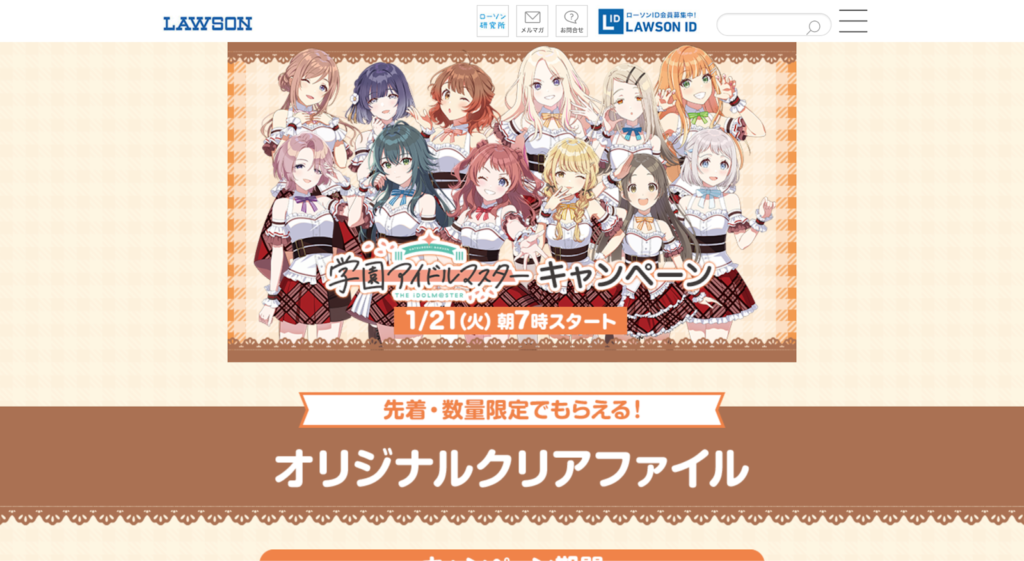
Lawson creates reasons for customers to visit by launching collaboration products centered on anime and game licenses, as well as running its own campaigns.
Lawson's Licensing Structure
Lawson enters direct contracts with each licensor to implement collaborations. It launches collaborations with characters and content as limited-time products and campaigns.
Licenses used
Anime/Manga: “Demon Slayer: Kimetsu no Yaiba,” “Dragon Ball,” “Pokémon,” etc.
Games: “Monster Hunter,” “The Idolmaster Cinderella Girls,” etc.
Characters: “Rilakkuma,” “Sumikkogurashi,” etc.
Movies/Dramas: “Star Wars,” “Harry Potter,” etc.
Characteristics of license usage
Limited-time nature: Collaborations are fundamentally campaign-based (limited-time), maintaining freshness
Product development: Unique original collaboration products are developed and sold, offering distinctiveness
Multi-faceted approach: Diverse collaboration methods including products, campaigns, and store decorations
Regional considerations: Some collaborations are limited to specific regions
Expected effects
Increased customer attraction: Collaborations with popular characters lead to new customer acquisition and increased visit frequency
Product differentiation: Original collaboration products differentiate the brand from competitors
Enhanced brand image: Collaborations with popular content boost brand favorability
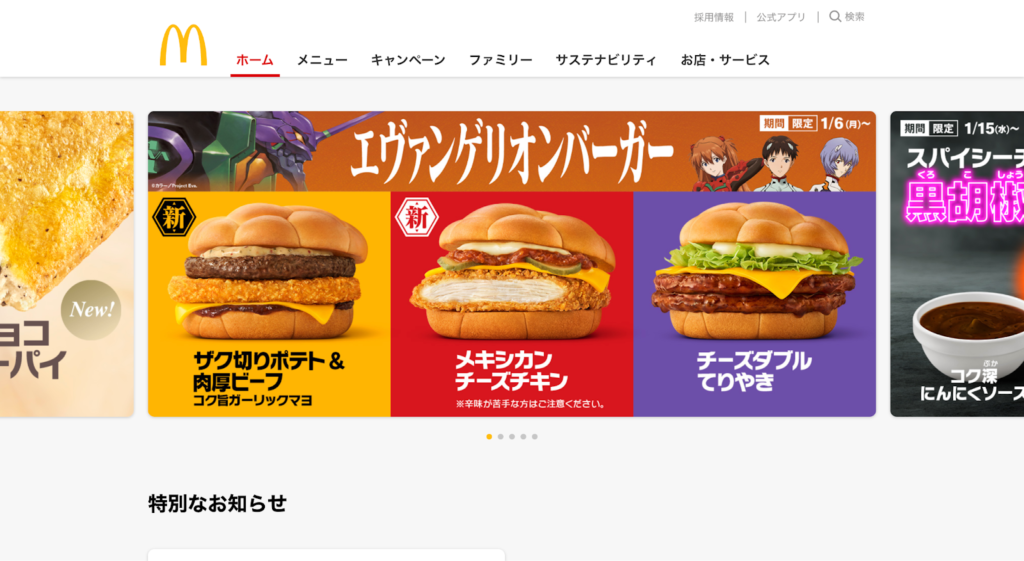
McDonald's keeps repeat customers engaged not only with standard menu items but also by offering limited-time collaboration products under various licenses.
McDonald's licensing structure
McDonald's collaborates between its global headquarters and national affiliates to contract with licensors. It pursues both global collaborations and country-specific collaborations.
Licenses used
Movies: “Minions,” “Spider-Man,” etc.
Anime/Manga: “Dragon Ball,” “Pokémon,” etc.
Characters: “Hello Kitty,” “Disney Characters,” etc.
Sports: Olympics, FIFA World Cup, etc.
Characteristics of license usage
Global rollout: Conducts worldwide collaboration campaigns
Happy Meal: Regularly collaborates with children's toys for high recall
Limited-Time menus: Strategically develops and sells limited-edition menu items in collaboration with long-selling products
Digital utilization: Also runs campaigns utilizing apps and AR
Expected Effects
Attracting families: Promotes visits from families through children-focused collaborations
Enhancing brand value: Strengthens image as a global brand
Generating buzz: Secures media exposure and word-of-mouth through large-scale collaboration campaigns
Summary of methods to enhance brand value using character licenses (third-party IP)
Let's summarize the key points so far.
Character licensing is a system where a licensee (company) contracts with a licensor (rights holder) to commercially use a character.
By leveraging the character's recognition and appeal, it can enhance brand image and increase sales.
The process requires selecting a character, contacting the rights holder, and negotiating contract terms.
The contract should clearly specify the scope of use, royalty rates, duration, and other details.
Ambiguity in the “scope of use” can lead to future disputes, so precise definition is crucial.
Royalty rates should be adjusted to align with the contract's revenue model, such as percentage-based or fixed fees.
Verify alignment not only with the character's popularity but also with the brand's values and target audience.
Even if competitors use the same character, differentiation is possible through unique storytelling and usage.
Specific usage examples, such as a cafe chain's promotion using “Snoopy,” significantly boost brand recognition.
Successful corporate examples exist, like USJ and Lawson, leveraging character collaborations.
License fees can be controlled by limiting the scope of use and duration.
Measure the character's ROI (Return on Investment) to concretely evaluate the value of the contract terms.
It is crucial to clearly stipulate in the contract how to dispose of inventory and return intellectual property.
Offering exclusivity and immersive experiences is key to successful character licensing.
Selecting characters that meet target audience needs and executing effective promotions are crucial.
Character licensing is a powerful tool for enhancing brand value. By selecting appropriate characters and carefully designing contract terms, businesses can deepen emotional connections with consumers and drive growth. Achieving this requires analyzing market trends and thoroughly understanding contract clauses.
First, check out the specific guidebook on characters available for download on the page below.
Marketing Perspective in Japan: Beyond Just Creation
NOKID provides creative planning and production for PR using characters, events, and video content. Effective videos balance business and creative perspectives, e.g., short clips optimized for TikTok, designed to capture attention in the first 2–3 seconds.
For first-time animation or PR-focused content, feel free to consult with us.
Tokuma Kanna
Founder and CEO of NOKID Inc., a premier creative studio specializing in short-form animation and graphic design. With a focus on narrative-driven visual storytelling, he has spearheaded high-profile projects across the global entertainment landscape. His portfolio includes the acclaimed VALORANT: YORU TYPICAL DAYS cinematic, the Hatsune Miku x Seven Premium 15th Anniversary campaign, and Koda Kumi’s music video "100 no Kotoba-tachi e." As a leading producer in the PV and MV sectors, Tokuma continues to redefine the intersection of animation and contemporary digital media.