Behind the scenes of the short-form anime production process! The secrets to capturing viewers' attention through planning, production, and outsourcing
The greatest appeal of creating short animations and sharing them on social media and in ads is that they instantly make viewers think “This looks fun,” making it easy to get them to stop what they're doing and watch.
When users watch “trending TikTok videos” or “funny YouTube Shorts,” they play the videos voluntarily. In other words, they aren't forced to watch.
Given this context, it's only natural that some people think: Unlike typical ads, short animations enjoyed as entertainment are more likely to be watched all the way through and remembered.
However, the moment they ask themselves, “How do I make one?”, many people stop in their tracks.
“What kind of story should I create?”
“I've never made an animation before—can I even do this?”
“Wouldn't hiring a pro cost too much?”
It's no wonder these concerns cross your mind. In reality, precisely because short animations are brief, they demand “a structure that hooks viewers instantly” and “a fast-paced rhythm that keeps them engaged.” Simply making one isn't enough. Visuals and music, character movements, whether to include dialogue... there are mountains of things to consider.
And the biggest worry is likely the question: “Will it really be effective?” What if you invest time and money, but the view count doesn't grow and it doesn't stick in anyone's memory...
That's why this time, we'll explain short animation production phase by phase: from planning and conceptualizing the structure to tips and examples for outsourcing.
<Key Points of the Article>
・Learn about planning methods for short animation production
・Learn about the creative aspects (content) of short animation production
・Learn about outsourcing methods for short animation production
・Learn about specific examples of short animation production
・Learn about copyright risks in short animation production
How to plan short-form anime productions: “Just do it” is a no-go
The rapid growth of TikTok and YouTube Shorts has brought short animations into the spotlight as a means for individual creators to share their work and as a promotional tool for businesses. However, simply creating without planning won't make your content go viral.
Viewers decide whether to stop scrolling or skip past your content in less than a second. This means that to succeed with short-form animation, you need a strategy designed to influence viewer behavior.
“Just do it” won't cut it! The one crucial question before production
Many creators say they want to make something interesting, but if they produce content without considering the viewer's perspective, their videos are more likely to be skipped.
The first question to ask: “In what kind of everyday situation will viewers watch this anime?”
For example, by imagining viewing scenarios like the ones below, you can create content that resonates more deeply with your audience.
To target a wide market, focus on reaching “untapped viewer demographics.”
Reusing the Same Video Across YouTube, TikTok, and Instagram is a No-Go
Many creators post the same short animation across multiple platforms, but each platform has its own distinct culture, and viewers expect different characteristics from videos.
Platform
Ideal content
YouTube Shorts
Self-contained stories, search-friendly content
TikTok
Interactive content that sparks discussion in comments
Instagram
Visual-focused content that resonates and encourages sharing
Instead of just “making videos,” tailor your ideas for each platform to “drive viewer action.”
What's the difference between viral short anime and forgotten ones?
Replay value is more about “repeatability” than “shareability”
Many people believe “likes” and “shares” are the keys to going viral. However, as mentioned earlier, it’s also crucial for short animations to be “replayable”—meaning they spark debate and make viewers watch repeatedly to think deeply.
Other ideas worth considering include:
・“Music or dialogue rhythms that get stuck in your head”
・“Loopable endings that connect back to the start”
・“The jokes are so intricate you'll want to watch it again and again."
<Practical Points>
・Design the target viewing scenario
・Optimize the video presentation for each platform
・Create with a structure and theme that encourages repeat viewing
To succeed with short animations, focus not just on making something entertaining, but also consciously on generating viewer actions. With these points in mind, evolve your short animations into “content that won't be skipped.”
“Stirring debate” > “evoking empathy”
The common belief that “empathy-driven anime succeeds” might actually be mistaken.
The author believes empathy is crucial for steadily growing a fanbase through stable management, but what creates short-term buzz are “posts that divide opinion.”
A concrete example is Burger King's strategy of targeting McDonald's to create factions—a reference case that easily sparks debate.
Examples likely to spark debate: Anime content that tends to cause arguments in the comments
・Couple breakup stories → Debate erupts over “Is the boyfriend at fault? Or the girlfriend?”
・Pet training → Opinions clash over “Should you be strict? Or spoil them?”
Put simply, “Turning the comment section into a ‘battlefield’ makes it go viral.” However, avoid overly insensitive content. Instead, think of it as posing questions to encourage discussion and interaction.
Creative strategy for short anime production: Designing the viewing experience
Short animations must be more than just “short animations”; they need to instantly capture viewers' attention, keep them watching until the end, and create a viewing experience that makes them want to watch again and again.
Also, what sets the recently popular “WEBREEN anime” apart from traditional vertical short animations? From here, we'll explain the creative aspects of short animation production from a practical perspective.
For short anime expression, “Memorable Direction”
In movies and TV anime, smooth character movement is highly valued. However, in short animations, “memorable visual effects” are far more crucial.
Rather than creating realistic animation, the key lies in compositions, shot cuts, colors, and pacing that make viewers think, “This is interesting!”
For example, domestic limited animations create visual effects that capture viewers' attention by combining still images with movement to establish a sense of rhythm. Rather than “animating everything,” “animating only the necessary parts” allows short animations to effectively convey their stories.
The Key to Limited Animation Expression: Omission is the Essence of “Refined Expression”
Limited animation is a technique that reduces the number of animation frames, but it functions not merely as a cost-saving measure, but also as “direction that stimulates the viewer's imagination.”
<Characteristics of Limited Animation>
・Convey character emotions with minimal movement
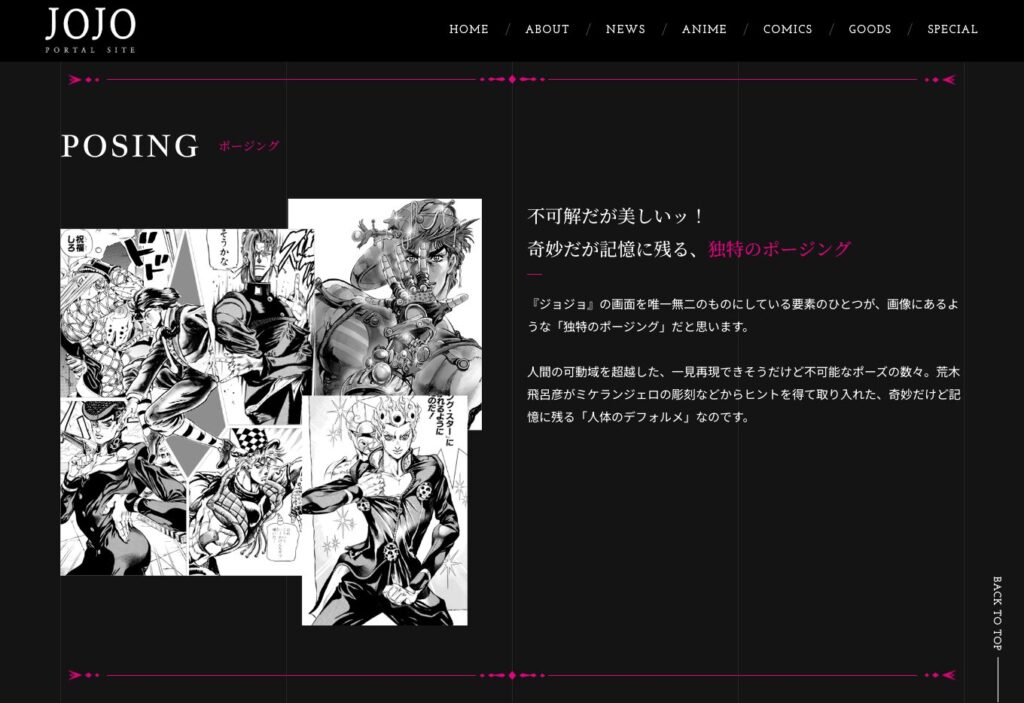
Example: Like “JoJo's Bizarre Adventure,” use onomatopoeia and unique cuts to create a sense of presence
・Create anticipation in viewers that “something will happen”
Example: Like “Neon Genesis Evangelion,” silence and still images paradoxically heighten tension
Limited animation leaves room for viewers to mentally fill in the gaps, making it more memorable. Apply this technique to short animations too—instead of showing everything, try directing in ways that “stimulate the viewer's imagination.”
Motion Graphics Expression Tips: Convey Information Through “Visual Rhythm”
Motion graphics is a technique that visually communicates information by animating text, shapes, icons, and more. In short animations, using this technique is effective for keeping the story simple while grabbing the viewer's attention.
<Scenes Where Motion Graphics Are Effective >
1. When conveying abstract concepts
Example: Like Apple commercials, where colorful geometric patterns move rhythmically to emphasize the brand's sophisticated impression.
2. When you want to keep the viewer's eyes engaged and emphasize tempo
Example: Frequently seen in trending TikTok videos, where animated text is used extensively to draw viewers in
3. When conveying a story without narration or dialogue
Example: Like in American animated works, combining simple characters with exaggerated movements to convey meaning visually alone
By incorporating motion graphics elements appropriately in short animations, you can create “visuals that smoothly convey information without compromising immersion.
Expression Techniques: “Vertical formt short anime” and “WEBREEN anime” are not the same
The recently trending “WEBREEN anime” can be seen as an evolution of vertical short anime, but it's not just “anime in a vertical format.”
<Characteristics of Vertical Short Anime>
・Short length (5–30 seconds) to instantly grab viewers' attention
・Optimized for platforms like TikTok, Instagram Reels, and YouTube Shorts
・Frequent use of character close-ups and dynamic text effects
・Story structure designed for loop playback
<Characteristics of WEBREEN Anime>
・Emphasis on “web-optimized viewing experiences” (not limited to vertical, includes smartphone scroll formats too)
・Requires a story that works as entertainment even in short formats
・May include interactive elements (e.g., branching stories where viewers choose options)
・Produced with different viewing experiences in mind for each platform (e.g., varying presentation for TikTok and YouTube)
In other words, WEBREEN anime isn't just “vertical anime”; it's the viewing experience itself, designed based on viewer behavior.
Future short animations will likely move beyond being mere “vertical short animations” to become visual experiences that utilize techniques to maximize viewer immersion (the viewing experience).
The key for short animations isn't just motion; it's “how to immerse viewers in the shortest time possible.” To create visuals that stick in viewers' memories, let's leverage these techniques and pioneer new viewing experiences.
Which is more likely be well-received by viewers?—2D vs 3D
While many assume “3D is more realistic and better,” it's often said that viewers accustomed to domestic anime frequently feel uneasy about 3DCG animation.
This means that even in short animations, “too realistic visuals” can sometimes turn viewers off. Therefore, it's important to consider not only smoothness but also whether viewers feel a sense of discomfort.
In such cases, a recommended approach is to incorporate “3D animation” combined with “2D elements.” Specifically, even in 3D animation, techniques like “frame drops” and “line-art style textures” can help reduce viewer discomfort.
Character Design: Make an impression through “movement” rather than “form”
Character design is important, but in short animations, movement patterns and actions are crucial.
△ “To create an appealing character, detailed design is necessary.”
◯ “What viewers remember is the movement that symbolizes the character.”
For example, movements like “Doraemon reaching into his pocket” or “Sazae-san's rock-paper-scissors pose” are instantly recognizable just by the action, even if you don't know the character's name. In other words, crafting memorable movements is essential for leaving an impression.
Key points for designing memorable characters
1. Give them iconic movements so “specific poses = that character”
Example: “Shin-chan's shy smile,” “Pikachu's 100,000 Volt Thunderbolt”
2. Use distinctive movements to create a “This character means this!” impression
3. Focus on creating specific expressions rather than facial features
Example: “Pixar characters raising one eyebrow”
3 Techniques to Convey Emotion Through Direction
1. Use “3 frames” to express rich emotion with minimal character movement
While standard animation uses “12-24 frames” for movement, short animations effectively use as few as 3 frames to strengthen impact.
Example: Surprised Expression・Neutral face → Eyes widen → Return to neutral expression
2. Exaggerate and deform the character's expressions and movements
Larger expressions and movements clearly convey emotions without words. Focus on “exaggeration instantly understandable to viewers,” not “reproducing realistically possible states.”
Specifically, use deformed movements rather than realistic human motion. Consider techniques like these:
Example: Expression of Anger
Suitable for Anime: Angry face → Face turns bright red → Waves both hands up and down
Suitable for Live-Action: Attempts to depict realistic, subtle facial changes
・Joy → Spreads arms wide, jumps up and down with whole body
・Surprise → Eyes widen dramatically, steps back forcefully
・Anger → Face turns red, clenches fists, body shakes
・Sadness → Drops shoulders, walks with head down
Disney's classic animations employ a technique where character movements are drawn “exaggeratedly” to instantly convey emotions to the viewer.
For this reason, making movements larger clearly communicates the character's emotions.
Script & Plot Creation: A structure that keeps viewers hooked until the end
The “introduction, development, twist, conclusion” framework is well-known for storytelling, but in short animations, the priority is getting viewers to stop swiping. Therefore, the standard approach is to avoid lengthy introductions.
△ “Stories won't get the message across unless they follow introduction, development, twist, conclusion.”
◯ “If you don't start with highlights like the ‘development’ and ‘twist,’ it's easy to get skipped over.”
The ideal scenario for short animations isn't introduction, development, twist, conclusion.
1. Hook: “A powerful line that cuts to the heart,” “jumping straight to the main point,” “a shocking scene”
2. Surprise: An unexpected development that draws them in with “Huh? What just happened?!”
3. Close: End with a punchline or deliberately leave them wanting more
4. Action: Create “discussion in the comments” or “a flow that makes them want to follow”
Viewers decide whether to leave within the first 2 seconds. This means a traditional “introduction-development-turn-conclusion” structure risks being skipped right at the ‘introduction’ stage.
Recommended Structure for Short Anime: Think in Terms of the 4C Framework
Our company, which has worked to expand awareness for a wide range of IPs through vertical short anime, proposes the “4C (Catch, Change, Close, Comment) Framework.” This is a video structure framework designed with viewer behavior on short video platforms in mind.
<Details of the 4C Framework>
4C Elements
Role
Examples
Catch (Capture)
Grab attention within the first 2 seconds Start with a scene that makes viewers think “Huh? What happens next?!”
A powerful line or visual impact
Change (Shift)
Unexpected twists or plot developments A reversal or plot twist that makes viewers think “Oh, that's how it goes!”
Unexpected character actions or gap-creating moments
Close
A clear punchline or message A self-contained story or an ending that leaves you wanting more
A satisfying “Ah, I see!” moment
Comments
Design that encourages viewer participation (comments) Questions like “What would you do?”
Content that sparks debate by dividing opinions
<Reference Example of 4C Structure>
1. Catch (Grab the audience instantly)
Include a “Huh?” moment within the first second
“Walking into the classroom, the teacher had transformed into a giant robot!”
2. Change (Draw viewers in with unexpected developments)
Incorporate unexpected gaps or plot twists that defy expectations
“The moment I tried to confess, the other person turned invisible!”
3. Close (Satisfy the audience with the punchline)
Design an ending that leaves them feeling refreshed or with lingering thoughts
“The moment I hugged my girlfriend who had become invisible, I turned invisible too!”
4. Comment (Mechanism to elicit audience reaction)
Get viewers thinking: “What do you think happens next?”
“Before the two invisible people, another mysterious transparent figure appeared...”
Simplicity that conveys the story through visual expression alone
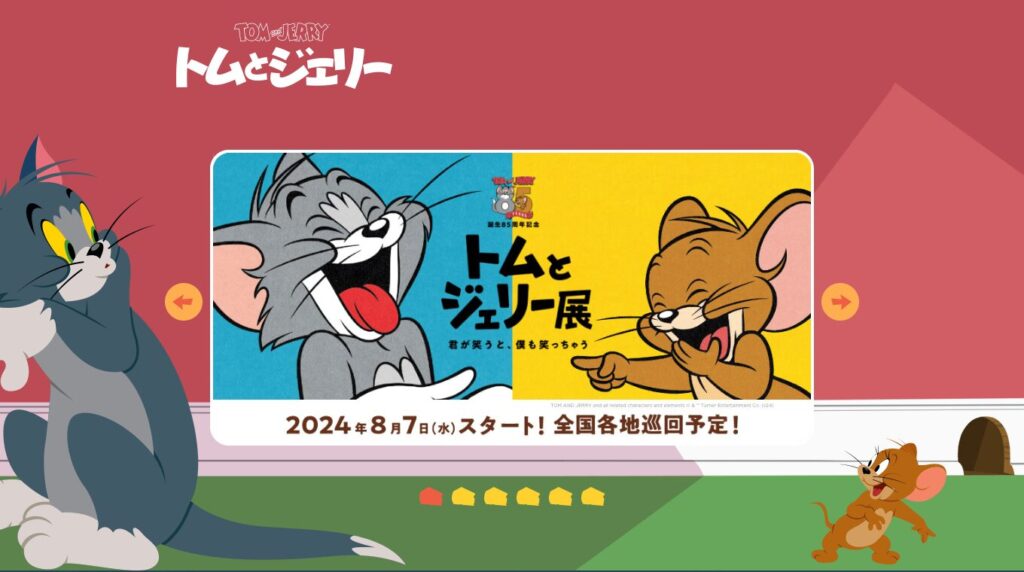
Take “Tom and Jerry” as an example: the story works almost entirely without dialogue. This is thanks to the characters' opposing dynamics and simple situational setups.
<Tips for Creating Stories That Communicate Through Visuals Alone>
1. Clearly define the conflict structure (e.g., protagonist vs. antagonist)
2. Create punchlines through movement alone (e.g., explosion → charred remains → dejected expression)
3. Include direction that sparks viewer imagination (e.g., heightening tension before opening a door)
As shown, stories can be conveyed solely through character actions and camera work, even without dialogue. When needing to communicate quickly, like in short animations, consciously prioritize simplicity.
Key Points: Storytelling Techniques
・Make characters memorable through “movement,” not just ‘design’
・Use the “4C Structure” to hook viewers and prevent drop-off
・For “3D,” deliberately maintain a 2D feel to avoid awkwardness
・“No voice acting” significantly increases global reach potential
・Ideally, “adjust editing methods” for each distribution platform
Succeed in short animation production by focusing on “how it will be viewed,” not just “how to make it.”
Narration & Sound Effects: What makes something “effective even without words”?
“Animation can't convey meaning without dialogue.” Don't you think so? However, simplicity that communicates effectively without words is also a crucial concept.
In fact, short animations that avoid dialogue are often more accessible and memorable to global audiences. Classics like Tom and Jerry and Mickey Mouse are universally beloved precisely because they succeed without dialogue.
Key Points: Checklist for Creating “Voice-Free” Animation
1. Can “emotion” be conveyed through character movement alone?
2. Can BGM/sound effects serve as “substitutes for words”?
3. Is the structure designed so the story can be understood visually alone?
Why it works without words: Direction that bridges the visual-language gap
We usually communicate through conversation. While the content of speech might seem crucial, visual information is actually more intuitively understood than language.
For example, when watching a movie scene, you often instantly understand whether a character is sad or happy. This is because visual elements like expressions, movements, colors, and composition directly convey emotion.
Why are “silent animations” suited for global audiences?
1. They overcome language barriers
・Without words, viewers from any country can enjoy them without feeling out of place
・Eliminates the need for foreign subtitles or dubbing, leading to cost savings
2. It broadens viewer interpretation
・The absence of words allows viewers to enjoy forming their “own interpretation”
・Fosters analysis and discussion, making it more likely to spread on social media
3. It facilitates emotional connection
・Even without language, characters' feelings are conveyed through movement and sound alone
・Simpler direction allows viewers to empathize more easily with characters
In other words, stripping away words actually stimulates viewers' imagination and enhances immersion.
Reinforce the emotional aspects of the story with BGM and sound effects
“Sound” plays a role in adding emotion to visuals. Especially in anime without narration, sound effects and BGM are essential for “aiding viewer comprehension.”
<Sound Effect Usage Examples>
・Express character personalities through distinct footstep sounds (light, quick steps = cheerful; heavy footsteps = tired)
・Use “BOO!” to emphasize surprise, “SHHHH” to build tension
<Examples of BGM Usage>
・Create a joyful atmosphere with a light melody
・Use piano bass notes to convey unease or tension
・Employ a violin's gentle melody for emotional scenes
As shown, the choice of sound can drastically alter an anime's impression, so careful selection is recommended.
Key Point: The Strength of Wordless Animation
・Reaches a broader audience beyond language barriers
・Stimulates viewers' imagination, creating more memorable content
・Stories can be conveyed without words by leveraging movement and sound
By stripping away words, you can appeal more directly to viewers' emotions. Next time you create a short animation, challenge yourself to see how much you can convey using only “visuals and sound,” deliberately avoiding narration or dialogue.
Optimized Production for Distribution Platforms: “Posting the same video everywhere” is a no-go!
While the gap between YouTube and TikTok is narrowing, viewer behavior patterns are not identical. Ideally, content should be optimized for each platform.
<Editing for YouTube Shorts>
・Keep the opening short and dive straight into the story
・Add subtitles (so viewers can watch without sound)
・A “series” strategy is effective for growing subscribers
<Editing for TikTok>
・Include “shocking visuals” or “weird lines” in the first second
・End in a way that encourages looping playback ・Create “space for viewers to comment with their opinions”
Rather than focusing on “where to post,” tailor your creation based on “where and how it will be viewed.”
Key Point: Optimize for the distribution platform
・Differences between SNS platforms have decreased, but the content that resonates isn't the same
・Change your editing approach for YouTube and TikTok
Focus on “how it will be viewed” rather than “how to make it?” to get better reactions with your anime.
Short animations can dramatically increase their impact not only through standalone success but also by integrating with other content. Collaborations with music, especially, and co-creation with creators from different genres enable reaching a broader audience.
Collaborative Music Video Production with Artists: Enhancing Song Promotion
Why are short animations and music such a good match? The reason is that by engaging both sight and sound, they can more powerfully imprint the song's worldview.
While music alone possesses the power to stir emotions through sound, adding animation allows viewers to form more concrete stories and imagery. This principle is similar to how novels, originally text-only, gain new fan bases when adapted into visual media.
<3 Benefits for Artists Creating Short Anime Music Videos>
1. Adding narrative depth makes the song's message clearer
2. Easier to spread on social media, leaving a strong impression even in short formats
3. Adaptable to diverse platforms like YouTube, TikTok, and Instagram
Looking at recent successful anime MV examples, they share a common trait: presenting the song not just as a music video, but as a complete “work” accompanied by visuals.
These artists create music videos that linger in viewers' memories by seamlessly integrating visuals and story, rather than simply setting songs to images.
Storytelling or Loopability: Which Type of Music Video Spreads More Easily?
It's hard to say definitively which spreads more easily. However, if I were to share my personal view for reference, on YouTube—where long-form videos are common and content is viewed across various devices—story-driven music videos seem to be preferred.
On the other hand, TikTok primarily features short-form videos, so stories tend to be simpler—which might make them harder to express in an MV. Therefore, I get the impression that MVs designed for easy looping tend to increase watch time and spread more easily.
Features
Story-driven MVs (for YouTube)
Highly loopable MVs (for TikTok)
Visuals based on lyrics
isuals based on lyrics with a clear narrative structure
Choosing between the two requires understanding the platform's characteristics and designing accordingly for your target audience.
Lyric-faithful visuals or abstract expression: Which music video resonates more with viewers?
While directly visualizing lyrics conveys meaning intuitively, unexpectedly abstract visuals tend to stimulate viewers' imagination and generate longer-lasting buzz.
Choosing between the two requires understanding the platform's characteristics and designing accordingly for your target audience.
Visual Style
Advantages
Disadvantages
Visuals faithful to lyrics
Story is easy to understand, clearly conveys the song's intent
Prone to feeling familiar, lacks surprise
Abstract visuals
Expands viewers' interpretation possibilities, encourages analysis and discussion on social media
May make it difficult to convey the song's intent
Abstract visuals pair well with art animation, which expresses them with an artistic aesthetic. On the other hand, visuals that bring lyrics to life include lyric videos.
Choose based on your strategy—whether you prioritize reach and buzz, or want to build a distinct world.
How to Boost Visibility Through Collaborations with Creators
Why are short anime collaborations so effective? Collaborations between creators offer more than just the benefit of “reaching each other's followers.” Their strength lies in the ability to combine each other's artistic styles and worldviews, thereby opening up new fan bases.
<Synergistic Effects of Collaboration>
1. Creators can reach each other's fanbases
2. Combining different genres creates new forms of expression
3. In the SNS era, “co-created content” tends to generate buzz
Should you choose a collaboration partner based on “follower count” or “worldview alignment”?
Collaborating with someone with a large follower count tends to generate buzz, but what truly matters is aligning worldviews.
How to choose collaboration partners
Pros
Cons
Choosing based on follower count
Generates short-term buzz easily
Won't stick if fan bases don't align
Choosing based on content
Enables long-term branding
May take time to generate buzz
Rather than focusing on short-term buzz, it's better to choose partners who can help create a “new culture.”
Key Point: Collaborative Short Anime Production That Adds Value
・Prioritize shared worldviews over follower counts in collaborations
・Build anticipation before release through advance announcements
By adopting the perspective of “creating a crossroads between art and entertainment” rather than merely producing visuals, short anime can become content with even greater potential.
Outsourcing short animation production: Key points for successful requests
When considering outsourcing a short animation, many people struggle with questions like “Where should I place the order?” and “How much budget is needed?”
However, simply searching for the cheapest production company often results in a finished product that doesn't meet the desired quality standards.
What's the typical cost for short animation production?
Short animation production costs vary significantly depending on the techniques used, runtime, and quality (frame rate). The table below provides a rough estimate.
Price Range 100,000 to 300,000 yen
Production Time 1 to 2 weeks
Ideal Platforms TikTok, Twitter posts
The expressive techniques used in short animations include 3DCG and 2D animation.
3DCG animation generally costs more than 2D animation because it requires numerous processes such as modeling, rigging, animation, and rendering.
*The production cost for one minute of 3DCG animation can range from several million to tens of millions of yen.
On the other hand, 2D animation tends to be more cost-effective compared to animation using 3DCG. However, costs can vary significantly depending on the number of drawings and the animator's skill level. Even for one minute of 2D animation, production costs can range from several hundred thousand to several million yen.
We accept quote requests at our company, including proposals for various styles and scenarios, so please feel free to consult with us.
Key Points
・The more complex the artwork, the more time and effort the production requires (the coloring process doesn't vary significantly)
・Opting for simpler artwork can help reduce costs
・Hiring freelance animators directly rather than through a production company can often lower costs, but it requires some know-how
While our short animations can be produced starting around ¥500,000, the final cost depends on your specific requirements. We recommend discussing how to stay within your budget as we work together to finalize the details.
Outsourcing costs: “Cheap = Good Value” isn’t always the case! What is a fair price?
It's only natural to want to keep costs as low as possible. However, overly cheap production fees often end up costing more in the long run. Why? Because “cheap production fees = a high likelihood of being handled by inexperienced creators.”
What becomes crucial is whether there's oversight from a director or similar figure who possesses both a business perspective and production expertise. Just as writing involves both drafting and editing, the ability to adjust the final product to better align with business goals makes a significant difference.
Choosing solely based on a low quote often leads to problems like “it doesn't match the vision,” “requires many revisions,” or “low quality,” resulting in additional costs.
<Reference Example for Considering Total Actual Cost>
Example: Hiring a Professional at a Fair Price
・Production Cost: ¥100,000
・No revisions or only minor revisions
=Total ¥100,000 (Completed on schedule)
Because cases like this are common, prioritizing “getting it right the first time” over “low initial costs” ultimately saves money.
Will shortening the length make it cheaper? The pitfalls of cost-cutting
It's often assumed that “shortening the length will make it cheaper,” but adjusting the smoothness (frame rate) can sometimes be more effective and easier to stay within budget.
Especially if the length is too short to convey anything, the entire cost becomes wasted. Focus on whether you can recoup your investment rather than just looking for the cheapest option.
<Cost-Cutting Considerations>
・Even short videos require full “character design,” “concept development,” and ‘animation’
・Production processes are nearly identical for “5-second videos” and “30-second videos” (mainly influenced by animation frames and planning)
・Excessively short videos fail to leave an impression, making it difficult to recoup production costs
<Proper Cost Reduction Methods>
・Utilize “existing characters and assets” (significantly cheaper than creating from scratch)
・“Reuse the same templates” (bulk orders for multiple videos reduce costs)
・Instead of “cutting unnecessary scenes,” “simplify the direction” (reduce unnecessary movement)
Remember, cost reduction isn't just about “shortening the length”; it's also about “creating efficiently through clever direction and asset reuse.”
How many drawings are needed to animate a 10-second sequence?
The number of drawings required to animate a 10-second sequence varies depending on the frame rate.
Frame rate refers to the number of still images displayed per second. A higher frame rate results in smoother motion.
What is the typical number of drawings for animation?
The standard frame rate for TV anime is 24 frames per second (24fps). Therefore, a 10-second animation requires 240 drawings.
How many drawings are used in limited animation?
Limited animation is a technique that reduces the number of drawings needed. If the frame rate is set to 12fps, only 120 drawings are required.
Is “handing everything over to a production company” a bad idea? Tips for commissioning projects
Are you thinking, “It'll be fine if I just leave it to the pros”? When the production team ends up not knowing what to create, it leads to unnecessary costs!
OK Example: “We want to convey this message to this target audience. Please produce it in a style similar to our past project XX.”
→ Result: The production team can create smoothly without hesitation → Cost reduction & Quality improvement
As shown, “communicating specifics” rather than “vague requests” ultimately leads to cost savings. Handing everything over is best reserved for after multiple collaborations, once the team thoroughly understands your company.
Outsourcing: Freelancers or production companies—which is best?
Many people think, “I want to go with a freelancer because I want to keep costs down.” However, choosing solely based on price can lead to problems and additional costs down the line.
Cases Where a Production Company is More Suitable
・Wanting to produce multiple videos (ensures consistent quality)
・Wanting consultation on planning and marketing aspects
How long does it take to produce a short animation?
The production time for a short animation varies significantly depending on the animation's length, quality, and production setup.
<Short Animation Production Process>
1. Planning: This preparatory phase includes concept development, scriptwriting, and storyboard creation. It can take several weeks to months.
2. Production: The stage where the animation is created, including drawing, coloring, filming, and editing. This can take several months to several years.
3. Post-Production: The stage for final adjustments toward completion, including sound effects, BGM, and narration. This can take several weeks to several months.
Combining all these stages, the production period for a short animation can range from several months to several years.
“Providing reference images will convey the message” is a mistake!
Many people believe that when commissioning videos from production companies, “providing reference videos will convey the message.” However, unless you clearly specify “which parts to reference,” discrepancies in the final product can occur.
Points where discrepancies often arise: Aligning perceptions of atmosphere is difficult
・Intended to convey design taste, but color schemes or overall mood differ
• Intended to convey animation pacing, but only the camera work was imitated
• Intended to convey character vibe, but the nuance of poses and costumes was off
Specific communication methods to prevent production discrepancies
The diagram below is a template we actually use during client meetings to reduce image discrepancies.
Solution 1: Clearly communicate “what to reference and how”
・“I only want to reference the character movements in this video”
・“I want to incorporate only the color palette and lighting from this footage”
・“I want the camera work to follow the atmosphere of this piece, but match the tempo to this one”
Solution 2: “Don't hesitate to make initial revisions” is the key to reducing final-stage corrections
A common mistake is “underestimating the importance of early alignment, only to realize the final product differs from expectations near delivery.” If you don't take time to align direction before fully starting work, it becomes equivalent to redoing the project, requiring both time and additional costs.
At our company, we meticulously align on initial storyboards and style decisions. Not cutting corners here prevents major revisions later.
<Key Points to Focus on Early On>
・Character design vibe (Cute? Cool? Realistic?)
・Color scheme (Warm tones? Monochrome? Pastel?)
・Camera work and scene transitions (Quiet fades? Dynamic cuts?)
・Animation movement quality (Smooth? Stiff? Still-image focused?)
Rather than assuming “providing reference images will convey the message,” it's crucial for the requesting party to adopt a collaborative mindset, thinking “How can I communicate to eliminate discrepancies?”
Useful references for short-form animation production & our case studies from our company
Sanrio: Hello Kitty 50th Anniversary Official Account
This example is a stop-motion animation (motion comic) of exceptionally high quality, easily comparable to professional work. It tells the story of a protagonist with various phobias who tries to overcome their fears before bed, only to be consumed by them instead.
It explores themes of phobias, anxiety, and how to confront them, depicting psychological conflict within comical expressions.
The story maintains a good pace with engaging developments, and scenes where phobias appear one after another are depicted swiftly and comically.
This work is highly polished in every aspect—stop-motion animation technique, story, and direction—and can be highly regarded as a professional piece.
Examples of short-form animation: Blending hand-drawn art with live-action footage
Source: Anime “A Japanese Boy Who Draws” Main Feature - YouTube
This work combines experimental animation with mockumentary techniques (presenting fiction in a documentary style). Its distinctive structure narrates the life story of a boy aspiring to become a manga artist, alongside the evolution of his artistic style. As evidenced by its numerous film festival awards, it is a highly acclaimed work.
It depicts Shinji, a boy who loves drawing, as he pursues his dream of becoming a manga artist and grows through the process. His journey—meeting and parting with a close friend, entering art college, gaining assistant experience, and finally seizing his chance—is told alongside the evolution of his artistic style. It explores universally relatable themes like chasing dreams, growth, talent, friendship, and the mix of success and setbacks, all set within the specific context of Japanese manga culture.
In terms of expression, the combination of animation and mockumentary techniques blurs the line between reality and fiction, adding depth to the work.
Not only does the use of various animation techniques make the world easy to understand, but the interweaving of live-action footage employing mockumentary techniques (interviews with those involved) effectively leverages the strengths of each expressive method.
This work will be stimulating not only for those interested in animation, manga, and art, but for everyone pursuing their dreams.
Examples of short-form animation: Non-traditional Japanese anime aesthetic
Source: 2D Animated Short Film - NOON - Animation movie by Cindy Yang - YouTube
This example is a hand-drawn style 2D animation work that differs from the typical image of animation in Japan. Set against the backdrop of everyday scenes in Taiwan, it delicately portrays the subtle emotions of a young girl. With high production values in visuals, music, and direction, it leaves a deep impression on viewers.
Amidst Taiwan's bustling everyday scenes, a girl feels lonely. Against the backdrop of the city's noise and people's busyness, the film depicts her inner conflict and a glimmer of hope. It delicately expresses themes like loneliness, alienation, and hope within Taiwanese culture.
While predominantly using bright colors, darker tones are employed in certain scenes to convey the girl's loneliness. The alternating use of quiet and dynamic scenes also adds a rhythmic quality to the work.
With minimal dialogue, the story is told almost entirely through visuals and music—an approach worth noting for its expressive power.
Set in Taiwan and exploring the psychology of a single girl, this film is recommended not only for those interested in animation production but for everyone.
Examples of short-form animation: Utilizing hand-drawn style
This example features hand-drawn style animation, unfolding a unique worldview and story. Being an independent production, it shows some rough edges technically, but the warm lines and unstable motion define the work's atmosphere.
It tells the story of a man late for his wedding and a clockmaker. Set in a world where time has gone haywire due to a meteorite impact, it depicts the craftsman's struggle to create an accurate clock and its ironic conclusion. The setting in Kerala, India, adds to its charm.
By combining 2D and 3D techniques, it creates a distinctive visual style. 3D is particularly effective in backgrounds and mechanical elements, adding depth and realism.
Notably, the production took five years and utilized only free, open-source software like Blender, Krita, and Gimp.
While technical polish could be improved, this work deserves high praise for its original story, hand-drawn style animation, and masterful use of open-source tools. It offers invaluable insights, especially for aspiring independent animators.
Examples of short-form animation: Commercials for domestic brand companies
Source: Iyemon's Train Window: “Ryokan” Edition 45 Seconds Suntory Short Animation Web CM - YouTube
This example is an animated promotional video (CM) that expresses the Iyemon brand image in a warm and approachable way. The voice actors' performances are also excellent, effectively conveying the product's appeal.
It depicts the everyday life of a young brother and sister enjoying themselves while drinking tea. Scenes like the sister having her hair dried after a bath or the brother helping her button her shirt convey the warmth of family and the small, everyday joys of life.
It effectively expresses Iyemon's brand image: “family bonds,” “warmth,” and “everyday happiness.” The product feature, “Iyemon, now richer,” is also naturally woven into the story.
Dialogue is concise, clearly conveying the product's features and appeal. By weaving the “richer Iyemon” message into natural conversation, it leaves a strong impression on viewers.
The animation, voice acting, music, and direction all effectively express Iyemon's brand image, making this a highly polished work. It will effectively communicate the product's appeal to its target audience of families and tea enthusiasts.
Copyright risks in short-form animation production you should be aware of
When considering the production and release of short animations, the most important considerations are copyright and risk management.
Even if you think, “This is an original work, so it should be fine,” there are cases where you can unintentionally infringe on copyright.
Copyright issues cannot be dismissed with “I didn't know.” If problems are discovered after production, it can lead not only to video removal but also to risks such as damages and damage to your brand image.
Is “It's original, so copyright is fine” a misconception?
Don't assume “it's my own anime, so it's fine.” Even if you think it's “original,” it can still be copyright infringement.
For example, situations like these could happen:
“I referenced an image I found online, but it was judged as tracing and I got sued!”
“I thought AI-generated characters were okay, but the rights to the source data used for training made them unusable!”
“I thought I used free materials, but later discovered usage restrictions and had to delete the video...!”
Common Misconceptions About Copyright Infringement and Reference Examples
NG Example 1: “I only referenced an image I found online”
※Tracing can be judged as copyright infringement (actual lawsuits exist)
NG Example 2: “I just tweaked a famous character a bit, so it's fine.”
※Even if modified, it's a no-go if it still relies on the original character!
NG Example 3: “It's an AI-generated image, so it's okay.”
※Depending on the rights of the source data the AI learned from, it could still be illegal.
Don't assume “original = safe.” Always check where your inspiration came from.
“Free” ≠ “Free to use”
Even free materials labeled “Commercial Use OK” can harbor unexpected risks. Check the following points.
Dangerous aspects of free materials
・Even if “free,” violating the terms of use constitutes infringement
・Risk that creators who originally provided materials as free may later assert rights
・Cases where the “No Redistribution” rule for free materials is broken
・Even if labeled “CC0 (Copyright Free),” it may not be completely unrestricted
How to choose safe free materials
1. Is commercial use explicitly permitted? (But always check the specific conditions)
2. Is the source a trustworthy site? (Avoid personal sites or unknown distributors)
3. The safest option is to use your own original materials
Don't assume “it's free so it's fine.” Make it a habit to carefully assess whether it's truly safe.
Contract disputes with production companies: “The copyright for the delivered work wasn't ours”
When outsourcing anime production, failing to clearly define “who holds the copyright?” in the contract with the production company can lead to restrictions on using the finished anime.
Cases where you lose out without realizing it
NG Example 1: “I commissioned the production company, so it's obviously mine.” ※ Rights may actually belong to the production company
NG Example 2: “I thought I could use it freely, but it turned out a separate license agreement was needed.” ※ Risk of incurring usage fees
NG Example 3: “I tried to use it for social media ads, but it wasn't included in the contract.” ※ May require renegotiating the contract
Checklist to confirm during contract signing
⬜︎ Copyright ownership (Production company or client)
⬜︎ Usage scope (Platforms and duration of use)
⬜︎ Secondary use rights (Can it be repurposed for other videos?)
⬜︎ Credit attribution requirement (Must the creator's name be listed?)
Outsourcing without verifying contract details carries the risk of significant losses later. Ensure these points are thoroughly confirmed.
Risks of fan-made anime
Have you ever heard stories like, “I made a fan-made anime of my favorite work and uploaded it to YouTube, only to have it taken down!”?
Risks of Fan Creations
・If the copyright holder hasn't given permission, your content could be removed or face legal action
・YouTube's AI detection system might automatically flag it as copyright infringement, preventing monetization
・Even if you think “it's just fan activity, so it's fine,” it could still be a problem depending on the rights holder's stance!
So, how can you safely publish fan-made anime?
You can prevent trouble by following these 3 key points:
Follow official guidelines when available (e.g., Touhou Project)
Adhere to “quotation” rules for parody (increase modification beyond simple tracing)
Obtain permission from rights holders (difficult if no guidelines exist)
Key Point: How to avoid copyright risks with short animations?
・Don't assume “it's original work so it's fine” – understand copyright basics
・Develop the habit of verifying if free materials are “truly safe?”
・When outsourcing to production companies, always check the “rights clauses in the contract”
・If publishing derivative works, check the rights holder's guidelines
This is no longer an era where “I didn't know” is an excuse! Before commissioning production, acquire the knowledge to avoid copyright risks.
The Complete guide to short animation production: From planning to production and commissioning
Let's summarize the key points so far.
Short animation planning method: “Just making it” is a no-go
To stop viewers from scrolling, you need a hook that grabs attention within the first second
It's crucial to consider “Who will watch it, and when?” to set the appropriate genre and target audience
Content that not only ‘resonates’ but also “sparks discussion” tends to go viral
Designing Viewer Behavior: Optimizing Targets and Platforms
Aim for “unexpected target demographics” like parents and office workers, not just Gen Z.
TikTok, YouTube Shorts, and Instagram Reels each demand distinct video characteristics.
The key is designing content around “how viewers will act,” not just streaming videos.
Short Animation Techniques: Prioritize “Memorable Effects” Over “Smoothness”
Use limited animation and deliberate ‘omissions’ to create impactful visuals
Leverage motion graphics to enhance visual communication
Create space for viewer imagination rather than showing everything
The Strength of Short Animation: “Communicating Without Words”
Stories can be conveyed through character movement and sound effects alone, without narration or dialogue
Utilizing BGM and sound effects as “substitutes for words” to emphasize emotion
Easier to overcome language barriers, making it suitable for global expansion
The Difference Between Viral Short Anime and Forgotten Short Anime
Focus on elements that become ‘addictive’ rather than just “shareable” (looping videos or rhythmically paced visuals)
Incorporate themes that spark discussion in the comments to aim for viral spread
An ideal structure stimulates the viewer's imagination and makes them want to watch repeatedly
Strengthen influence through collaborations with artists and creators
Collaborative music videos with artists complement the music's worldview through animation, leaving a deeper impression
When collaborating between creators, prioritize “worldview alignment” over follower count
“Unexpected pairings” tend to generate more buzz (e.g., horror writer × surreal comedy)
How to Outsource Short Anime: How to Ensure Quality While Keeping Costs Down?
Choosing a production company based solely on “low cost” often leads to additional expenses.
When contracting with a production company, it's crucial to confirm copyright and usage rights beforehand.
Even for short videos, overly simplifying the animation and direction processes risks failing to resonate with viewers.
Points to Note to Avoid Copyright Issues
“Free materials ≠ freely usable” – always thoroughly check the terms of use.
When outsourcing to a production company, clearly define in the contract who holds the copyright.
When publishing derivative short animations, always check the official guidelines.
Key Points for Successful Short Animation Production
Focus on “How will it be viewed?” rather than “How to make it?”
Strategies are needed to stop viewers from scrolling and keep them watching until the end.
Making it enjoyable entertainment content reduces the advertising feel and makes it easier to watch naturally.
Short animations are powerful tools that go beyond mere short-form videos—they capture viewers' attention and create memorable visual experiences. The key to success lies in pre-designing “how viewers will act” and mastering expression techniques tailored to your target audience.
If you're starting short animation production now, it's crucial to develop a strategy focused on viewer response, not just creating videos.
If you want to start producing short animations immediately, please take advantage of downloading our detailed production guide or scheduling a free consultation.
Marketing Perspective in Japan: Beyond Just Creation
NOKID provides creative planning and production for PR using characters, events, and video content. Effective videos balance business and creative perspectives, e.g., short clips optimized for TikTok, designed to capture attention in the first 2–3 seconds.
For first-time animation or PR-focused content, feel free to consult with us.
Tokuma Kanna
Founder and CEO of NOKID Inc., a premier creative studio specializing in short-form animation and graphic design. With a focus on narrative-driven visual storytelling, he has spearheaded high-profile projects across the global entertainment landscape. His portfolio includes the acclaimed VALORANT: YORU TYPICAL DAYS cinematic, the Hatsune Miku x Seven Premium 15th Anniversary campaign, and Koda Kumi’s music video "100 no Kotoba-tachi e." As a leading producer in the PV and MV sectors, Tokuma continues to redefine the intersection of animation and contemporary digital media.